One of Twelve Hundred Magnums
Heitz Cellar Napa Valley Cabernet Sauvignon 1999 (Magnum)
- Producer
- Heitz Wine Cellars
- Appellation
- Napa Valley
- Grapes
- Cabernet Sauvignon
- Tasted
- 25 November 2020
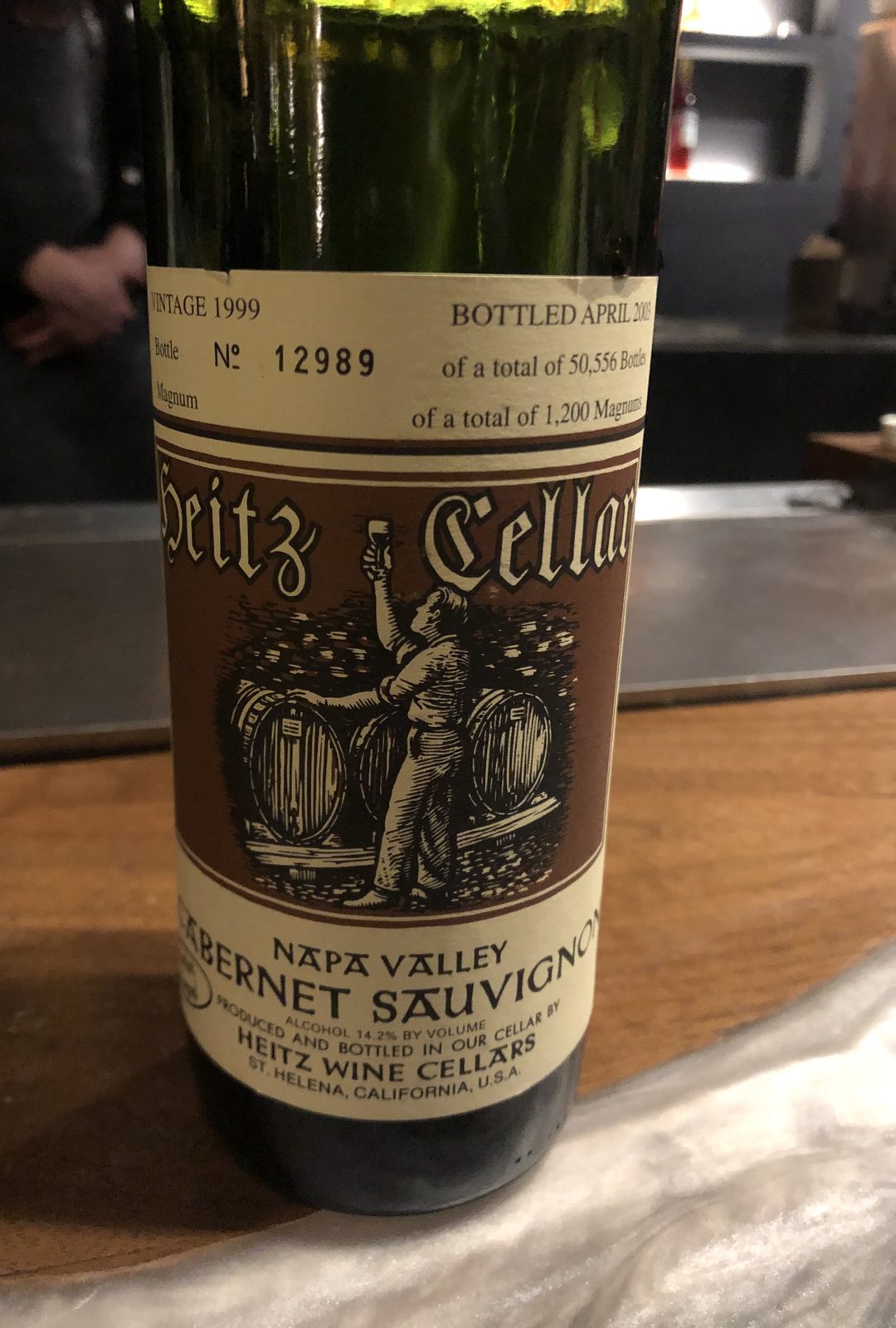
The neck label on this bottle does something most wineries stopped bothering with: it tells you the arithmetic. Vintage 1999. Bottle No. 12,989. Magnum. Of a total of 50,556 bottles and a total of 1,200 magnums. It is a small, slightly obsessive gesture, and it fits the house exactly.
Heitz Cellar was founded in 1961 by Joe Heitz, who came to wine during the war and then to UC Davis for a bachelor’s and a master’s in winemaking — a technical education at a moment when Napa had very few technically educated winemakers. What he did with it was less technical than territorial. In 1966 he bottled a Cabernet Sauvignon under the name of the vineyard it came from, Martha’s Vineyard: the first vineyard-designated Cabernet in the Napa Valley, and the beginning of the idea that a Napa wine could have an address rather than just a brand. He handed the winery to his son David in the late 1970s.
The Wine Without a Vineyard Name
This is not one of the famous single vineyards. It is the Napa Valley bottling — the house’s appellation Cabernet, assembled rather than site-designated. In many cellars that would make it the afterthought. At Heitz it has always been the wine that shows what the house believes a Napa Cabernet is supposed to taste like when nothing is being made a case for: aged long in wood and then long in bottle before release, and sent out without much interest in whether it is ready to drink on arrival.

Why 1999 Suits It
1999 was a cool, slow year in the Napa Valley. A long spring gave way to a mild summer with a single real heat spike in early July, so the fruit hung a long time without ever being cooked; sugars climbed slowly while phenolic ripeness caught up, and natural acidity survived. An unusually hot final week of September pushed the Cabernet over the line. The result was a crop with a high ratio of skin to juice and wines that people at the time described as unusually European for California — firmly structured, sometimes close to austere, and built to wait.
A structure like that, put into a magnum, is a long-term proposition. The larger format ages more slowly, and twelve hundred of them is not many.
In the Glass
Twenty-one years on, and there was no sign of the wine being tired. The colour was deep, only slightly bricked at the edge. The nose opened on cassis and dried black cherry, then unfolded into the more interesting register — cedar, pencil lead, a cool minty-eucalyptus lift that Heitz drinkers know to look for, and a savoury, almost meaty depth underneath.
On the palate the vintage’s reputation was legible immediately. This is not a plush wine. The fruit is dark and firm rather than sweet, the acidity is genuinely present, and the tannins are still fine-grained and gripping at the back of the mouth. Air brought out more earth and tobacco without softening the frame at all. Two decades in, it was drinking beautifully and giving no indication that it had reached a peak — the magnum, presumably, still holding some of it back.
For the same Napa vintage from two other cellars, see the Beringer State Lane Vineyard 1999 and the Clos du Val Palisade Vineyard 1999.