A Wine With No Address
Cardinale Napa Valley 2003
- Producer
- Cardinale
- Appellation
- Napa Valley
- Grapes
- Cabernet Sauvignon, Merlot
- Tasted
- 26 December 2020
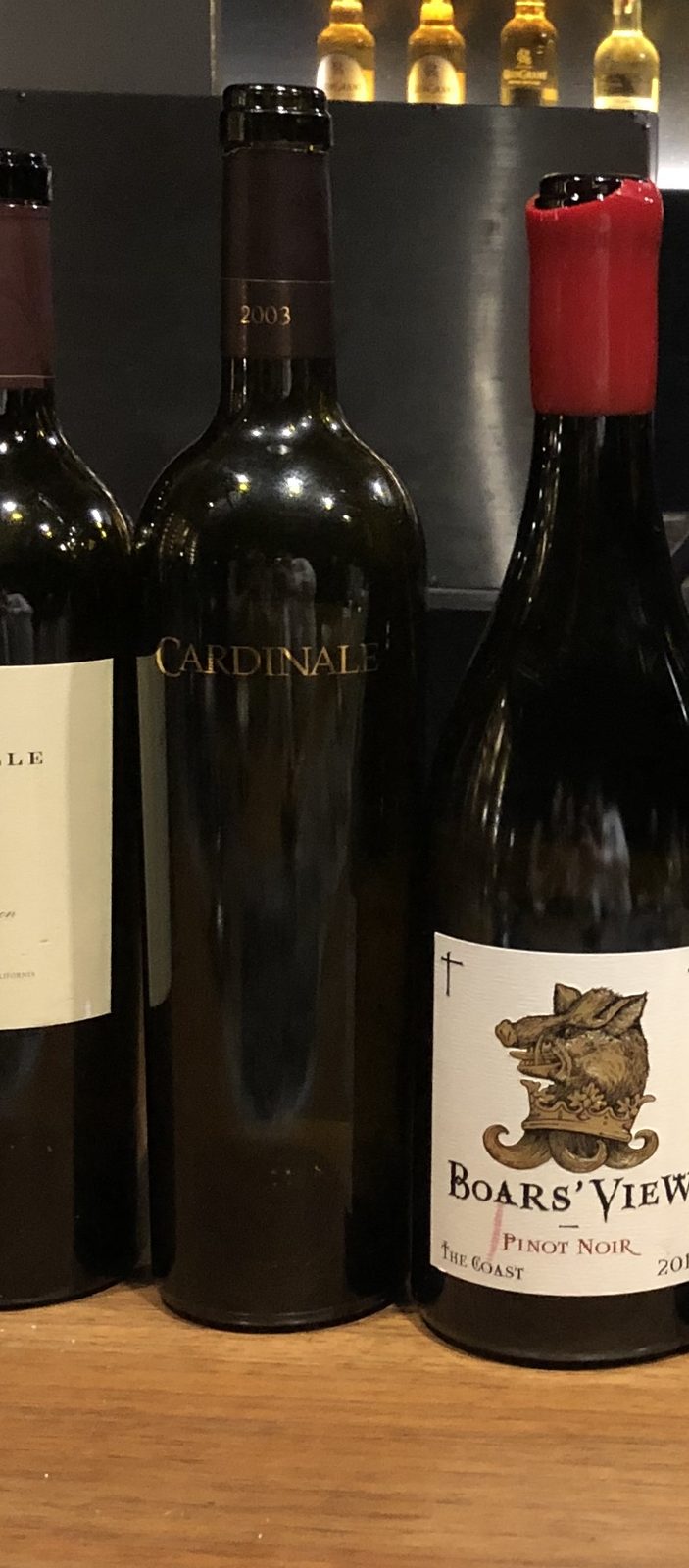
There is no label on the front of this bottle. The name is embossed into the glass — CARDINALE, and the vintage on the neck — and that is the whole of the information the producer offers. It is a confident piece of design, and it is also, in an odd way, accurate: there is very little else that could honestly be printed there.
Almost every serious Napa Cabernet argues from an address. Cardinale does not have one. The wine is assembled each year from whichever mountain parcels the house judges to have performed, and the blend is rebuilt from the ground up rather than adjusted at the edges. In a valley where the vineyard name has been the main currency since the 1960s, that is a deliberate refusal.
Four Sites, One Wine
For 2003 the fruit came from four sources: Keyes on Howell Mountain, Veeder Peak on Mount Veeder, To-Kalon in Oakville, and a parcel in Stags Leap. Those are four genuinely different propositions — two mountain sites on opposite sides of the valley, one benchland site with the most argued-over reputation in California, and one from the district that made its name on a softer kind of structure.
The blend came out at 86% Cabernet Sauvignon and 14% Merlot, raised over twenty months in new French oak, and it amounted to 760 cases. Chris Carpenter had taken over the winemaking in 2001, having joined as an enologist in 1998; he makes the Lokoya mountain Cabernets as well, which is the clearest statement of where his instincts sit.
A Year That Kept Changing Its Mind
2003 gave Napa growers very little to plan around. It opened with heat spikes in March, then delivered the wettest April on record, then settled into a long cool summer in which flavour developed well ahead of sugar. By late in the season the assumption was a late harvest. Heat waves in September overturned that and brought everything forward.
For a wine built from four sites at different elevations, a season like that is less a problem than a reason to exist. Mountain fruit and valley fruit respond to a cool summer and a hot September on different schedules, and a blender who is not committed in advance to any one parcel has room to work with the difference.
In the Glass
Seventeen years on, this was still a deeply coloured wine, ruby to purple at the core rather than anywhere near brick.
The nose leads with sweet kirsch and black currant, then moves somewhere richer — dried fruit and candied peel, cedar, and a forest-floor note underneath that reads as age rather than as decay. New oak is present and has been for two decades; it has resolved into cedarwood rather than sitting on the surface.
The palate has filled out. Whatever angularity the mountain fruit gave it early has been absorbed, and the wine is now broad and long, with the tannins holding the shape from underneath rather than announcing themselves. It is unmistakably a made wine rather than a grown one, and it is very good at being that.
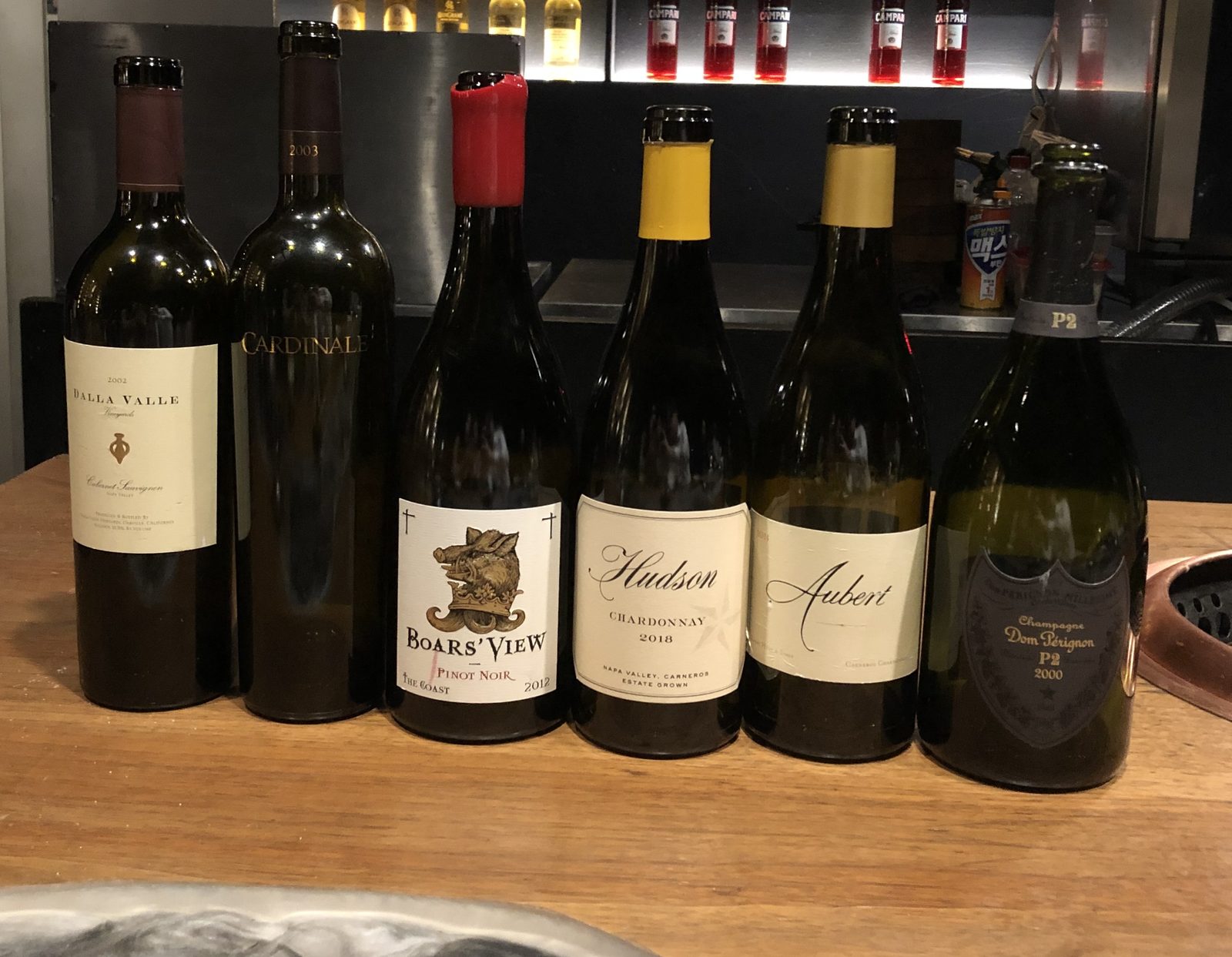
Opened alongside the Dalla Valle Cabernet Sauvignon 2002 — an estate that argues the exact opposite case — with the Boars’ View ‘The Coast’ Pinot Noir 2012, the Hudson Chardonnay 2018 and the Dom Pérignon P2 2000.