The Bottle Before the Consultant
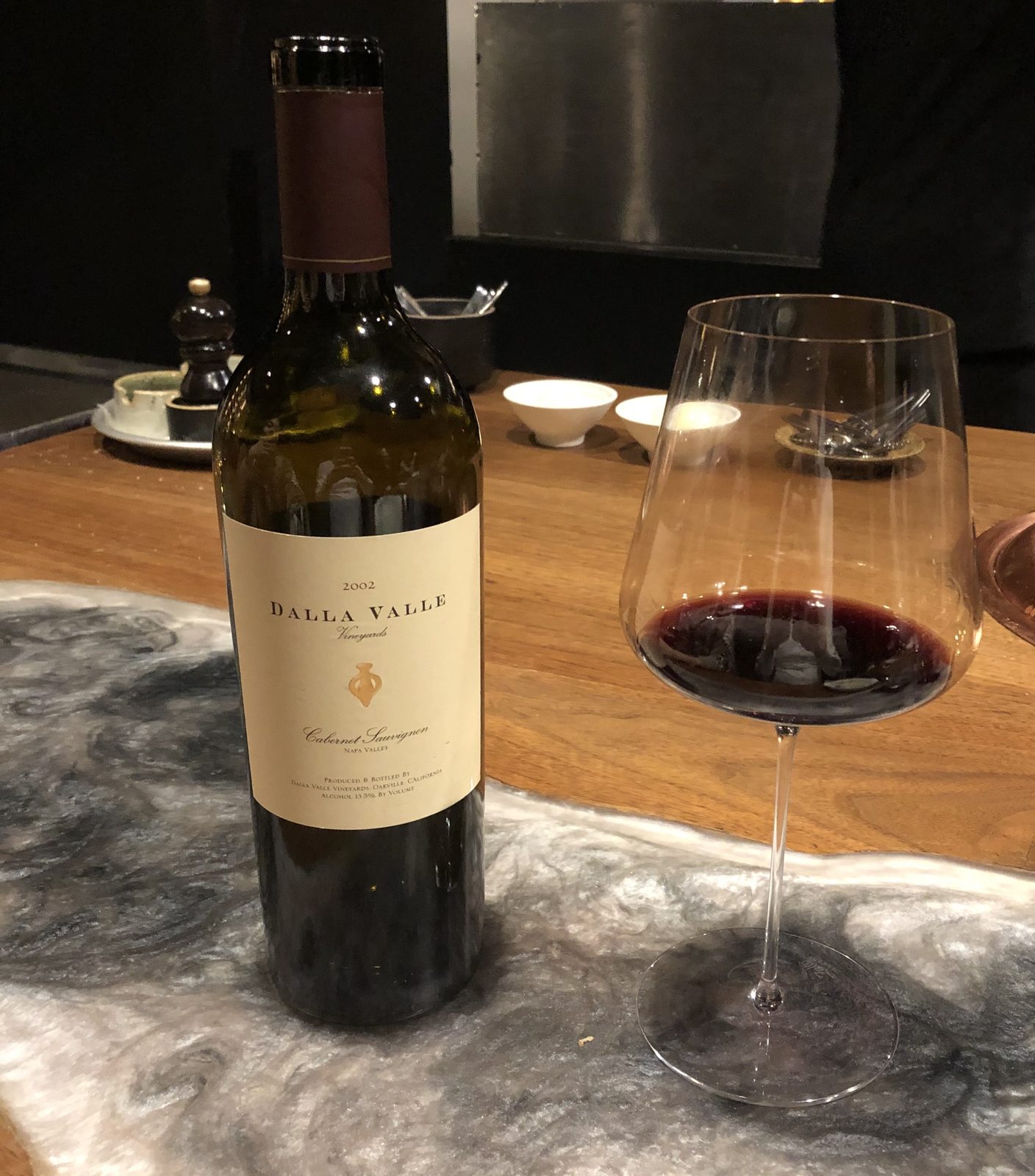
Dalla Valle Vineyards Cabernet Sauvignon Napa Valley 2002
- Producer
- Dalla Valle Vineyards
- Appellation
- Oakville
- Grapes
- Cabernet Sauvignon, Cabernet Franc
- Tasted
- 26 December 2020
The hillside east of Oakville is not where the Napa Valley made its reputation. The valley floor is; the benchland is. The shelf above the Silverado Trail is steeper, rockier, and volcanic, and until the 1980s the argument for planting it was largely theoretical.
Gustav and Naoko Dalla Valle began putting vines in there in 1983, a year after buying the property. Gustav had come to it by an unusual route — northern Italian, from a family that had been in wine for generations, but the decades in between had been spent elsewhere entirely, including a spell in Haiti after the war running a spearfishing and snorkelling school, and a hand in founding a company that made diving equipment. The first wine appeared in 1986, the same year the winery was built. Twenty-one acres, Cabernet Sauvignon and Cabernet Franc, on rock.
An Estate in Its Second Chapter
Gustav died in 1995, and Naoko carried the estate on alone. What is easy to miss now, with the label long established, is how much of the reputation was built in that second period rather than the first — the wines from the late 1990s and early 2000s were made by an estate that had lost the person whose name was on it, and had to prove the site rather than the founder.
The 2002 sits exactly on the hinge. Michel Rolland began consulting at Dalla Valle in 2004, and the 2002 was the vintage he blended first. So this bottle is a strange object: made in the old regime, assembled at the start of the new one. Whatever else it is, it is not a wine you could reproduce by deciding to.
2002 in the Napa Valley
The season was long and mostly mild — an early April frost, rain in May, then a summer of warm days and genuinely cold nights, the pattern that lets flavour develop while sugar takes its time. Late September turned warm, which pushed ripeness up and compressed the picking window into something much shorter than the season had suggested.
The result was concentration arriving at the end rather than being carried all the way through. In wines from thin volcanic soils, where the fruit is already small and the skins already thick, that final push tends to show up as density rather than as sweetness.
In the Glass
Eighteen years on, the colour was still dark to the rim, with only the faintest brick at the edge.
The nose was the estate’s own signature more than the vintage’s: cassis and dark plum first, then something distinctly savoury underneath — soy and dried spice rather than fruit, and a tarry, mineral note that the volcanic shelf seems to leave on everything grown there. There is graphite in it, and leather, and a floral lift that keeps arriving late.
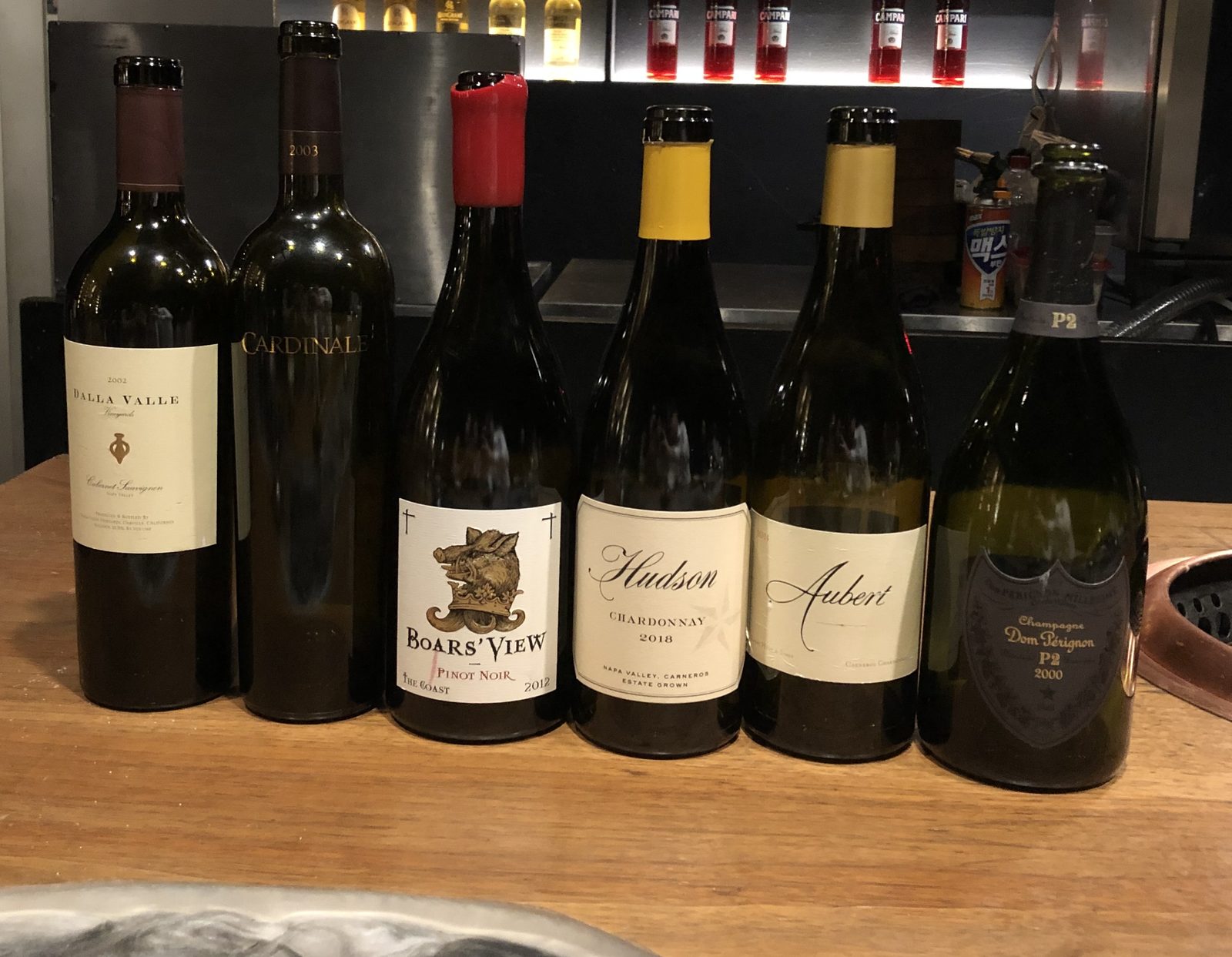
On the palate the tannins had gone silky without going soft. The fruit is black-curranted and liqueur-like at the centre, but the structure around it is still upright, and there is a smoky, tobacco-leaf finish that runs on for a long time. It gave no sense of being at an end. Poured at a counter over a grill, alongside five other bottles, and it was the one that kept changing in the glass.
For another Oakville-adjacent Cabernet from a mountain assemblage opened at the same counter, see the Cardinale 2003; the rest of the table was the Boars’ View ‘The Coast’ Pinot Noir 2012, the Hudson Chardonnay 2018 and the Dom Pérignon P2 2000.