The Opening Argument
Jacques Selosse Substance Grand Cru Blanc de Blancs Brut
- Producer
- Jacques Selosse
- Appellation
- Champagne Grand Cru
- Grapes
- Chardonnay
- Tasted
- 22 January 2021
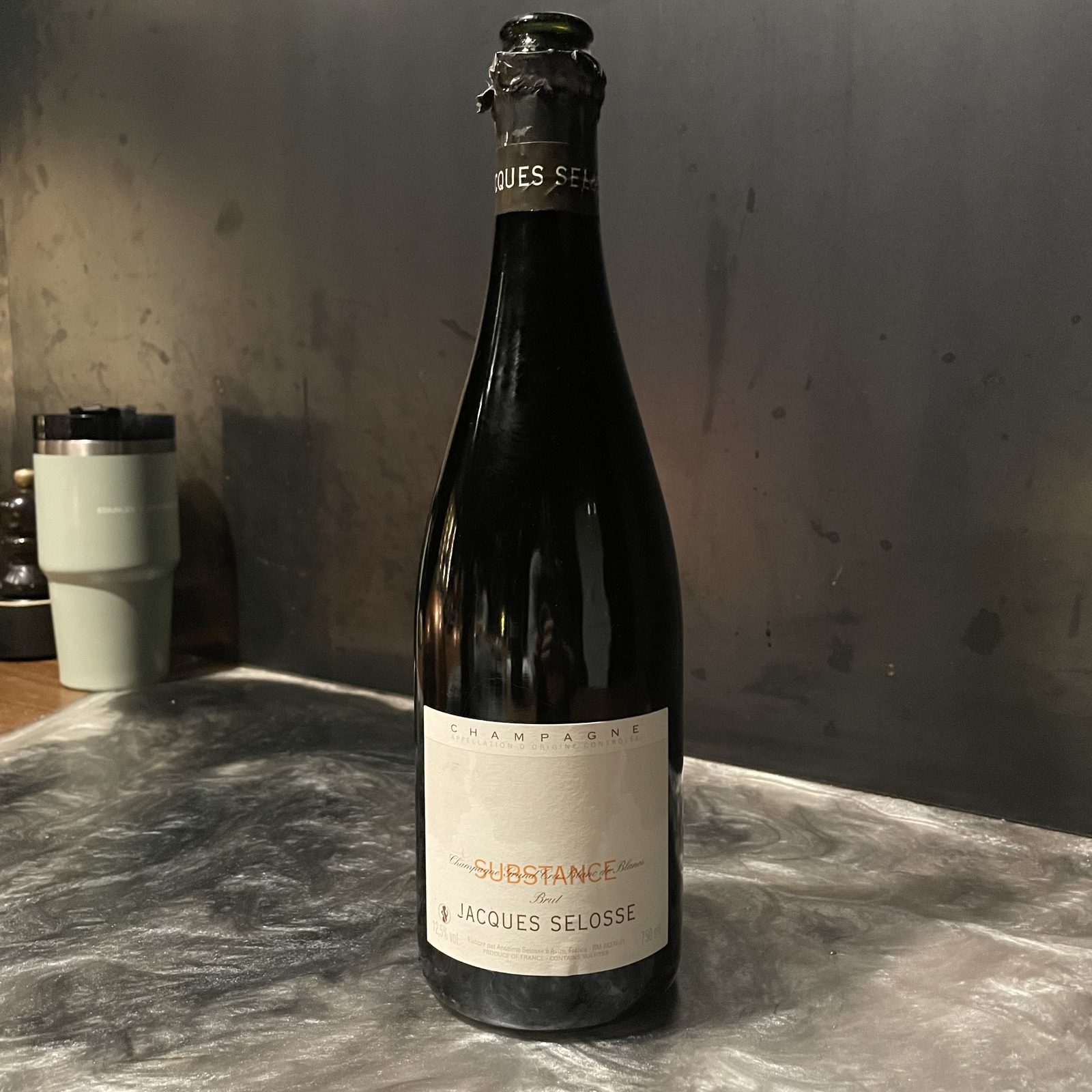
Anselme Selosse’s Substance is the Champagne that made the word solera part of the region’s vocabulary. Every year since 1986 a portion of the reserve has been drawn off and bottled, and the reserve topped up with new base wine from Avize — a perpetual blend, kept in cask and tank, in which the oldest fraction has been ageing for well over three decades and the youngest vintage makes up only a fifth or so of what goes into the bottle.
It is Chardonnay from a single grand cru village, Avize, from two lieux-dits on opposite faces of the same hill: Le Mont de Cramant, facing full south, and Les Chantereines at the foot of the slope, facing east. Fermented in oak, aged on lees for five or six years, dosed at close to nothing. The result is a Champagne that tastes less like a vintage than like a place remembering itself.
The Evening
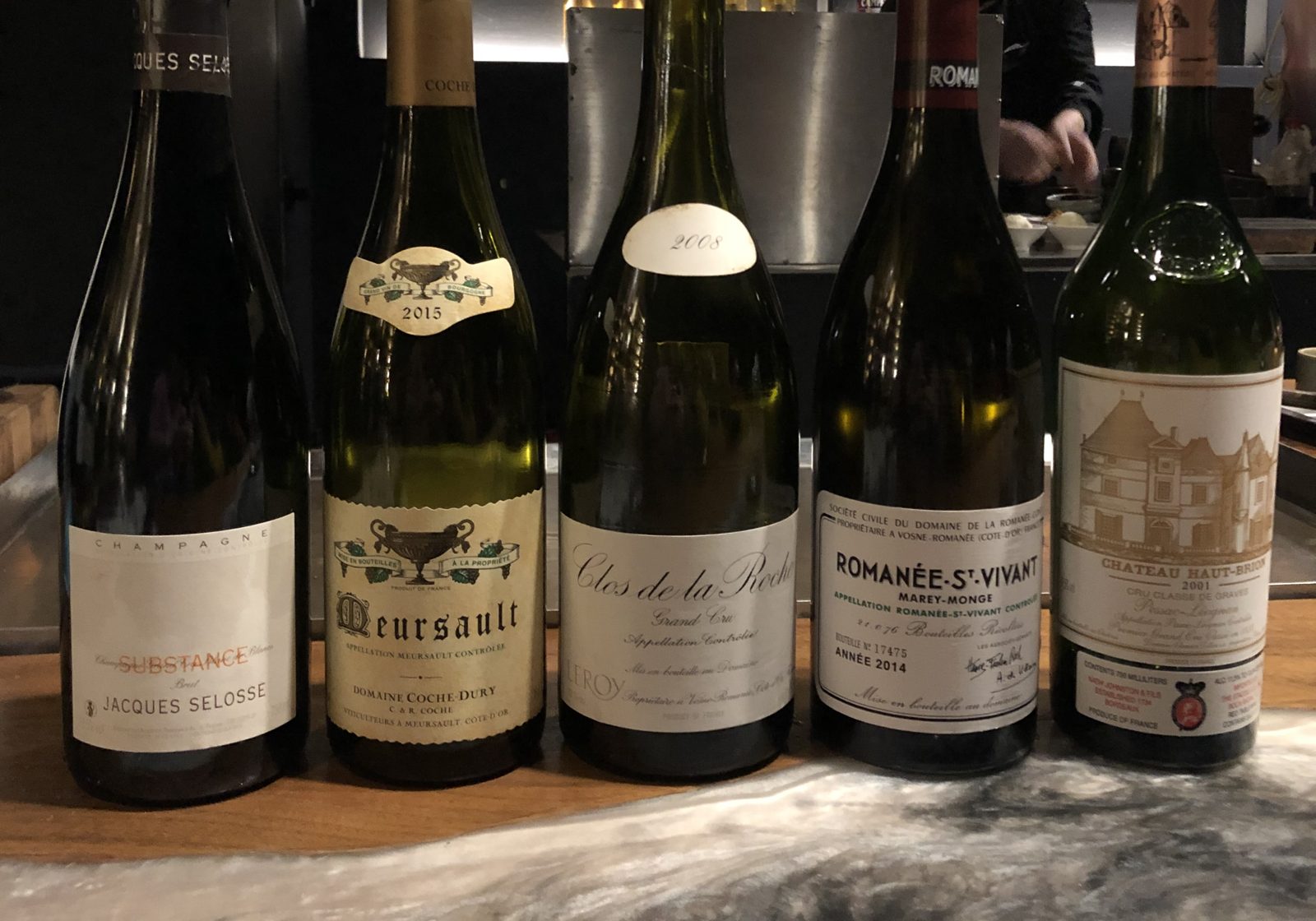
This was the opening bottle at a counter dinner that went on to a Coche-Dury Meursault 2015, a Leroy Clos de la Roche 2008, a DRC Romanée-Saint-Vivant 2014 and a Haut-Brion 2001. The Champagne’s job in a line-up like that is to set a standard the rest have to meet, and to do it before anyone has eaten.
In the Glass
Deep gold, with a fine, unhurried mousse. The nose was the reason people either love or refuse this wine: baked apple and quince under a distinct oxidative layer — toasted almond, dried fig, a curry-leaf and sherry-like edge — with chalk and salt at the bottom of it. Nothing about it read as fresh fruit, and nothing was meant to.
The palate was vinous and broad, with the bubbles doing texture rather than lift. Real weight through the middle, a bitter-almond grip at the back, and acidity that came through late and kept the whole thing upright. The finish went to brioche and salted caramel and stayed a long time.
It is, deliberately, more wine than Champagne. Against a table of that calibre it did not so much open the evening as set its terms — a bottle that made the Meursault that followed have to argue for its place, which a Coche-Dury is well equipped to do.
The same cuvée, from a different bottle and a different counter, was drunk again four and a half years later. The solera does not stand still; neither, it turns out, does the drinker.