The Other Bryant
Bryant Family Vineyard Bettina Proprietary Red Napa Valley 2010
- Producer
- Bryant Family Vineyard
- Appellation
- Napa Valley
- Grapes
- Cabernet Sauvignon, Merlot, Cabernet Franc, Petit Verdot
- Tasted
- 29 January 2021
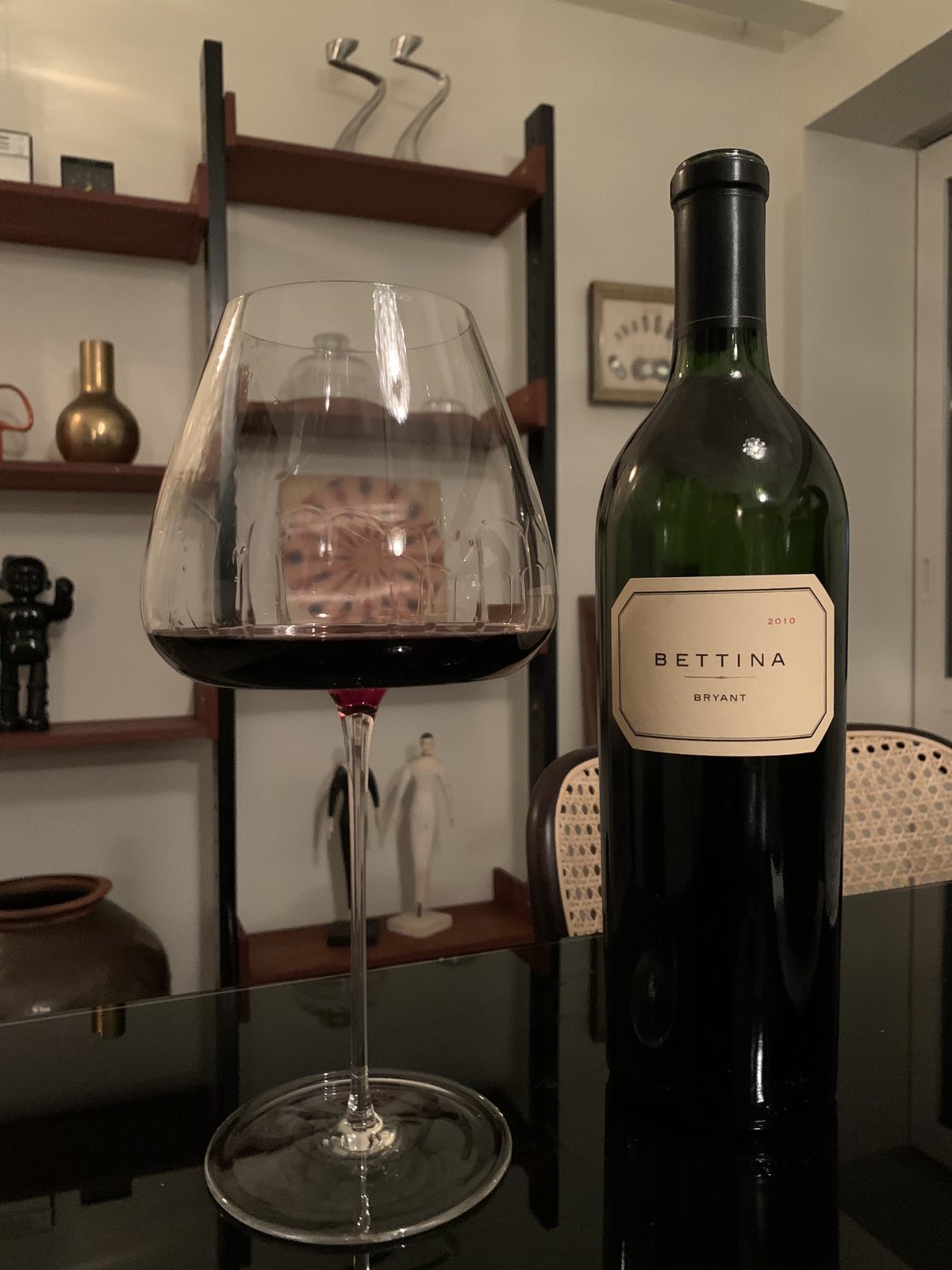
Bryant Family Vineyard is one of the original Napa cult estates: a single vineyard on Pritchard Hill above Lake Hennessey, a first vintage in 1992 with Helen Turley making the wine, and a Cabernet Sauvignon that for the rest of the decade was among the hardest bottles in California to obtain. The estate wine is that vineyard and nothing else.
Bettina is a different proposition. Named for Bettina Bryant, it is a Bordeaux-style blend assembled from fruit grown by David Abreu — the viticulturist whose own vineyards, Madrona Ranch, Thorevilos and Lucia on Howell Mountain, supply some of the most expensive Cabernet in the valley. Bryant buys from all three and blends across them. The 2010 was roughly three-quarters Cabernet Sauvignon with Merlot, a little Cabernet Franc and a touch of Petit Verdot.
So the label says Bryant, and the wine is Abreu’s dirt — a collaboration between two names that, on their own, each already carry more weight than most.
The Year
2010 was a cool, difficult Napa vintage — a wet spring, a summer that never really warmed up, then a violent heat spike in late August that scorched exposed fruit, and a harvest that ran late into October. The wines that survived the year well are more restrained and structured than the valley’s usual style, with lower alcohol and firmer acidity. Hillside sites with good exposure came through best.
In the Glass
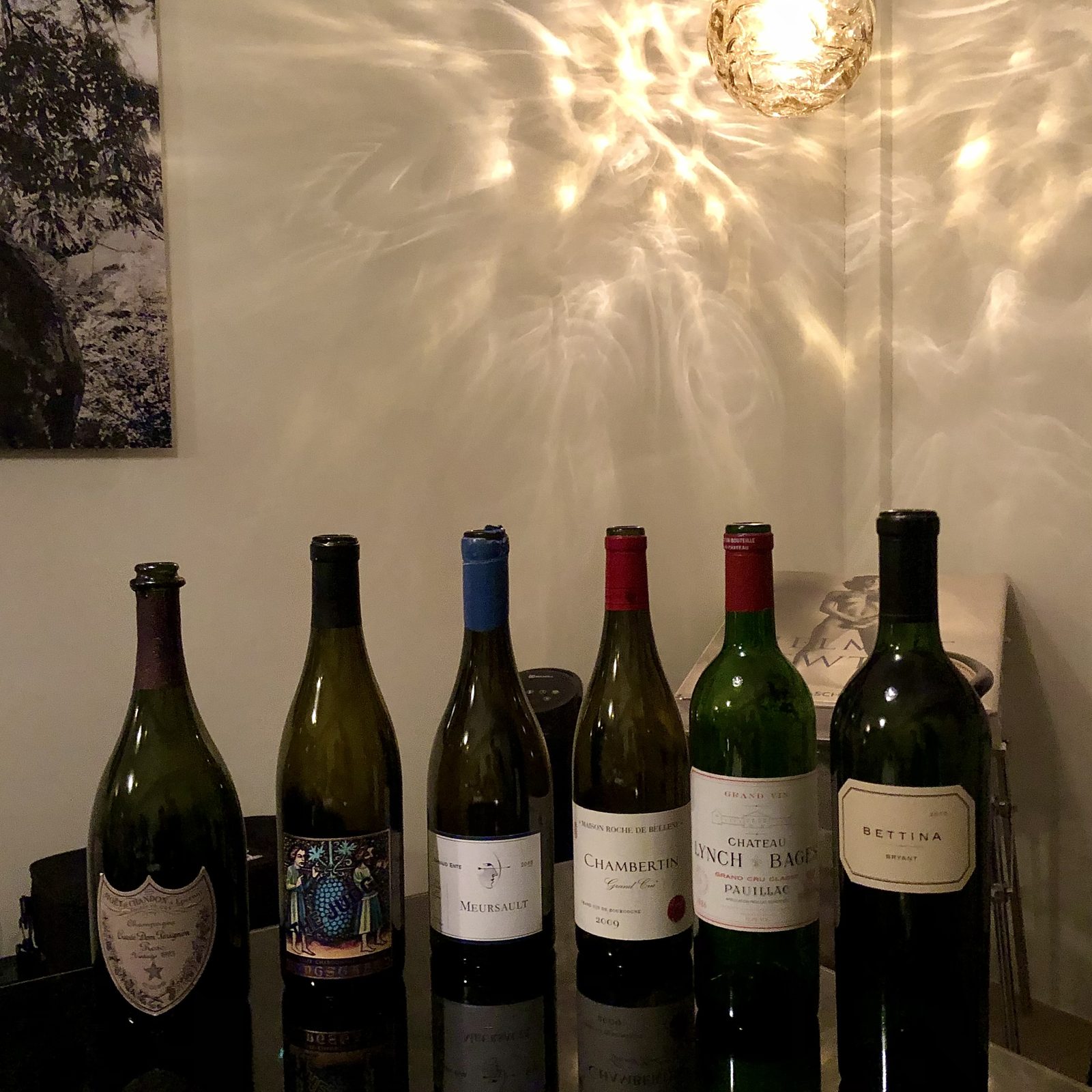
The last bottle of a six-bottle evening at a friend’s home, after the Lynch-Bages 1986 — an unfair act to follow — and just over ten years from the vintage.
Opaque purple-black, no sign of age at the rim. The nose was intense and aromatic in the mountain-Napa register: crushed blackberry and blueberry, then mint, clove and liquorice, a floral note, and a crushed-rock, graphite minerality that Abreu’s sites tend to give. The oak was present as a sweet spice rather than as vanilla.
The palate was powerful and dense — full-bodied, layered, with tannins that were still firm and chalky at the back and a mineral line running through the middle that kept the weight from becoming heaviness. The cool year showed in the acidity, which was higher than the valley’s norm and gave the wine lift. The finish was long, on pencil shavings and dark fruit.
At ten years it was still a young wine, closer to its beginning than its middle. Coming after a Pauillac at thirty-five, it made an interesting contrast: two Cabernet blends, both built for the long term, one at the point of arrival and the other still on the road.
For another Napa hillside Cabernet from a cult address, see the Colgin IX Estate 2005.