The Rosé From the Year Nobody Declared
Dom Pérignon Rosé Vintage 1993
- Producer
- Dom Pérignon
- Appellation
- Champagne
- Grapes
- Pinot Noir, Chardonnay
- Tasted
- 29 January 2021
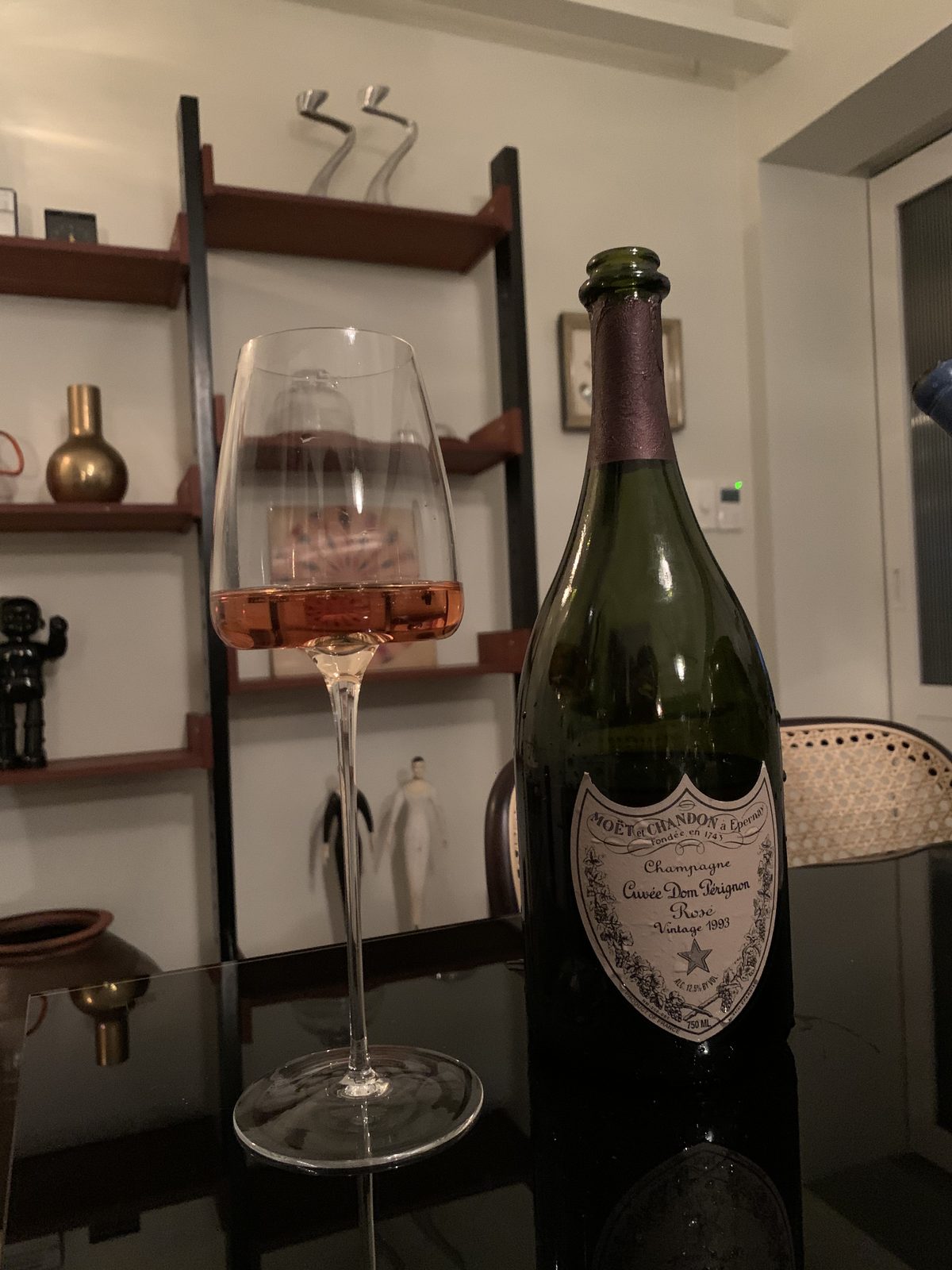
Dom Pérignon declares a vintage only when the house decides the year deserves one, and the rosé is declared less often still — a handful of years per decade, from a selection of Pinot Noir that the winemaker considers strong enough to carry the red-wine component the style depends on.
1993 was an unusual year to make that call. September brought rain to Champagne at harvest, the crop was uneven, and many houses passed on a vintage release altogether. Dom Pérignon released both a white and a rosé. In the shadow of the 1990 before it and the 1995 and 1996 after it, the 1993 rosé has spent most of its life being the one people forget to mention — described, when it is mentioned, as the most direct and forward of the three, with more red-fruit punch and less of the smoky subtlety of its neighbours.
The Evening
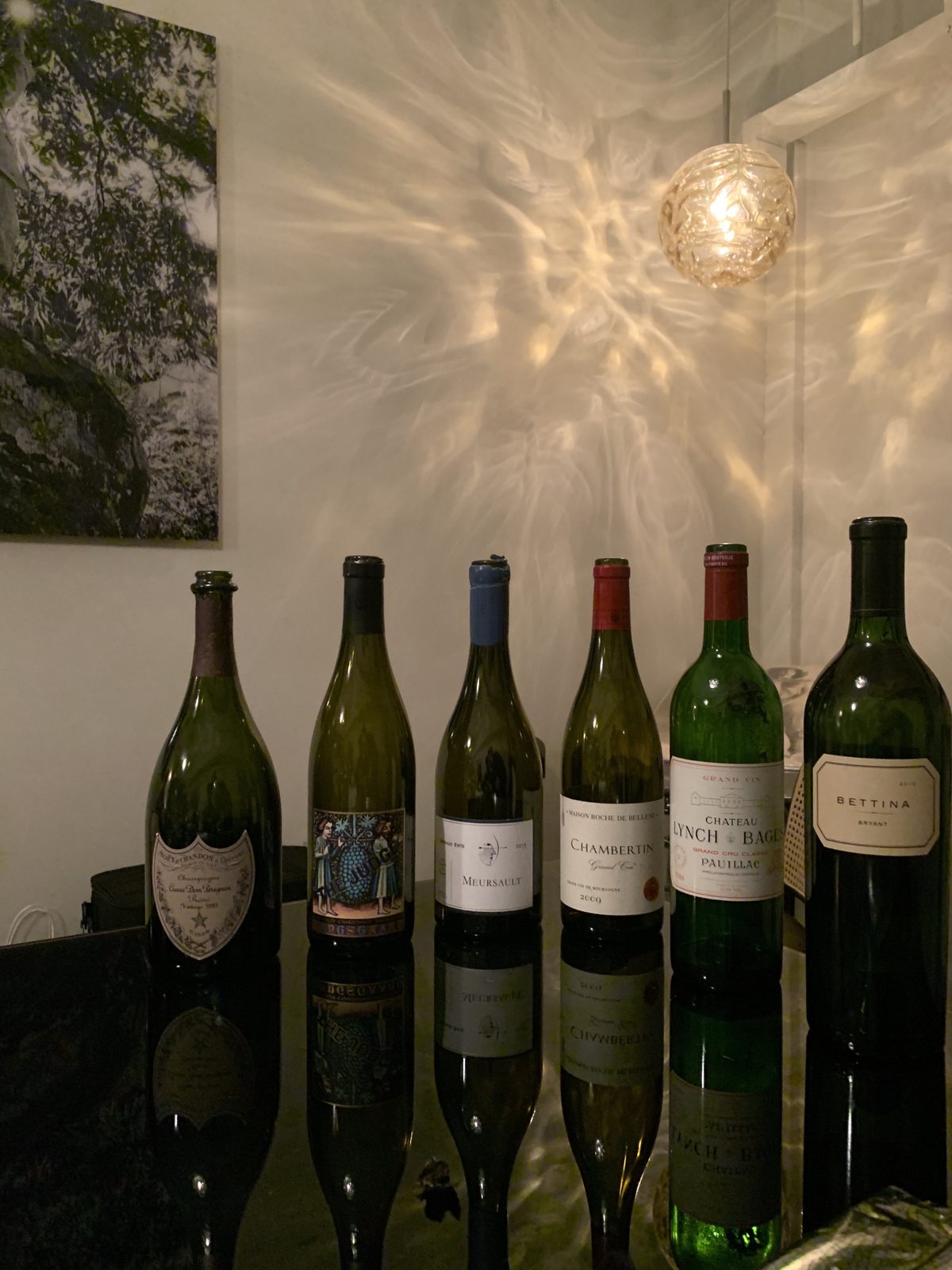
This was the first bottle of a six-bottle dinner at a friend’s home — a long lacquered table, cane-backed chairs, a shelf of small figures behind — that went on to a Kongsgaard Judge 2009, a Meursault from Arnaud Ente, a Roche de Bellene Chambertin 2009, a Lynch-Bages 1986 and a Bryant Bettina 2010. The Champagne went in first, as Champagne does, and twenty-seven years from the vintage it was not a warm-up.
In the Glass
The colour had moved from salmon to a light copper, with a fine and still-persistent bead. The nose was the surprise: not the faded, oxidised profile one braces for in a rosé approaching thirty, but something alive — dried strawberry and orange peel, smoked nuts, a spiced, almost gingery warmth, and the toasted-brioche autolysis sitting underneath the fruit rather than over it.
On the palate the acidity was the story. The wine was still taut, still had cut, and the red-fruit character that the 1993 has always been described for had dried and deepened rather than disappeared. A saline, mineral finish, moderate length, no heaviness. It drank like a wine with time still in front of it, which for a Champagne from a year most people would not have kept is a kind of quiet vindication.
Earlier Dom Pérignon rosés and later ones sit elsewhere in these pages — the 1998 in particular makes an interesting companion, from a year that was similarly overshadowed by its neighbours and similarly better than its reputation.