Death, Resurrection, and a Judge
Kongsgaard The Judge Chardonnay Napa Valley 2009
- Producer
- Kongsgaard
- Appellation
- Napa Valley
- Grapes
- Chardonnay
- Tasted
- 29 January 2021
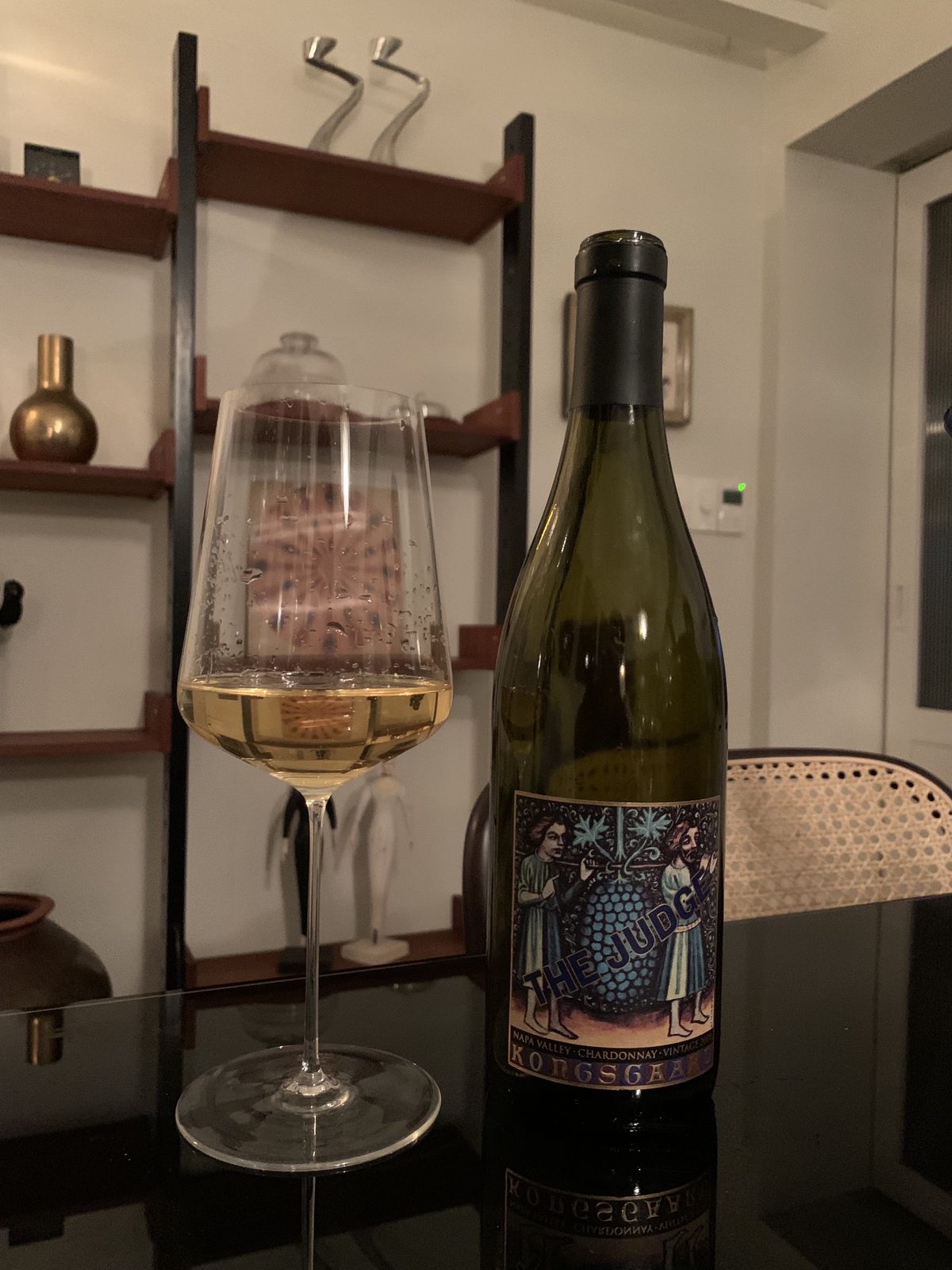
The Kongsgaard family has farmed in Napa since the 1920s, and John Kongsgaard planted Chardonnay on the family’s Stonecrest property, in the hills just northeast of the town of Napa, in 1975 — on the advice of a neighbour who happened to be André Tchelistcheff. He spent the eighties and early nineties as the winemaker at Newton, and released the first wine under his own name in 1996.
The Judge is the top Chardonnay, from the oldest block of that vineyard, and it is named for his father, who sat on the bench. The production is tiny.
The method is the thing people write about. Fermentation in barrel is allowed to take as long as it takes — often close to a year — with no stirring of the lees and no intervention when the wine passes through a phase that, by Kongsgaard’s own cheerful description, smells like a problem. He calls it death and resurrection: the wine goes somewhere unpleasant and comes back. The reward, when it works, is a Chardonnay of unusual density and a long, savoury, almost oxidative complexity that has more to do with old-school Meursault than with anything else in Napa.
The Year
2009 in Napa was a mostly even, moderate season — no serious heat spikes through the summer, a harvest that ran comfortably until a heavy rainstorm in mid-October caught the latest-picked reds. Chardonnay was long in by then. For a wine made this way, a year without stress is the ideal raw material.
In the Glass
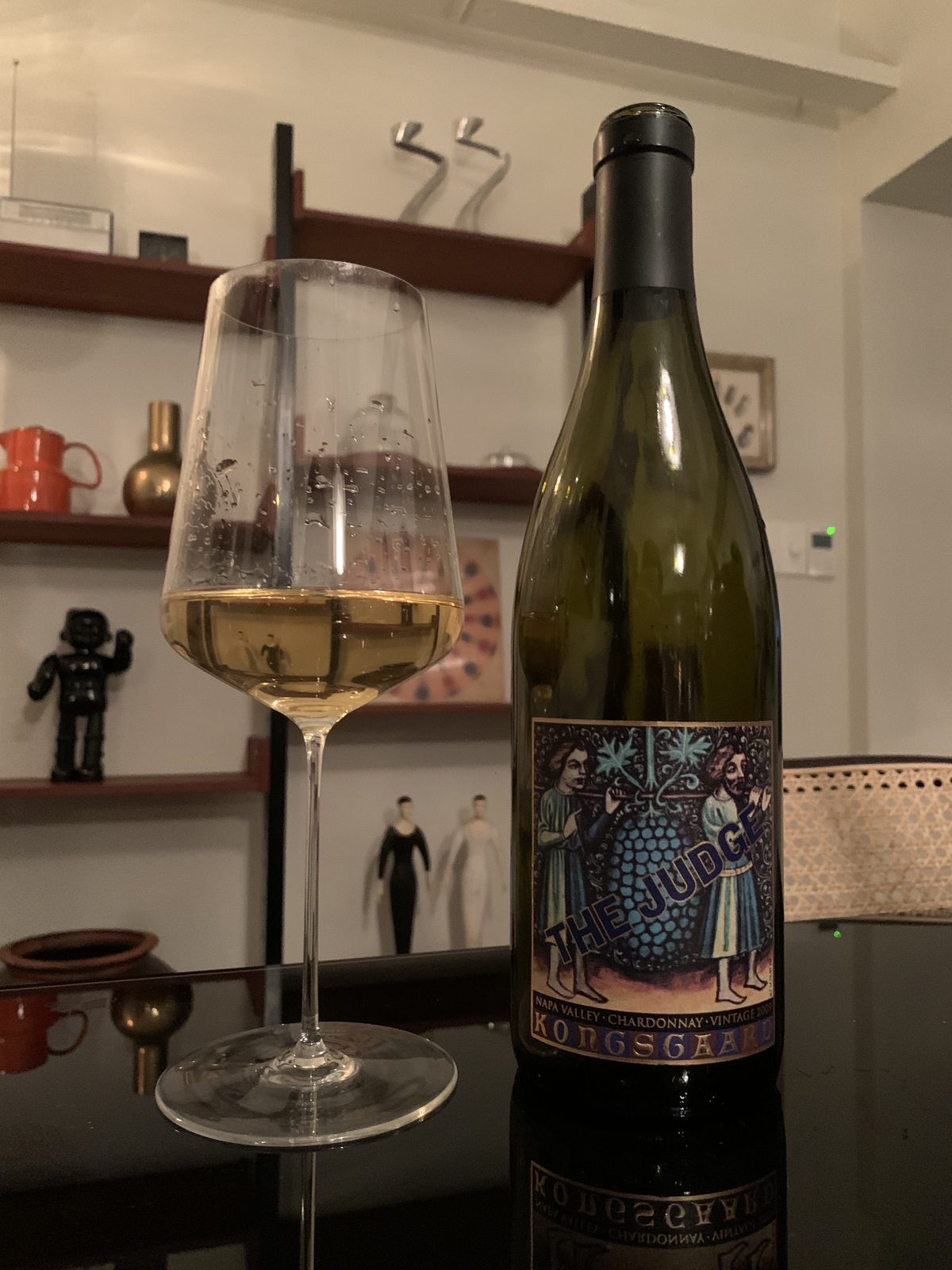
The second bottle of a six-bottle evening at a friend’s table, following the Dom Pérignon Rosé 1993, just over eleven years from the vintage.
Deep gold. The nose was dense and layered — baked apple and quince, roasted hazelnut, honeycomb, a struck-match and lanolin savouriness over the top, and a faint oxidative edge that read as intentional rather than as a flaw. Nothing about it was fresh or primary, and nothing was meant to be.
The palate was full, almost viscous in texture, with a broad, waxy weight through the middle and acidity that arrived later than expected but arrived. The oak had long since dissolved into the wine. The finish went to toasted nut and salted butter and stayed a long time.
It is a Chardonnay that asks you to accept a different set of terms — richness as the goal, tension as the support rather than the point. At eleven years it had done exactly what the method promises: gone through whatever it went through, and come back as something a great deal more interesting than a clean, correct white wine.