Petite Sirah, Eighteen Years On
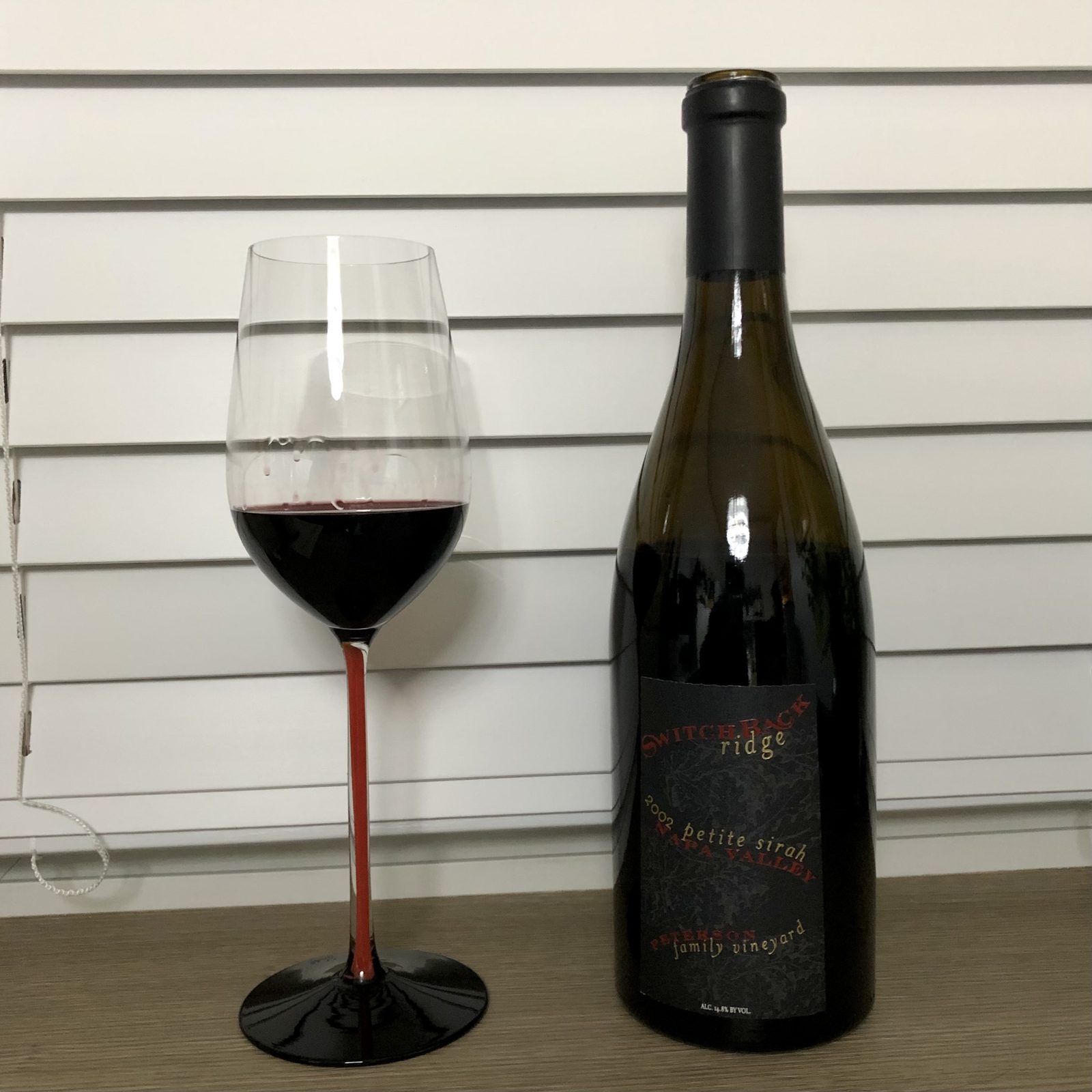
Switchback Ridge Petite Sirah Peterson Family Vineyard Napa Valley 2002
- Producer
- Switchback Ridge
- Appellation
- Calistoga
- Grapes
- Petite Sirah
- Tasted
- 31 January 2021
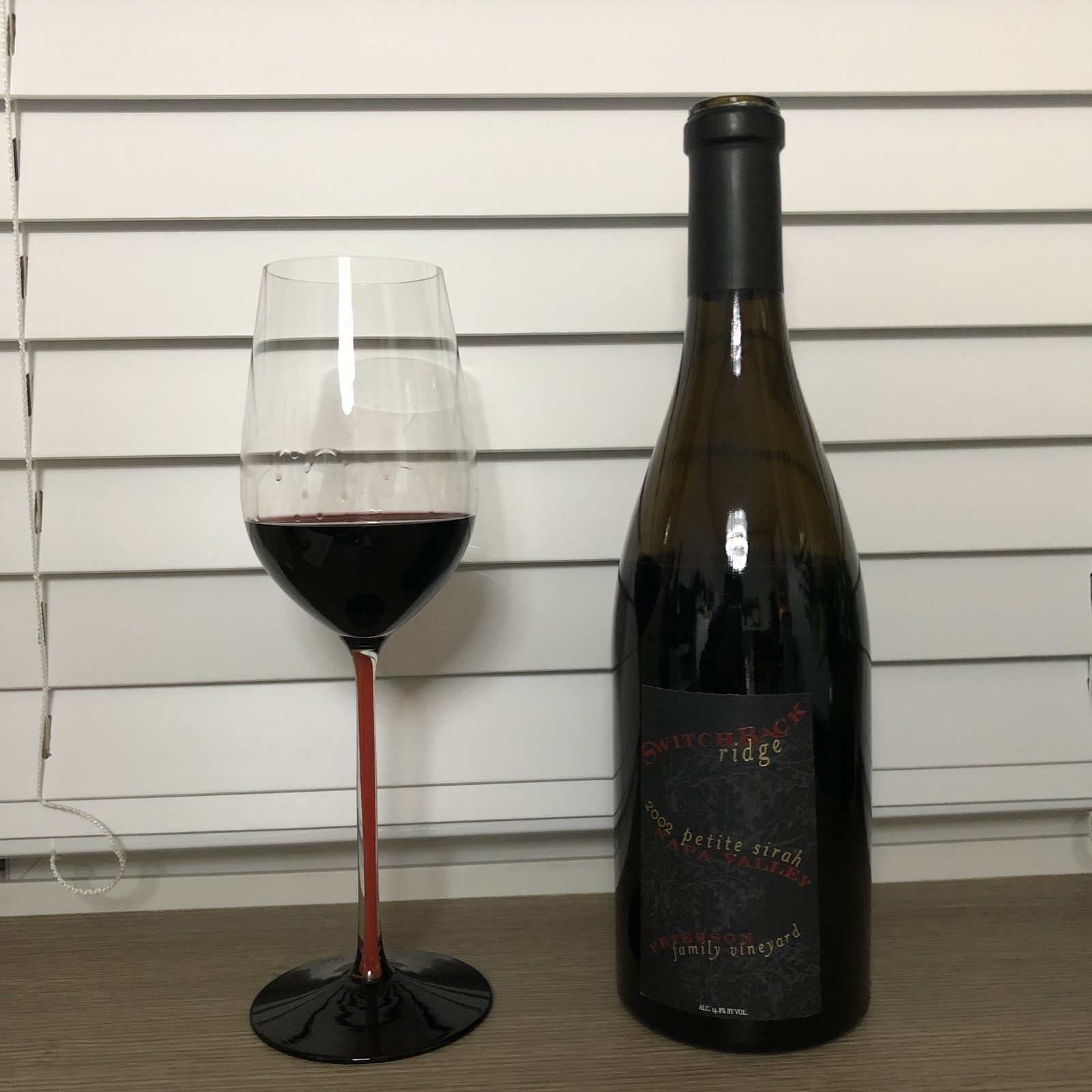
Petite Sirah has spent most of its California life as a supporting player — the grape that goes into a Zinfandel or a Cabernet blend for colour and grip, planted in old field blends up and down the state, and only occasionally bottled by itself. It is not Syrah, despite the name; it is Durif, a nineteenth-century French crossing that found a second life in California’s warm valleys, where it makes wines of almost black colour and formidable tannin.
Switchback Ridge is one of a small number of Napa estates that takes it seriously. The wines come from the Peterson Family Vineyard in Calistoga, at the hot northern end of the valley, farmed by a family that has been on the land for generations, and made since the first vintage in 1999 by Bob Foley — a winemaker whose reputation was built on Cabernet at Pride Mountain and whose own style runs to concentration and polish. The Petite Sirah is the estate’s signature, and in its youth it is a wall of fruit and tannin.
The Year
2002 in Napa was a warm year with a long, mostly dry ripening season and a late heat wave in September that pushed sugars up quickly. For Cabernet it produced big, ripe, opulent wines that were praised early. For Petite Sirah, which ripens late and has tannin to spare, a warm year gives the fruit enough weight to carry the structure.
In the Glass
Opened at the office on a Sunday evening, eighteen years from the vintage, in the same sitting as a Drouhin Clos des Mouches blanc 2005.
The colour was still nearly opaque, purple-black with only a slight bricking at the very edge — the grape’s pigment does not fade quickly. The nose had moved into a mature register without losing its intensity: blackberry and blueberry gone to compote, white chocolate, black pepper, a smoky espresso note from the oak, and an earthy, slightly tarry undertone.
The palate was the answer to the question. Eighteen years had done what youth could not: the tannins, which in this wine’s early life are dense and chewy, had softened into something broad and velvety, still present but no longer in the way. The fruit had stayed rich and the acidity, which the grape keeps naturally, held it in balance. The finish was long, on cocoa and dark berry.
A grape most people know only as a blending component, from a vintage most people drank a decade too early, had aged into a wine of real refinement. Petite Sirah’s problem has never been quality; it has been that almost nobody waits.