Champagne Closer to Chablis
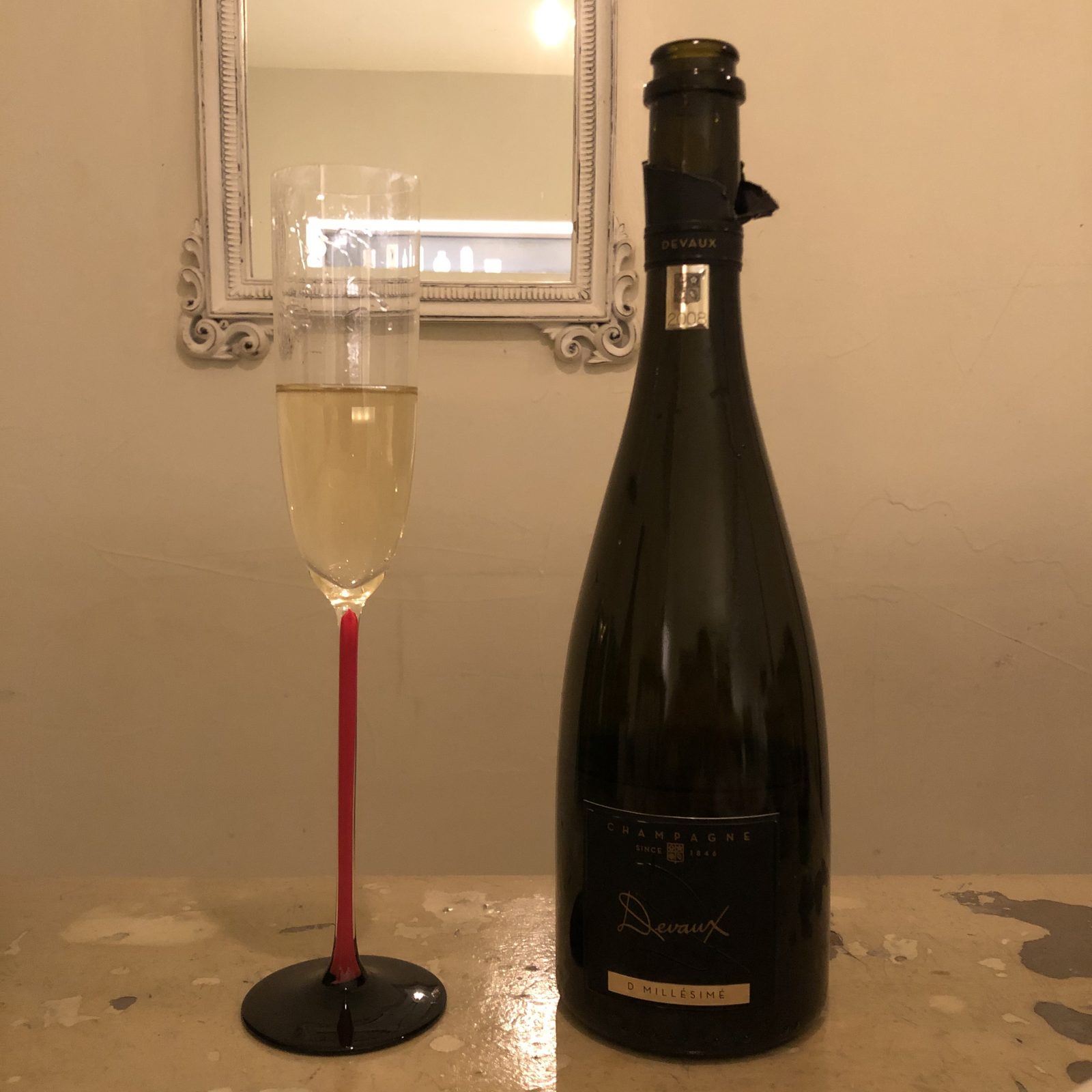
Champagne Devaux D Millésimé 2008
- Producer
- Champagne Devaux
- Appellation
- Champagne
- Grapes
- Pinot Noir, Chardonnay
- Tasted
- 26 February 2021
The Aube is the part of Champagne that the rest of Champagne spent most of a century trying not to talk about. It lies at the southern end of the region, a long way below the Marne — closer to Chablis than to Reims or Épernay, and sitting on the same Kimmeridgian marl and Portlandian limestone that Chablis grows on. Growers there fought a small war in 1911 for the right to call their wine Champagne at all. Today the Côte des Bar supplies a large share of the region’s Pinot Noir, and a growing number of houses have stopped treating it as a source and started treating it as an address.
Devaux is one of those. The house was founded by the brothers Jules and Auguste Devaux in 1846 — the date is printed on the label, under the word Champagne — and moved south to the Côte des Bar in the 1980s, to the Manoir de Villeneuve outside Bar-sur-Seine. Michel Parisot has been chef de cave since 1999.
The Cuvée
The D range is the house’s top tier, and the D Millésimé is its vintage wine: half Pinot Noir, half Chardonnay, held on its lees for more than seven years before disgorgement. That is a long élevage by any standard, and it is the whole design of the cuvée — the aim is not primary fruit but the bread-and-pastry register that only comes from time in contact with the yeast.
2008 is one of the vintages Champagne producers talk about without hedging. A cool, unremarkable-looking summer gave way to a dry, bright September, and the grapes came in fully ripe with acidity almost untouched. Wines from the year have tended to stay tight far longer than expected, and to reward the houses that were patient with them.
In the Glass
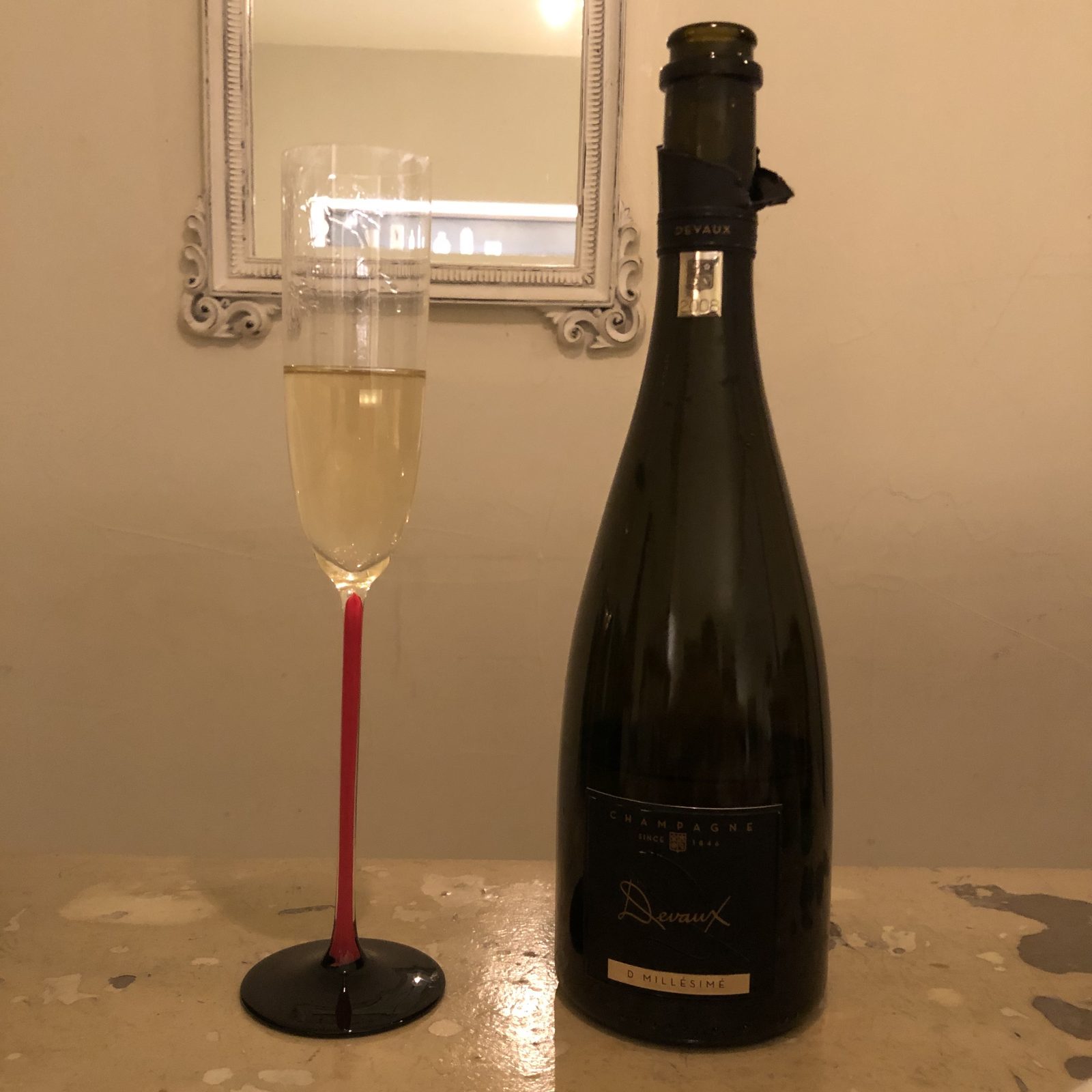
Deep gold with a green cast at the edge, and a fine, persistent bead. The nose was firmly on the mature side of the ledger — brioche, toasted hazelnut, dried apricot, a citrus-peel lift over the top — but there was no oxidative heaviness anywhere in it. The long lees ageing was audible rather than merely present.
The palate ran taut. The 2008 acidity is still the frame of the wine, and it holds the pastry richness in a straight line from front to finish; the mid-palate is broad, the finish dry and salty, with dried orange and a chalky grip at the end. Twelve years from the vintage and it had the balance of a wine that had not yet decided to soften.
The Kimmeridgian argument is easy to overstate, but the salinity at the back of this wine did not feel like an accident. Elsewhere in this archive, another house’s non-vintage réserve makes the case for long ageing from a different direction. Opened the same evening as a Napa Cabernet from 1998.