The Vintage Napa Wanted to Forget
Robert Mondavi Winery Reserve Cabernet Sauvignon 1998
- Producer
- Robert Mondavi Winery
- Appellation
- Oakville
- Grapes
- Cabernet Sauvignon, Cabernet Franc, Merlot, Petit Verdot
- Tasted
- 26 February 2021
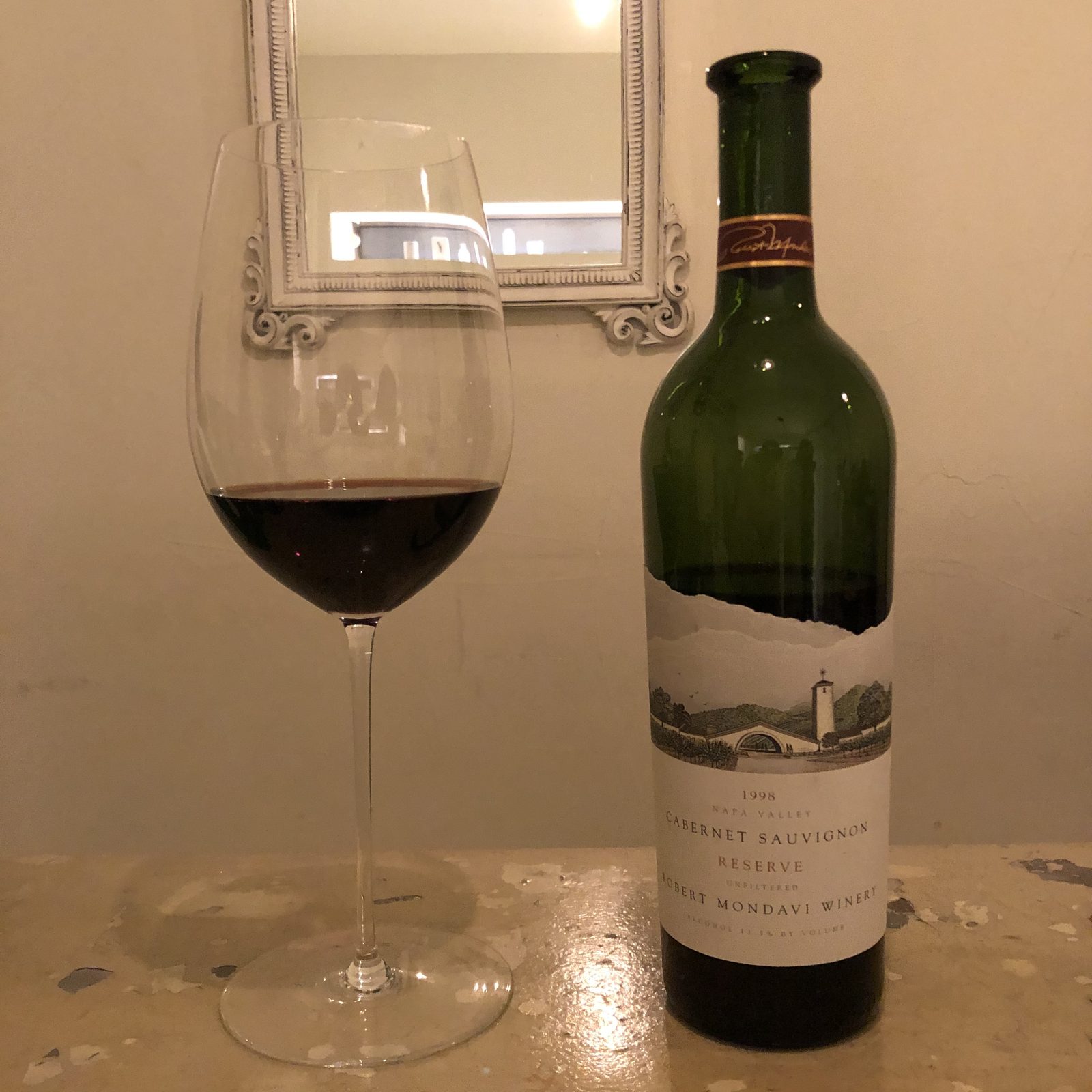
Every region keeps a list of years it would rather not discuss, and in Napa the 1998 sits near the top. El Niño ran the whole growing season: roughly twice the normal rainfall, eighteen nights of frost, cold weather through bloom, then a couple of record heat spikes to unsettle whatever had survived. Harvest ran late and nervous. The critical scores that followed were the lowest the valley had seen in a decade, and the vintage was filed away as a write-off before most of the wines had finished their first year in bottle.
That verdict was about ripeness, and it was fair on its own terms. What it could not measure was what a difficult year does to a wine’s shape. Cool vintages in Napa give lower alcohol, higher acid, firmer tannin and less flesh — a profile that reads as thin at three years and as structure at twenty.
The Wine
The Reserve is Robert Mondavi’s Oakville statement, and in 1998 the blend ran 84% Cabernet Sauvignon with Cabernet Franc, Merlot and a trace of Petit Verdot filling out the rest. Around 70% of the fruit came from the Oakville district, with roughly 40% from To Kalon — the vineyard directly behind the winery, and the reason the estate stands where it does. It went into 85% new French oak and was bottled unfiltered, which the label states plainly beneath the cuvée name.
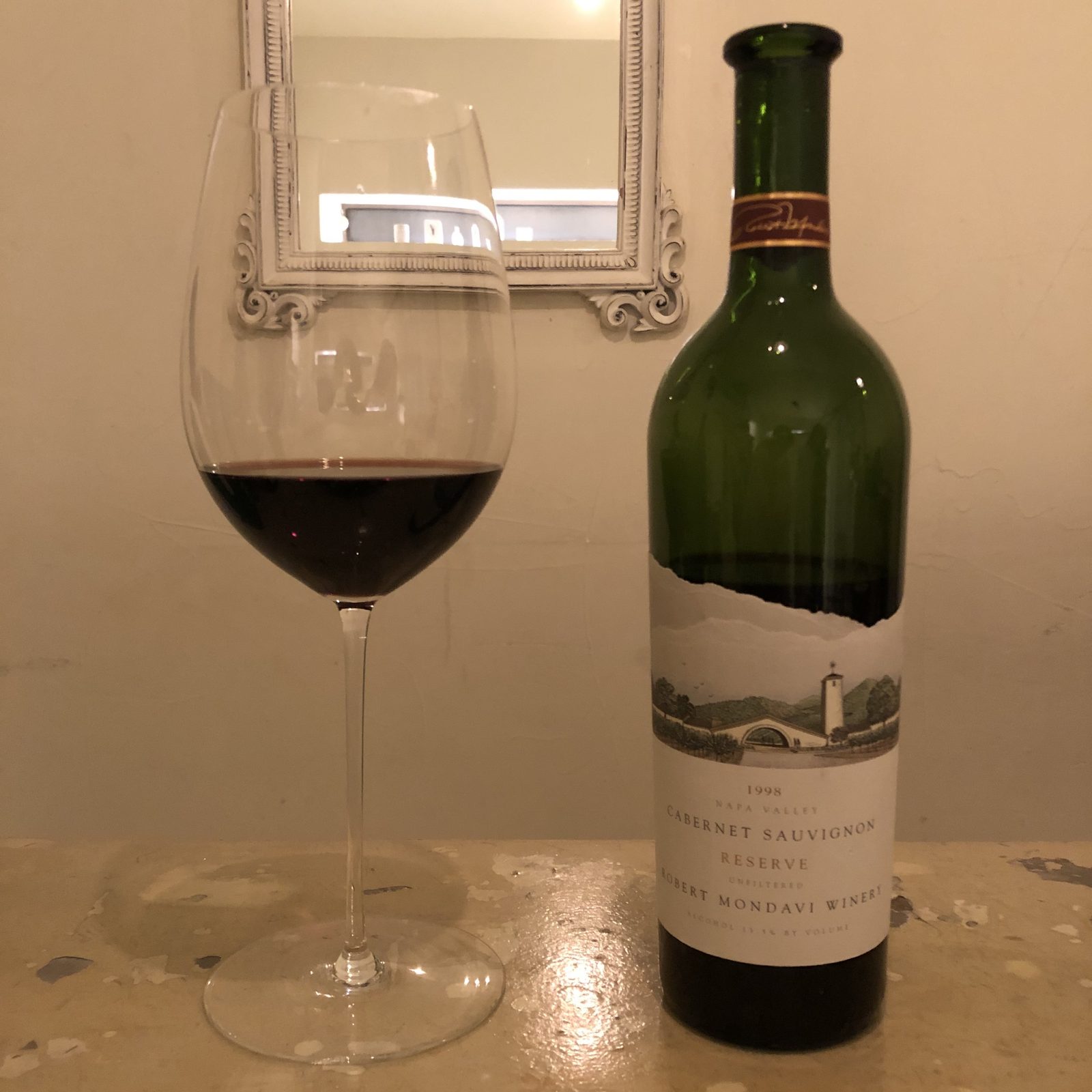
The engraving on the label is the winery’s own front elevation: the long arch and the bell tower Cliff May designed in 1966, drawn as a line etching against the Mayacamas. It is one of the few American labels that shows a building rather than a château, and it has barely changed in half a century.
In the Glass
Opened at home on a Friday evening, twenty-three years from the vintage.
The colour had gone fully to garnet, bricking at the rim, with none of the purple a Napa Cabernet carries in its first decade. The nose opened dusty and savoury rather than sweet — dried blackcurrant, cedar, tobacco leaf, a little dried mint and a graphite edge underneath. The new oak had folded itself entirely into the wine; what was left of it read as pencil shavings, not vanilla.
On the palate the cool year showed exactly where it was supposed to. Medium-bodied rather than plush, with acidity still bright and tannins that had gone fine and dusty without going soft. There was cassis in the middle, but it was dried fruit rather than fresh, and the finish was long, dry and faintly herbal — bay leaf, cigar box, a mineral coolness at the very end.
A wine with no fat left to lose, and none to lose in the first place. The years that get marked down on release are the ones built on acid and tannin instead of sugar, which is another way of saying they are the ones that survive. Elsewhere in this archive, the same valley in 1999 and a magnum from the same year make the comparison directly. A week later the Opus One 1999, the Oakville venture Robert Mondavi built with Baron Philippe de Rothschild, came out of the cellar.
Alongside it that evening, a Champagne from the Côte des Bar.