Two Signatures on One Label
Opus One 1999
- Producer
- Opus One
- Appellation
- Oakville
- Grapes
- Cabernet Sauvignon, Cabernet Franc, Merlot, Malbec, Petit Verdot
- Tasted
- 5 March 2021
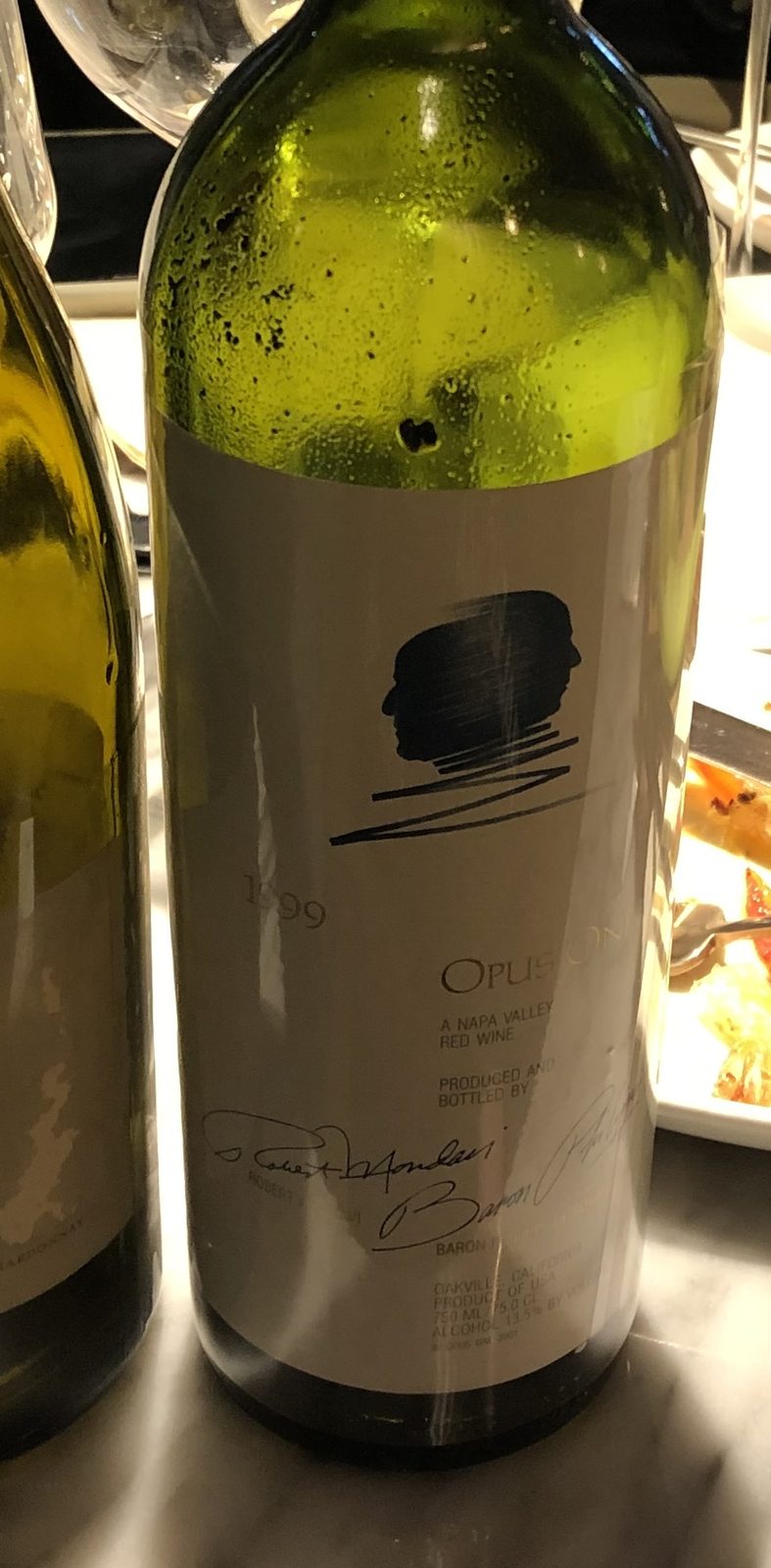
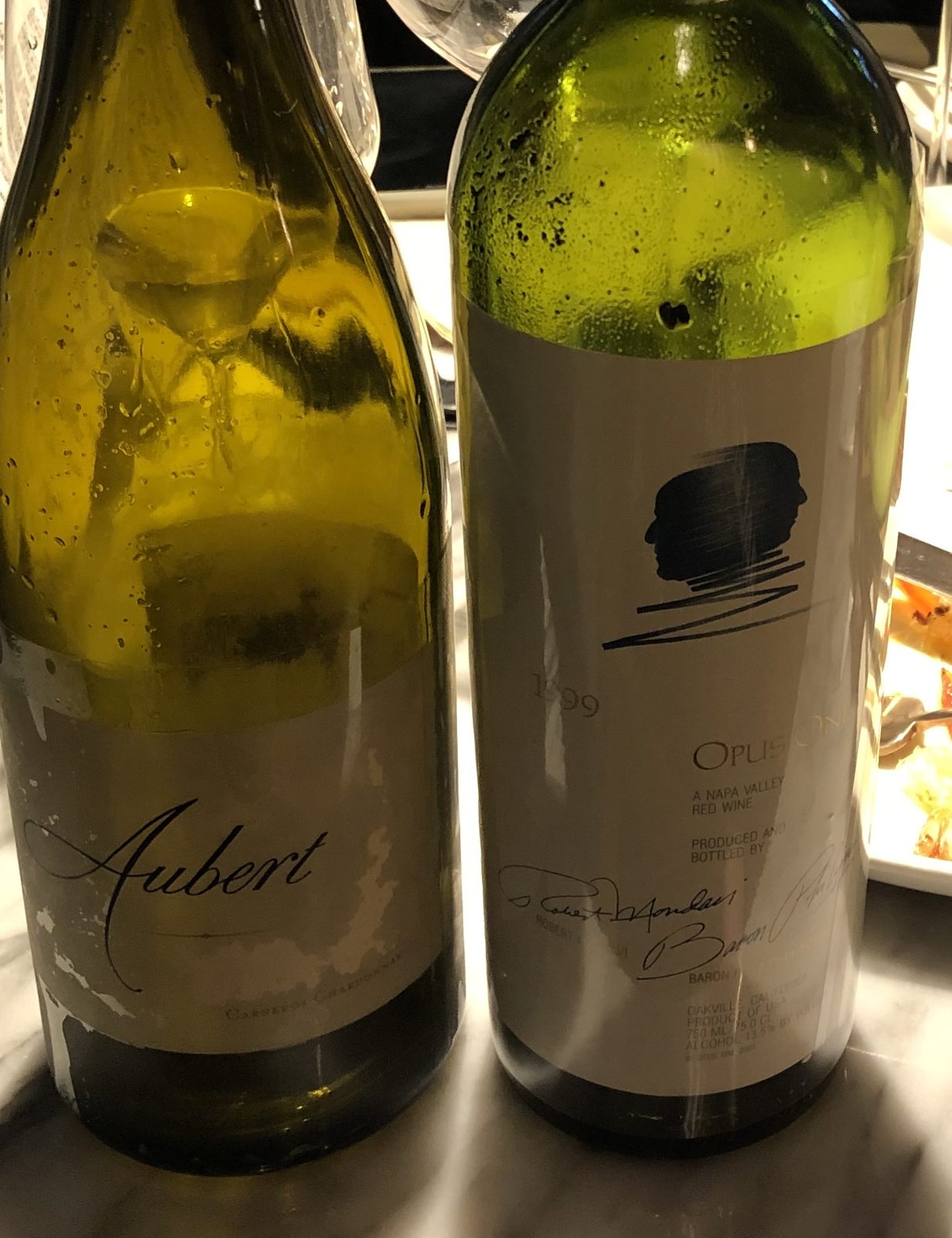
The label is the clearest statement of intent in Napa. Two men’s profiles in silhouette, overlapped so that they read as one head; two signatures beneath, Robert Mondavi’s and Baron Philippe de Rothschild’s, side by side. Nothing else — no château, no vineyard, no varietal. The partnership was agreed in 1979, and the first bottling carried both names because the point of the venture was that neither name alone would do.
By 1999 the arrangement was twenty years old and the wine was being made jointly by Tim Mondavi and Patrick Léon of Mouton Rothschild — two cellars’ instincts negotiated bottle by bottle. Michael Silacci would take over the winemaking in the years that followed; this bottle belongs to the earlier arrangement.
The Year
1999 in Napa began cool. Low temperatures pushed back budbreak and bloom, and spring rain during flowering cut the flower count — fewer berries per cluster, and more concentration in the ones that set. The summer stayed moderate rather than hot, so ripening went slowly and evenly, and a long warm autumn finished the job without ever forcing it.
That is the profile of a classic Napa vintage rather than a dramatic one: moderate alcohol, firm acid, tannin that arrives structured rather than sweet. It is also the year immediately after the one that gave the Mondavi Reserve 1998 its difficult reputation — the same district, one vintage on, and a great deal kinder.
In the Glass
Poured over dinner, twenty-two years from the vintage.
Deep garnet with a distinctly bricked rim. The nose was Bordeaux in shape and Napa in fruit: cassis and dark plum, but wrapped in cedar, cigar box, dried tobacco and a graphite mineral note, with a sweet, cool herbal thread — bay and dried mint — running under it. There was no oak left as oak.
The palate was medium-full and firmly built, with tannins that had gone completely fine-grained without collapsing, and acidity that kept the whole thing upright. The fruit had moved to the dried end of the register, and the finish was long, savoury and dusty, closing on tobacco and graphite rather than on fruit.
Twenty-two years in, the two accents had stopped arguing. The structure and the savoury finish are the Bordeaux half of the conversation; the depth and sweetness of fruit at the core are unmistakably Oakville. Elsewhere in this archive, Napa Cabernet from the same year and a magnum from 1999 show the vintage without the French half of the argument.