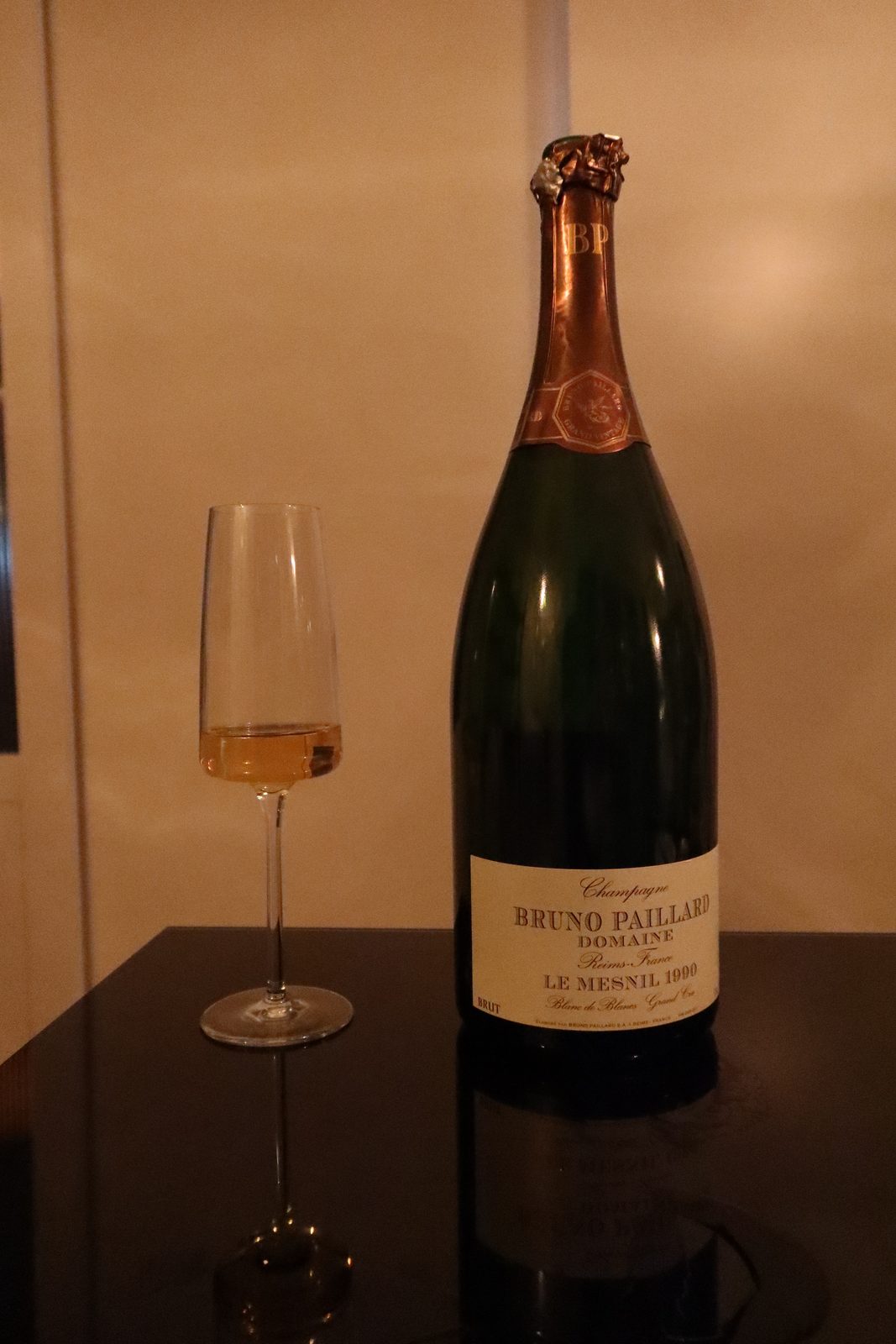
The Youngest House, the Oldest Bottle
Bruno Paillard Blanc de Blancs Grand Cru Le Mesnil 1990 (Magnum)
- Producer
- Bruno Paillard
- Appellation
- Champagne AOC
- Grapes
- Chardonnay
- Tasted
- 2 April 2021
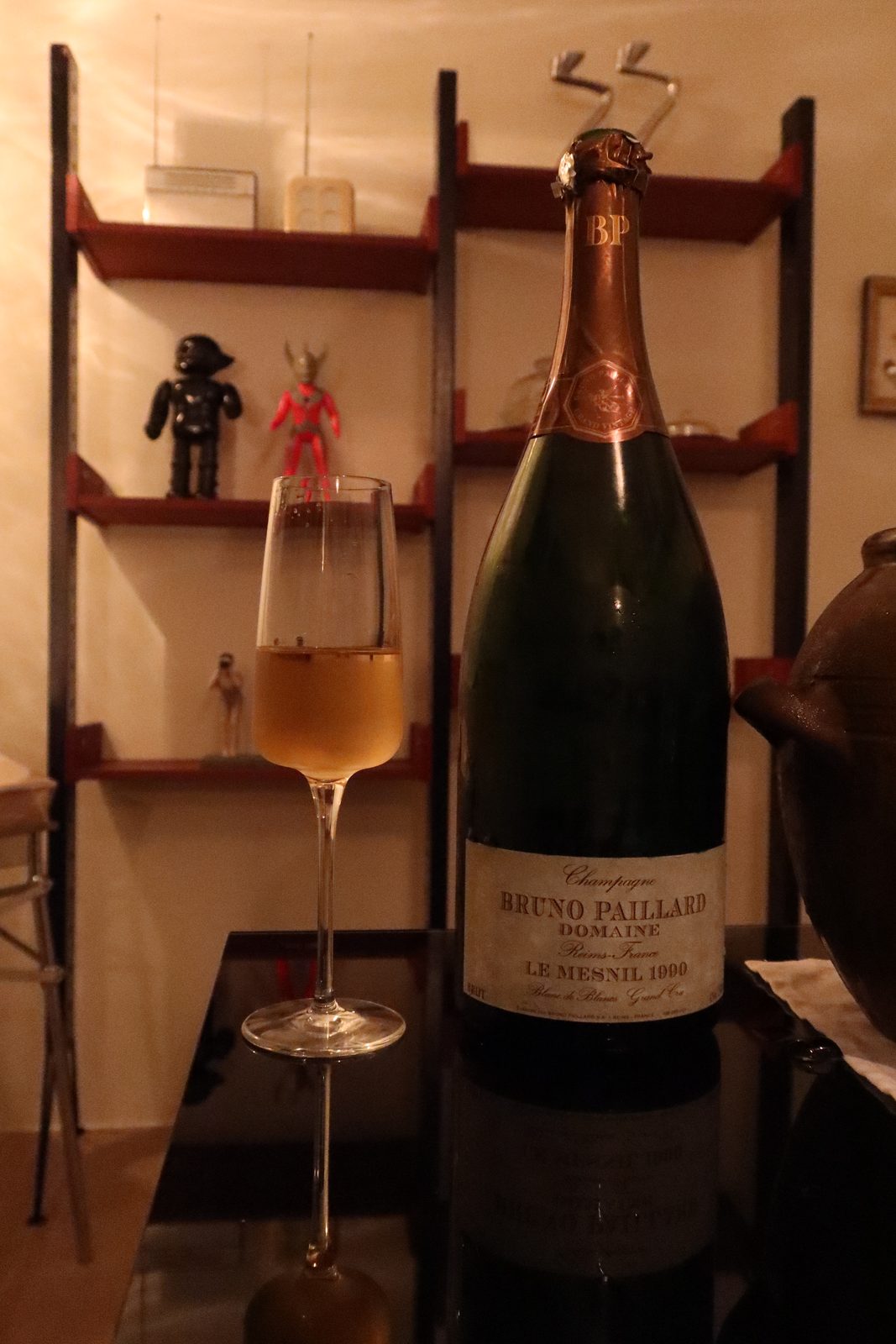
Bruno Paillard was twenty-seven when he started his own Champagne house in 1981, in Reims, with very little capital and a famous anecdote about selling an old Jaguar to fund it. Nobody had founded a house of any consequence in Champagne since the war; the region ran on names that were centuries old. His answer was to make a virtue of having no past — only first pressings, ageing far longer on the lees than the rules required, low dosage, and, from the early years, the date of disgorgement printed on every bottle, which no other house was then doing and most still do not.
The house’s own vineyard grew over time to thirty-two hectares across fifteen crus, twelve of them grand crus, with Le Mesnil-sur-Oger among them. The Le Mesnil Blanc de Blancs is the purest statement of that holding: one village, one grape, one vintage. The 1990 was made only in magnum.
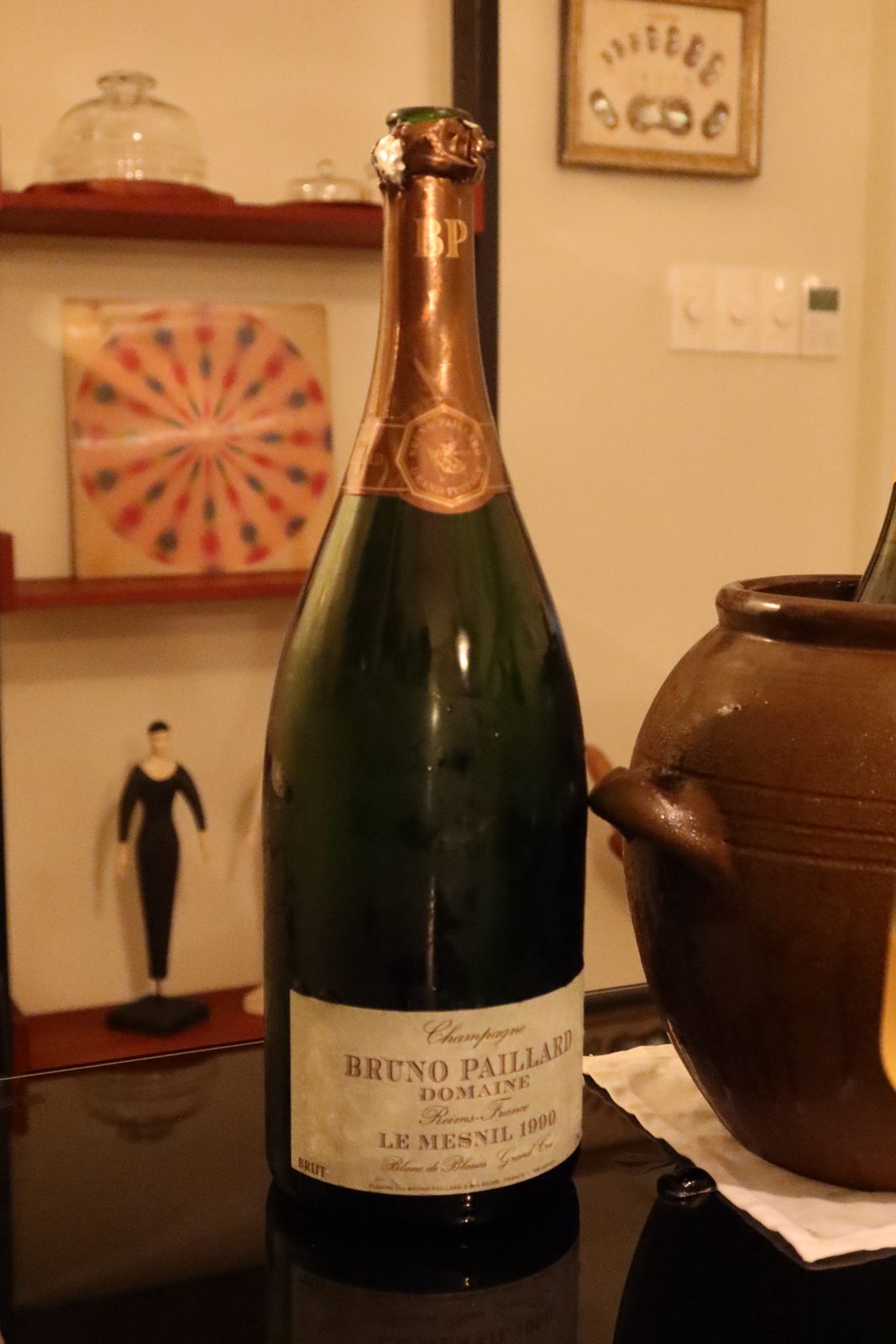
1990
Champagne’s 1988, 1989 and 1990 are usually spoken of together, as the trio that closed one era and opened another. 1990 was the ripest and most generous of the three: a spring frost cut the crop early, a hot summer built sugar, and the grapes came in with the kind of concentration that makes a vintage wine capable of decades. The best blanc de blancs from that year have aged into something closer to old white Burgundy than to Champagne as it is usually understood — honeyed, nutty, almost weightless in their mousse.
In the Glass
It opened an evening at home that went on to a Giacosa Riserva 2000 in magnum, a Sine Qua Non Grenache and a Clos de l’Arlot, and it was the oldest thing on the table by a decade.
Thirty years from the harvest, the colour was a deep, burnished gold. The mousse had thinned to a fine, slow bead — present, but no longer the point. The nose had gone fully into maturity: brioche and toasted hazelnut, honey, beeswax, dried apple, lemon curd, a faint smokiness and, underneath, the chalk of the village. On the palate it was rich and rounded, more vinous than sparkling, with the acidity of the Côte des Blancs still running through the middle to hold the whole thing upright. The finish was long, saline and nutty. Nothing tired, nothing oxidised beyond what thirty years is meant to give.
The village of Le Mesnil appears elsewhere in this archive in the hands of Salon — the 1996, two weeks before this bottle, and the 1988 in magnum. Salon’s Le Mesnil is austere by design. Paillard’s, from the vintage it was, had gone another way: generous, mellow, complete. Same chalk, different temperament.