The Anemones, Under Another Name
Perrier-Jouët Belle Epoque (Fleur de Champagne) 1990
- Producer
- Perrier-Jouët
- Appellation
- Champagne
- Grapes
- Chardonnay, Pinot Noir, Pinot Meunier
- Tasted
- 4 June 2021
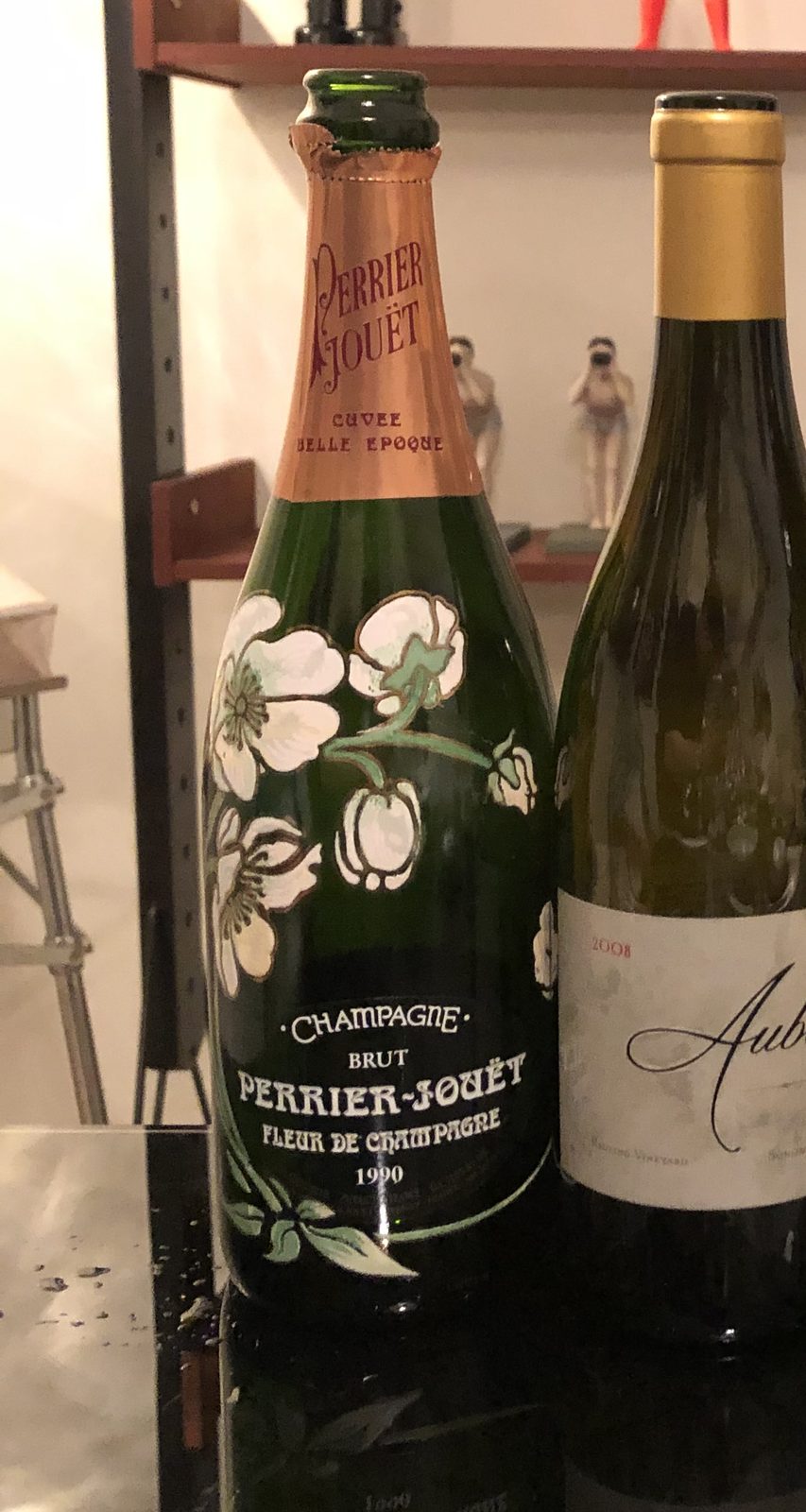
In 1902 the president of Perrier-Jouët asked Émile Gallé, the glass artist of the Art Nouveau movement, to decorate a champagne bottle. Gallé delivered four magnums enamelled with a spray of white Japanese anemones, and the house decided the process was too expensive to repeat and put them away. They stayed in the cellar for sixty years. The chef de cave André Baveret came across them in 1964, and the house built its prestige cuvée around the design: the first Belle Epoque was the 1964 vintage, launched in 1969 at Duke Ellington’s seventieth-birthday party in Paris.
In the United States the same wine was sold, until the early 2010s, as Fleur de Champagne — the anemones on the bottle, the flower in the name. The reason is usually put down to a trademark question in that market, though the house has never made much of it. This bottle carries the American name, which means it crossed the Atlantic before it crossed the Pacific.
Perrier-Jouët is unusually Chardonnay-heavy for a house of its size, with more than half its own vines in the grands crus of Cramant and Avize, and Belle Epoque follows that lean: around half Chardonnay from Cramant, Avize and Chouilly, most of the rest Pinot Noir from Mailly, Aÿ and Verzy, and a small share of Meunier from Dizy.
The Third of the Trilogy
1990 closed the run of three great Champagne vintages that began in 1988. It was a strange year to live through. The mildest winter in thirty years brought an early budbreak, then four nights of frost in April hit nearly half the vineyard. Flowering was late and uneven. And then the summer turned long, hot and dry — the sunniest year since 1950 — without ever tipping into drought stress. The harvest ran from the middle of September, and despite the frost it was one of the largest on record, with sugars above 1989’s and acidity that stayed unusually high. The combination of ripeness and acid is why the year was compared to 1959 from the start.
The wine was made under Baveret, in his last years at the house, with Hervé Deschamps, who would succeed him, alongside.
In the Glass
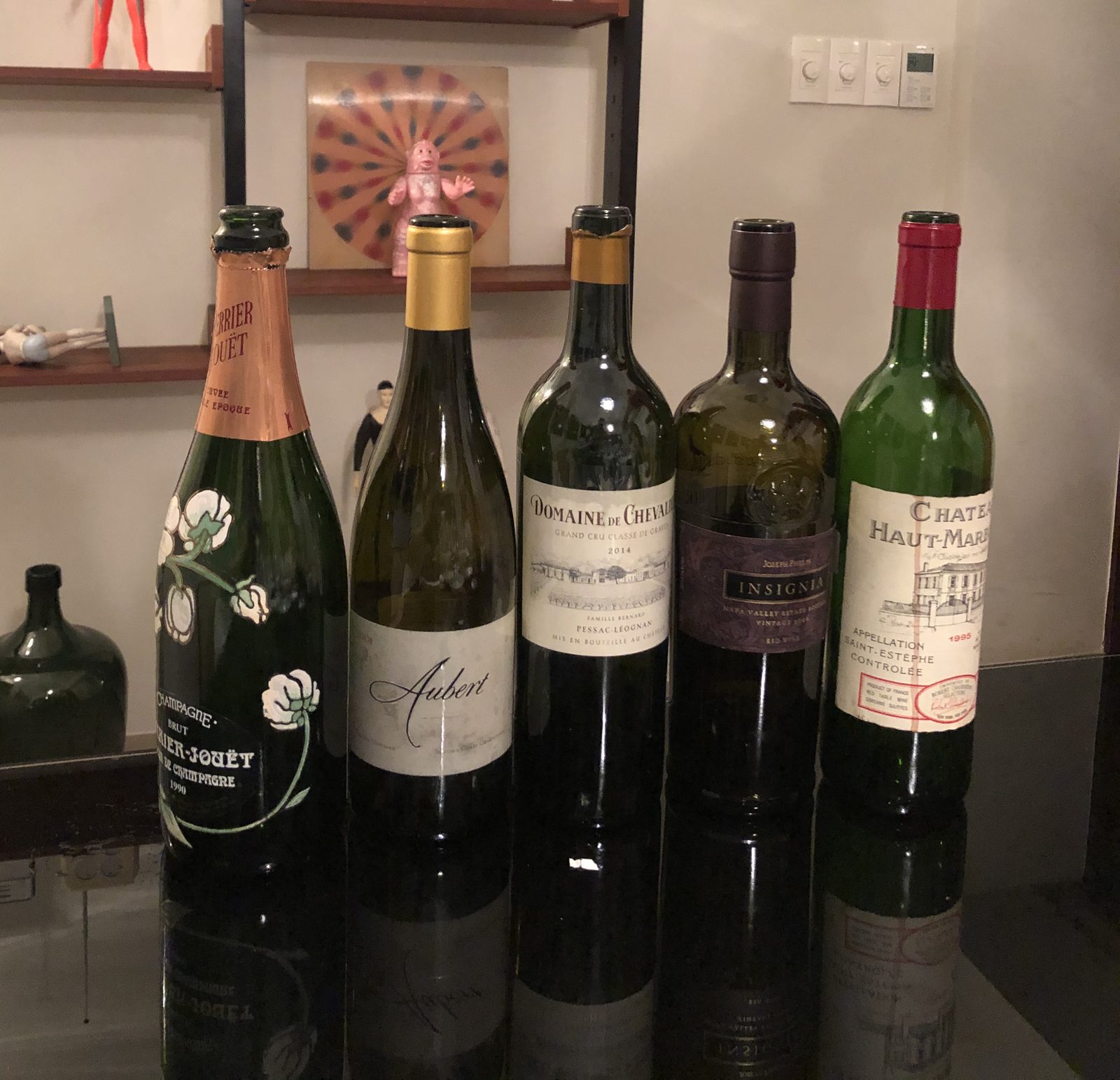
It opened a dinner that went on through a Domaine de Chevalier Blanc 2014, a 2008 Aubert Chardonnay, the 2006 Insignia and a 1995 Haut-Marbuzet — five bottles that ended the evening lined up empty on a black tabletop.
Deep gold, with a mousse that had gone quiet and fine. The nose was fully mature and entirely intact: toasted almond, baked apple, honey, a caramelised edge, and behind it the lime-flower and lemon-oil that the Chardonnay from the Côte des Blancs keeps longer than anything else. The palate was creamy and deep, the acidity of that odd year still doing its work underneath, with candied citrus and pastry on a long, gentle finish. No sign of the tiredness that some bottles of the 1990 trilogy have shown; this one was simply at the top of its arc and content to stay there.
Thirty years is a long time for a champagne that was made to be pretty. For other bottles from the same three-year run in this archive, see Salon 1988 in magnum, the Rare 1988 and the Bruno Paillard Le Mesnil 1990 — the last from the same vintage, opened two months earlier.