Reserve Wines Kept in Magnum
Bollinger Special Cuvée
- Producer
- Bollinger
- Appellation
- Champagne
- Grapes
- Pinot Noir, Chardonnay, Meunier
- Tasted
- 10 July 2021
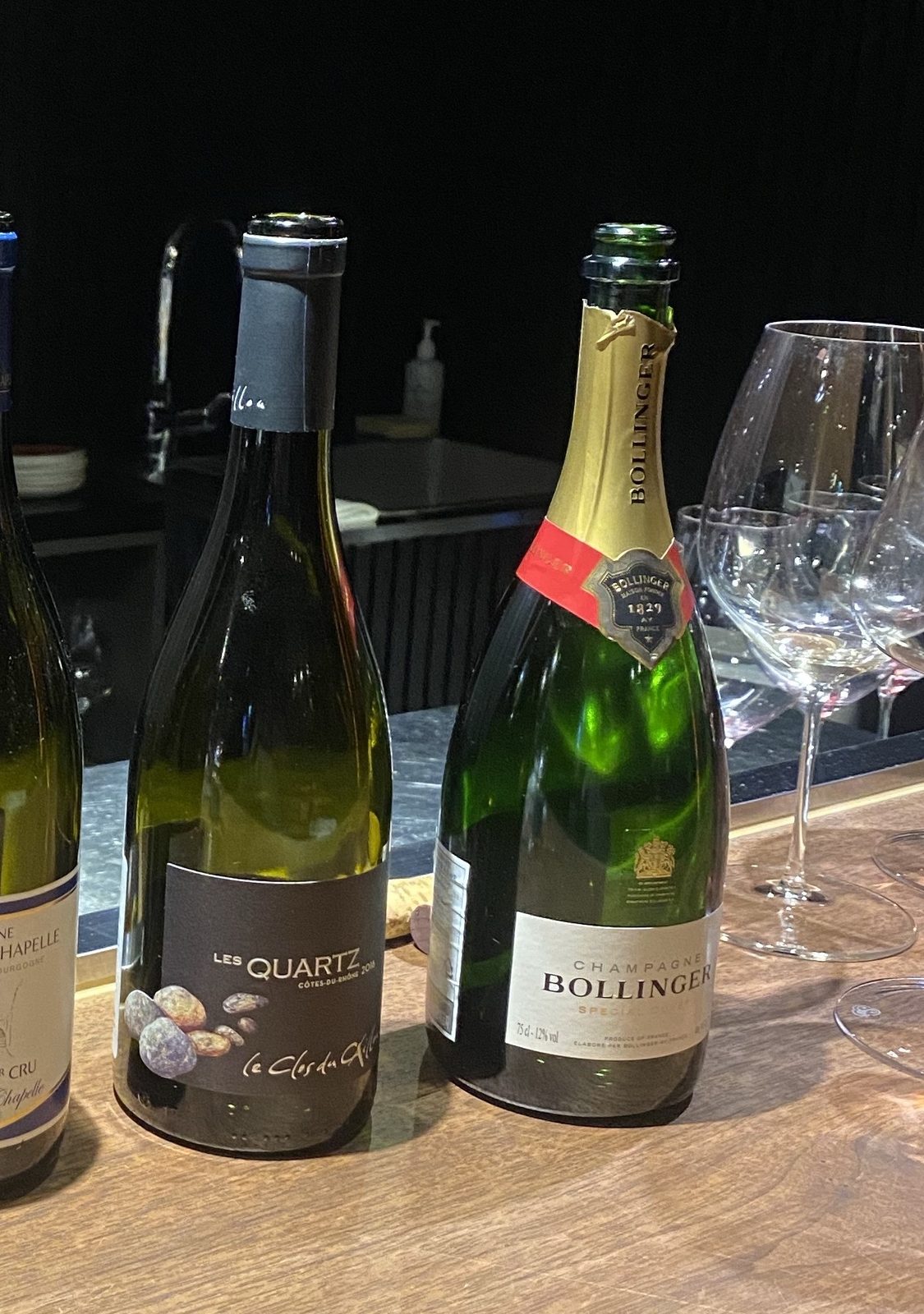
Bollinger was founded in Aÿ in 1829 by three men, only one of whom could put his name on the door: an aristocrat who was not permitted to trade, a cellarman named Renaudin, and a young German salesman, Jacques Bollinger, who married the aristocrat’s daughter and eventually gave the house its name. Queen Victoria granted the royal warrant in 1884. The wine that became the house’s calling card was its non-vintage brut, and the name it carries was coined in 1911 by the London agent, who felt that a wine of this weight deserved something better than a technical description. Special Cuvée was his solution, and it has stuck for over a century.
The person most associated with the house was Lily Bollinger, who ran it from her husband’s death in 1941 until 1971, expanded the vineyards, bicycled through them, and left behind the most quoted line about when one ought to drink Champagne. The house is still in the family’s hands, with around a hundred and eighty hectares of its own vines, most of them Pinot Noir in Aÿ, Verzenay and the villages around them, supplying well over half of its needs — an unusually high proportion for a house of its size.
What Is in the Blend
Special Cuvée is about sixty percent Pinot Noir, with a quarter Chardonnay and the rest Meunier, drawn from some sixty villages, the large majority of them grand or premier cru. Roughly half of any bottle is reserve wine, and this is where the house does something nobody else does at scale: a portion of those reserves is kept not in tank but in magnums, under natural cork, for anywhere from five to fifteen years. Each magnum is hand-riddled and disgorged before its contents go into the blend. A share of the base wines — the lots that would otherwise have gone into the vintage wine — is fermented in old, small oak barrels maintained by the house’s own cooper. The malolactic is done, the wine spends around three years on its lees, and the dosage has been trimmed over the last decade to somewhere between six and eight grams.
The result is the most vinous of the grande-marque non-vintage wines — golden, full, structured, with the roasted-apple and brioche character that comes from Pinot Noir raised in wood. A bottle on sale in the summer of 2021 would have been built mostly on the 2016 and 2017 harvests, with the reserves reaching back much further.
In the Glass
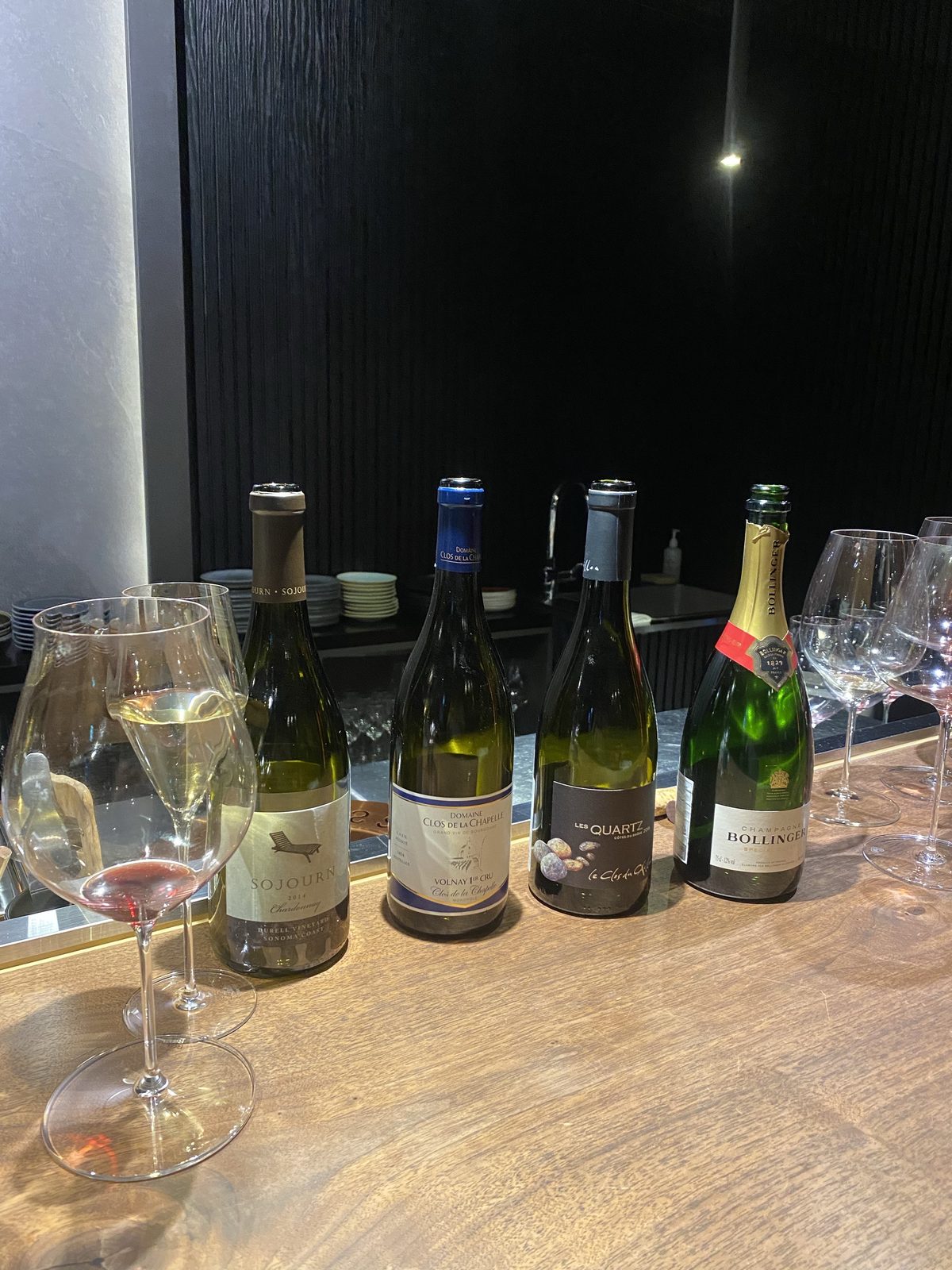
Poured alongside three still wines on a counter — a Durell Vineyard Chardonnay, a Volnay premier cru and a Côtes-du-Rhône from inside the walls of Châteauneuf — rather than in the usual opening slot.
Deep gold with a fine, dense bead. The nose was baked apple and pear, white peach, a walnut and hazelnut note from the oak-raised reserves, fresh bread, a little spice. The palate was full and firm — this is a Champagne with the structure of a still wine — with the mousse pillowy rather than sharp, and a dry, mineral finish that kept it from feeling rich. It is a wine that most people drink too young, and a year or two in a cellar does it visible good; this bottle showed the frame a little more than the flesh.
The house’s vintage wines are elsewhere in this archive from a different table: the R.D. 2002 and, opened some months after it, the La Grande Année 2002 — the same base wine at two different points in its life, with the Special Cuvée as the house’s everyday version of the same argument.