Five Hectares Behind a Wall
Domaine Prieuré-Roch Nuits-Saint-Georges 1er Cru Le Clos des Corvées 2011 (Monopole)
- Producer
- Domaine Prieuré-Roch
- Appellation
- Nuits-Saint-Georges 1er Cru
- Grapes
- Pinot Noir
- Tasted
- 16 July 2021
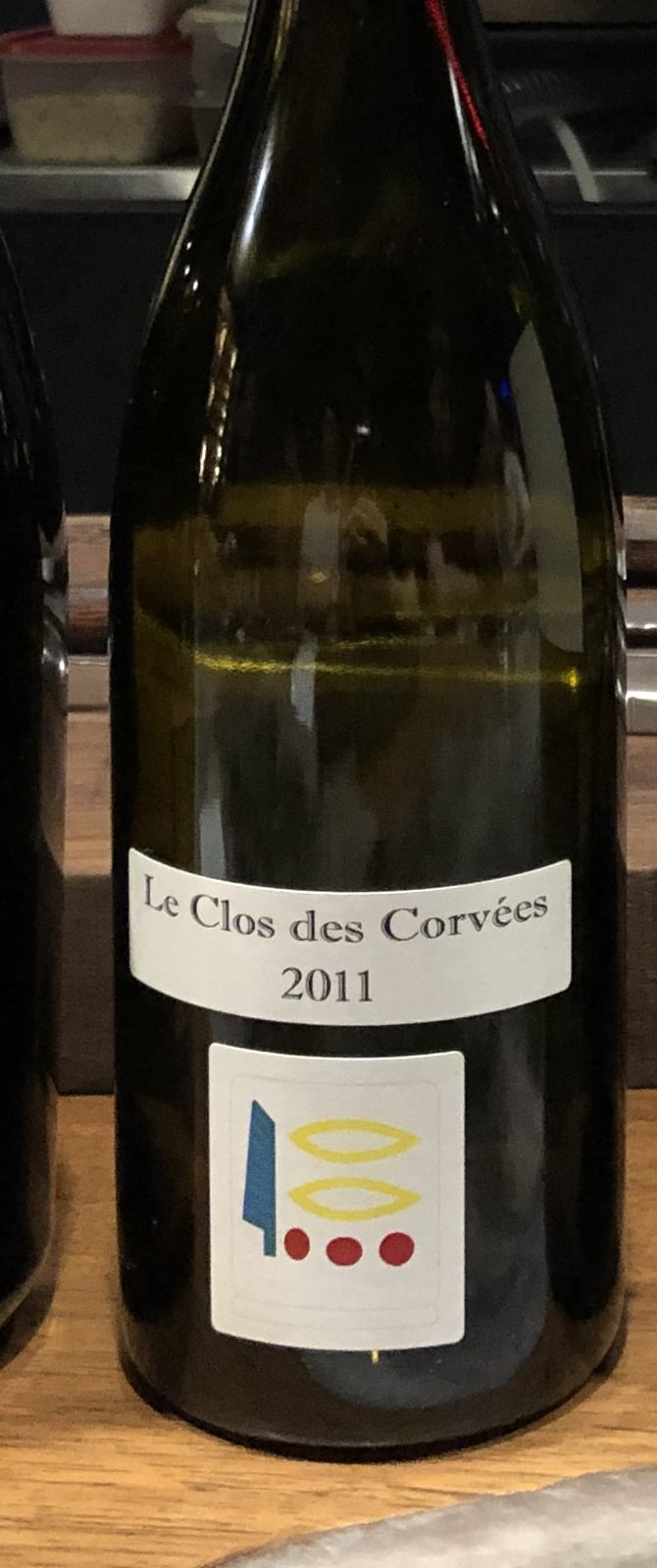
The label says almost nothing. A strip of white with the name of the vineyard and the year, and beneath it a small square bearing a pictogram in the manner of Egyptian hieroglyphs — a blue blade, two yellow eyes, three red dots — that Henry-Frédéric Roch chose as the domaine’s mark instead of a crest or a château. There is no appellation in large type, no producer’s name at the top. If you know, you know.
Roch himself is described more fully alongside his Chambertin Clos de Bèze 2005 in these pages: a member of the Leroy family who co-directed Domaine de la Romanée-Conti for a quarter of a century and, from 1988, made wine under his own name at a domaine that did things DRC could not — whole-bunch fermentation in wood with the wild yeasts, no fining, no filtration, and sulphur reduced to the point where the wines carry a warning about their fragility. He died in 2018, and the domaine has continued under the people he trained.
The Clos
Le Clos des Corvées is the domaine’s largest holding and its signature: a little over five hectares of premier cru at the southern end of Nuits-Saint-Georges, in the commune of Prémeaux, enclosed by a wall and held as a monopole. It is one of the biggest single-owner clos in the Côte, on the heavier, deeper soils of the lower slope that make the wines of this end of Nuits dark and structured. Roch farmed it organically from his first year and made from it a wine that has become the domaine’s calling card, as well as a second wine from the younger vines.
2011 was a year Burgundy did not know what to make of at the time. An early, hot spring pulled the vines a month ahead, a cool wet summer slowed them down, and the harvest came at the end of August — early enough that some growers picked before full ripeness and others waited into a rainy September. The wines were lighter, more aromatic, sometimes greener than the 2009s and 2010s around them, and the vintage was written off and then, over the following decade, quietly reconsidered. The same year at Louis Boillot’s Pruliers, a few hundred metres to the north, is elsewhere in this archive.
In the Glass
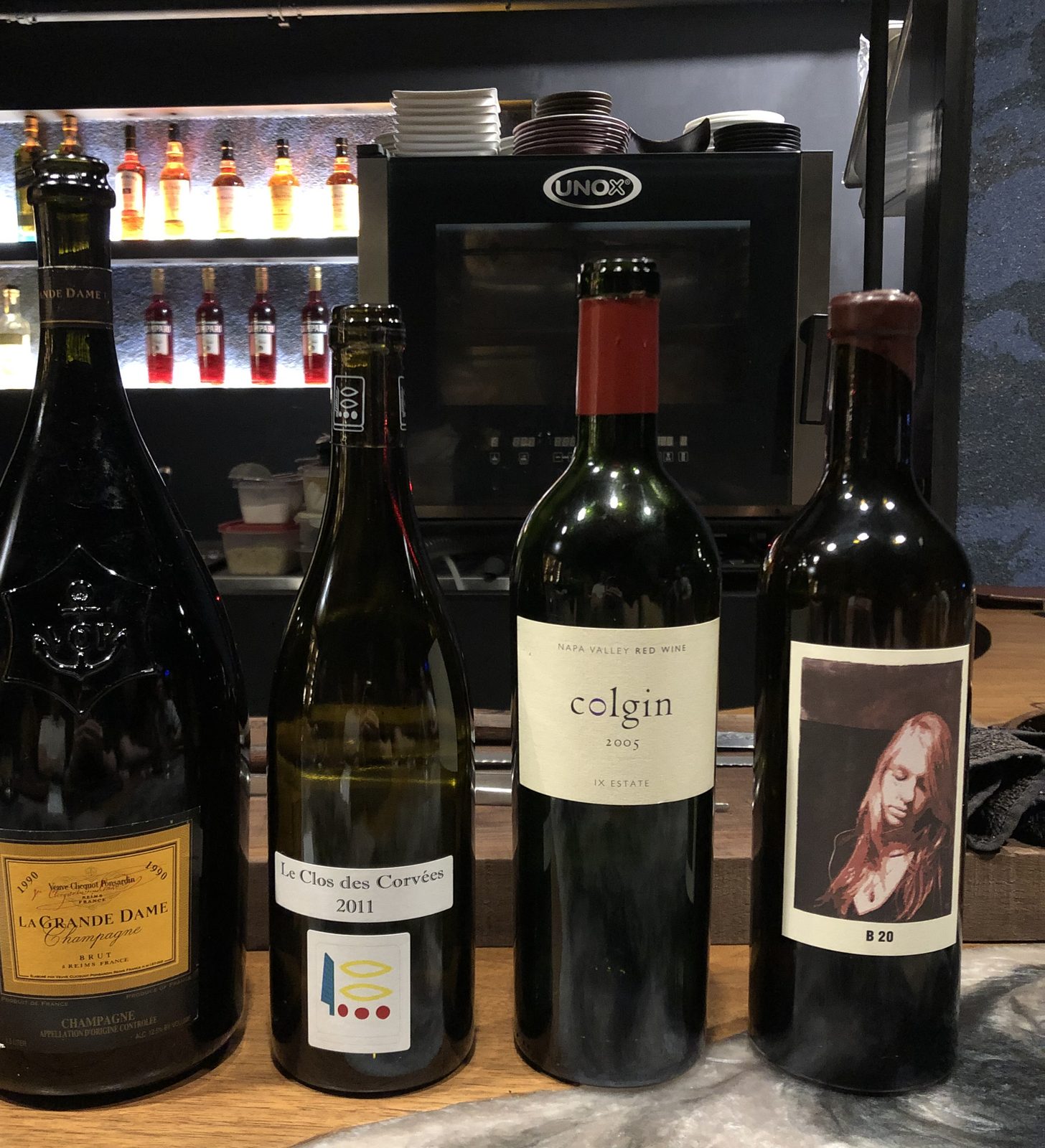
Opened at ten years, the one Burgundy at a counter dinner built around California — Colgin IX Estate 2005 and a Sine Qua Non — with a magnum of La Grande Dame 1990 to open.
The colour was a medium ruby, brighter and lighter than a Nuits usually is. The nose was the domaine’s: a lifted, almost ethereal red fruit — wild strawberry and cranberry — with the spicy, sappy, faintly green perfume that whole-bunch fermentation gives, then orange peel, dried flowers and an earthy, mushroomy note behind. There was a hint of volatility that added to the lift rather than detracting from it.
The palate was medium-bodied and remarkably supple for the appellation, the tannins fine and silky, the acidity fresh and prominent — the early year showing as brightness rather than as hardness. The whole-bunch character ran through the middle as a stemmy spice, and the finish was long, savoury and faintly bitter, in the way that the domaine’s wines are.
A wine that made the cool year into a virtue: light, perfumed, alive in the glass, and nothing like the stereotype of dark, tannic Nuits-Saint-Georges. Next to two Napa reds of enormous scale it was the quiet voice at the table, and it did not need to raise it. It held its own by being entirely itself.