The Widow's Name on a Magnum
Veuve Clicquot La Grande Dame 1990 (Magnum)
- Producer
- Veuve Clicquot
- Appellation
- Champagne
- Grapes
- Pinot Noir, Chardonnay
- Tasted
- 16 July 2021
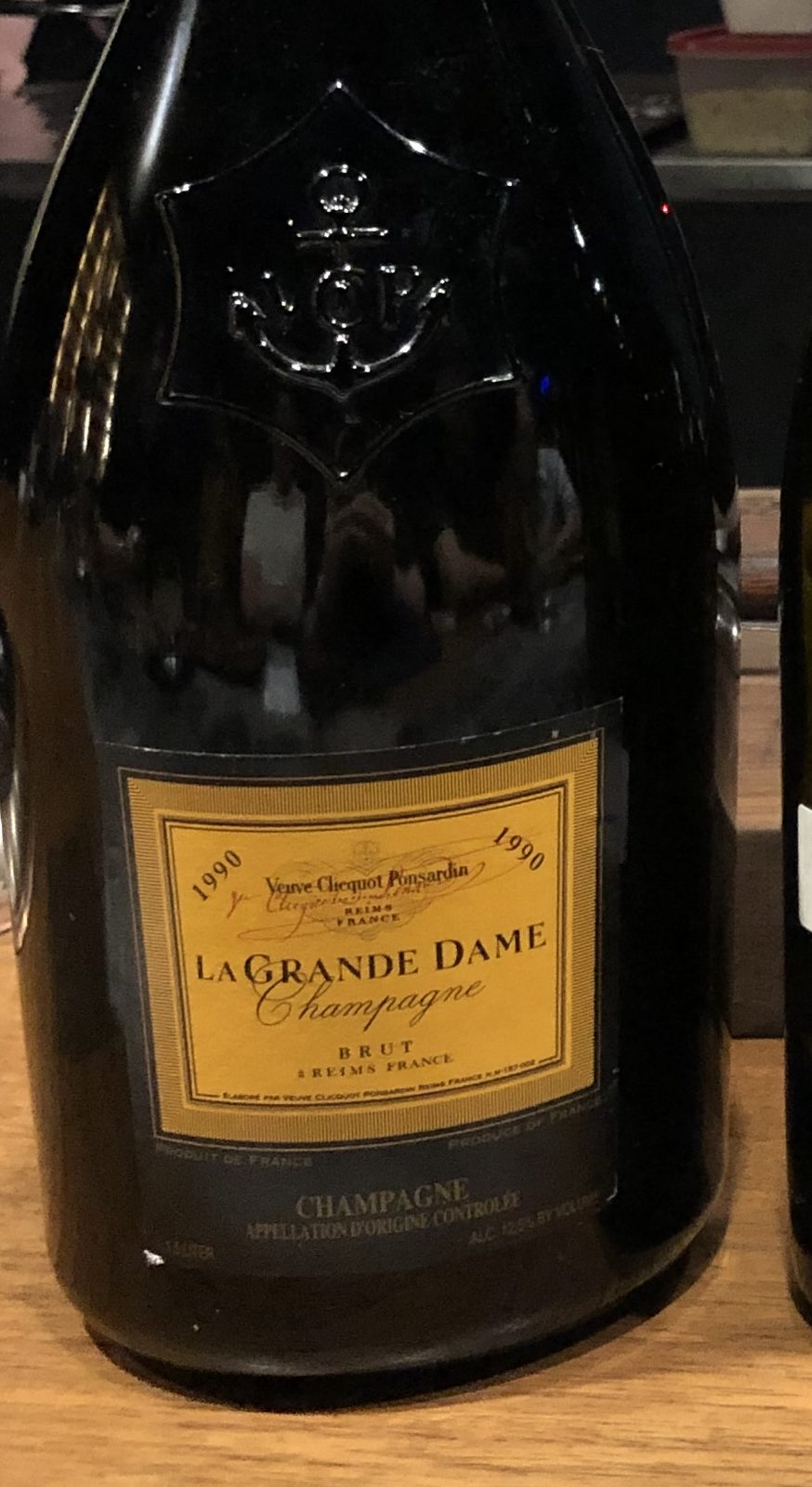
Barbe-Nicole Ponsardin married François Clicquot in 1798 and was a widow by 1805, at twenty-seven, with a small wine business and a child. She kept the business, against the advice of everyone around her, and over the following six decades built it into one of the great houses of Champagne — the woman who sent her Champagne into Russia through the Napoleonic blockades and whose cellars worked out the riddling table that made clear sparkling wine possible. In the town she was la grande dame, and when the house created a prestige cuvée it borrowed the name. The first vintage was 1962, released for the house’s bicentenary in 1972.
The blend has always leaned toward Pinot Noir, as the house style does, and draws on a fixed set of grand cru villages the house has owned vineyards in since Madame Clicquot’s day. In 1990 it was roughly three-fifths Pinot Noir from Aÿ, Bouzy, Ambonnay, Verzy and Verzenay, and two-fifths Chardonnay from Avize, Oger and Le Mesnil-sur-Oger — eight villages, all grand cru.
1990, in Magnum
1988, 1989 and 1990 are the trio of great Champagne vintages at the close of the last century, and 1990 was the ripe, sunny one — a warm year that gave generous, full wines with enough acidity to carry them. Thirty years on, the best of them are at a stage where the format of the bottle matters as much as the name on it: a magnum holds twice the wine under the same cork and ages at roughly half the pace, which is why old Champagne in large format so often tastes a decade younger than the same wine in a standard bottle.
In the Glass
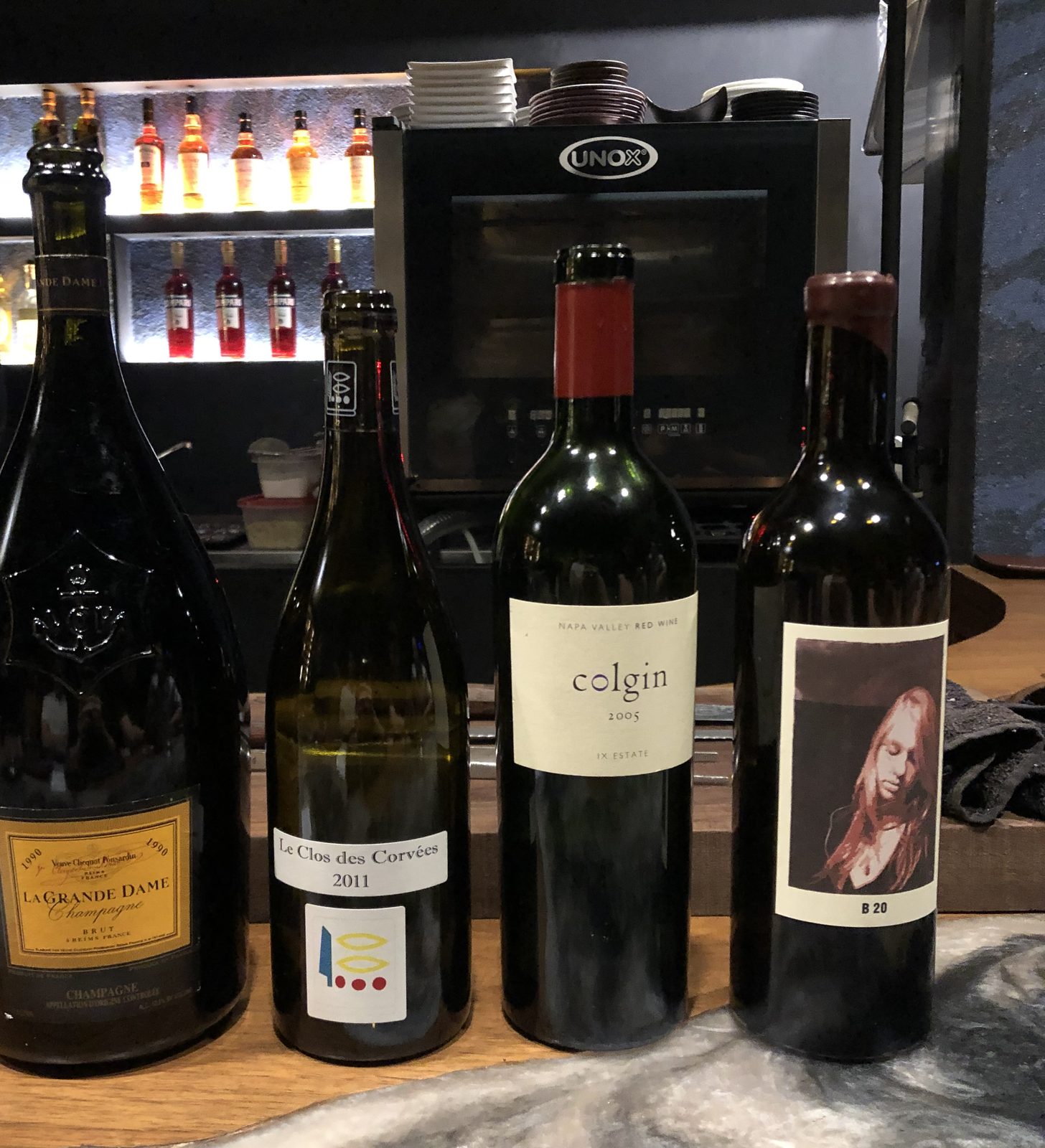
Opened at thirty-one years at a counter dinner where the reds were Californian — Colgin IX Estate 2005 and a Sine Qua Non Syrah — and the Burgundy was Prieuré-Roch’s Clos des Corvées 2011. The Champagne opened the evening.
The colour was a deep gold, well short of amber, with a mousse that had thinned to a gentle bead. The nose was the reward for the format: toasted brioche and hazelnut, dried apricot and quince, a little honey and beeswax, coffee and a smoky, gunflint edge, with the fruit still recognisable underneath the development.
The palate was full and vinous, Pinot Noir’s weight evident in the middle, the texture rich and the acidity still doing its job at the edges. Nothing about it was tired; the wine had the layered, savoury complexity of old Champagne without the oxidative flatness that often comes with it. The finish was long, on toast, dried fruit and a saline note.
A thirty-one-year-old Champagne from a warm year, drinking with the vigour of a wine ten years younger, which is exactly what a magnum is for. The other 1990s in this archive make an instructive set: Bruno Paillard’s Le Mesnil, all Chardonnay and also in magnum, and Perrier-Jouët Belle Epoque from a standard bottle.