Musigny in Short Trousers
Domaine Comte Georges de Vogüé Chambolle-Musigny Premier Cru 2004
- Producer
- Domaine Comte Georges de Vogüé
- Appellation
- Chambolle-Musigny Premier Cru
- Grapes
- Pinot Noir
- Tasted
- 21 October 2024
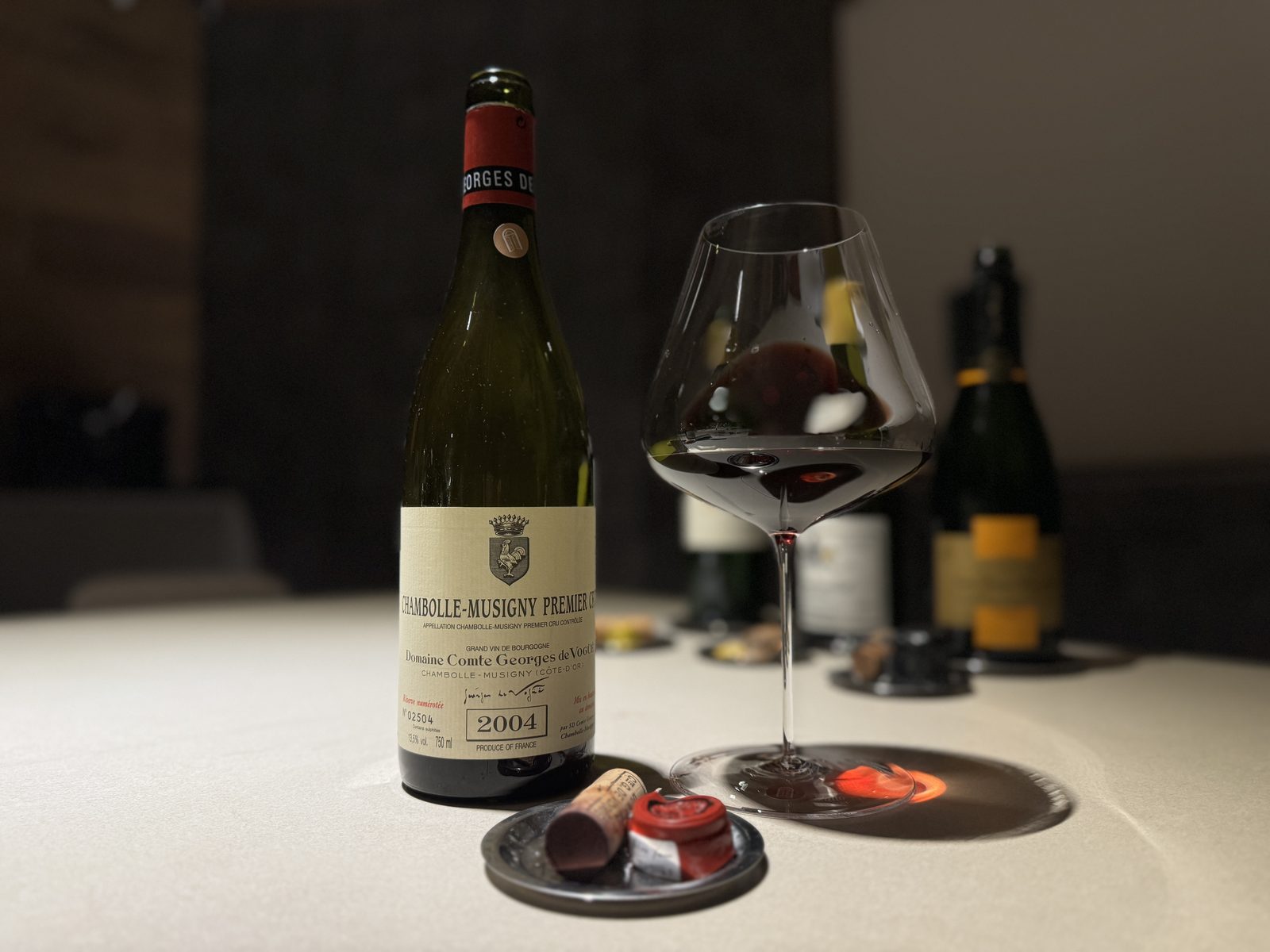
The label on this bottle is, in the most honourable way possible, a lie. Domaine Comte Georges de Vogüé owns some 7.2 hectares of Musigny — roughly two-thirds of the entire grand cru — and its “Chambolle-Musigny Premier Cru” does not come from a premier cru vineyard at all. It is Musigny, from vines younger than about twenty-five years, deliberately demoted so that only old vines feed the Musigny Vieilles Vignes. Meanwhile the domaine’s actual premier cru holdings, Les Baudes and Les Fuées, go the other way — down into the village wine. The whole hierarchy is shifted one rung, like a family where everyone wears the next sibling’s hand-me-downs.
The cuvée only exists because the domaine decided, from the 1995 vintage, to stop selling its young-vine fruit to négociants. Inside the house they call it “Musigny in short trousers”; the market prefers “Baby Musigny.” Either way, the vines graduate into the grand vin as they cross the age threshold, and the premier cru is permanently made from adolescents standing in grand cru soil.
2004, the Ladybird Vintage
This was François Millet’s cellar in full stride — native yeasts, nearly complete destemming, restrained new oak, no fining or filtration. But 2004 needed all of that discipline. A cold, wet August was rescued by September; hail on the 23rd of August forced the domaine to sort ruthlessly, down to a meagre 20–25 hl/ha. And over the whole vintage hangs Burgundy’s famous ladybird question — the swarm of coccinelles that year, and the green, pyrazine-edged streak that turns up in many 2004 reds. The science remains argued over; the bottle variation does not.
In the Glass
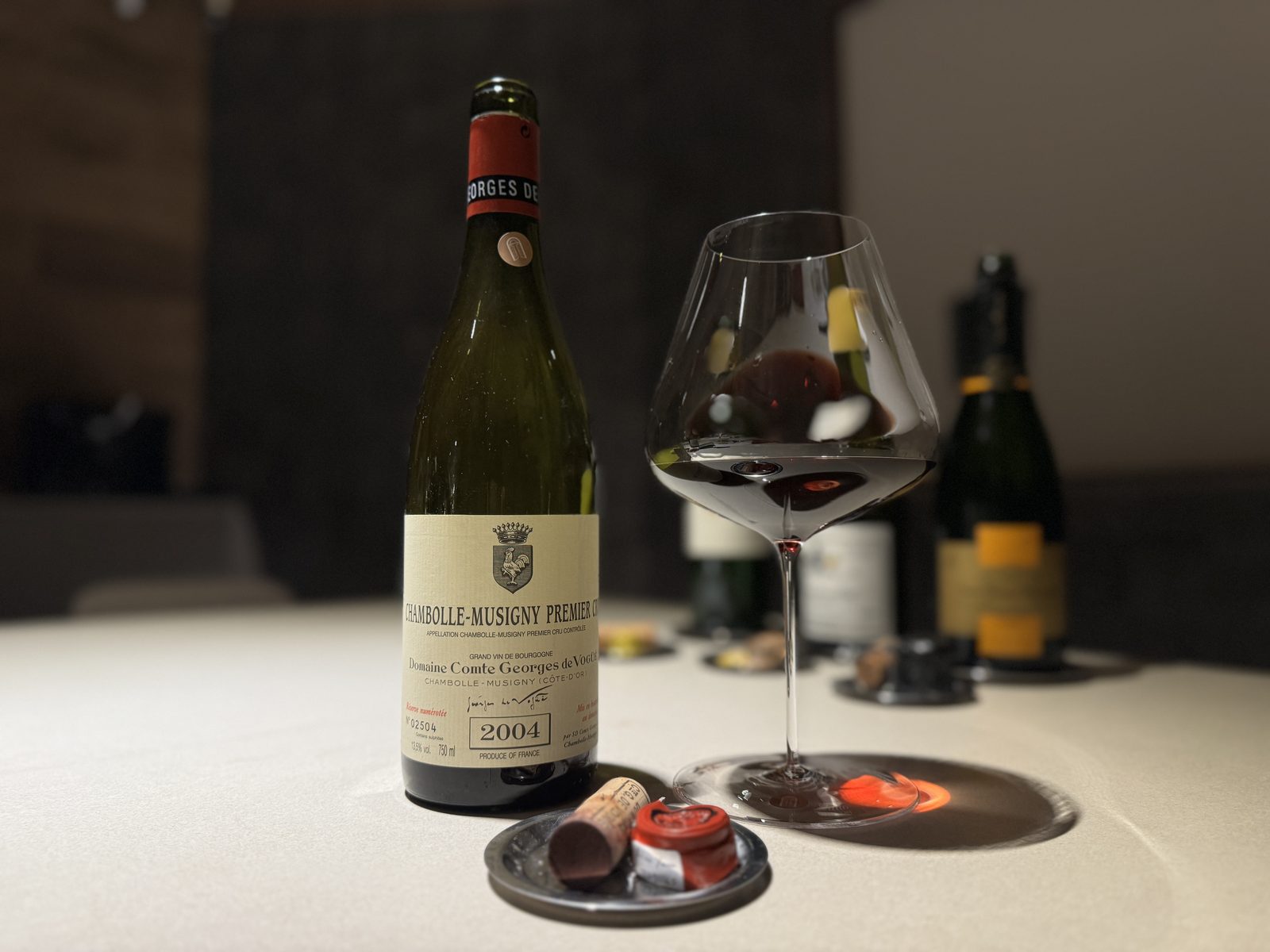
The relief, twenty years on: this bottle was clean. No herbaceous shadow, none of the vintage’s feared greenness. Instead, dark fruit folded into sous-bois, florals, and only the faintest herbal accent of proper maturity. The palate leaned on ripe, slightly weighty fruit with a rustic thread in the texture — this is not the silk of the domaine’s grand cru line, and the tannins signed off a little roughly — but it wore its village’s perfume convincingly.
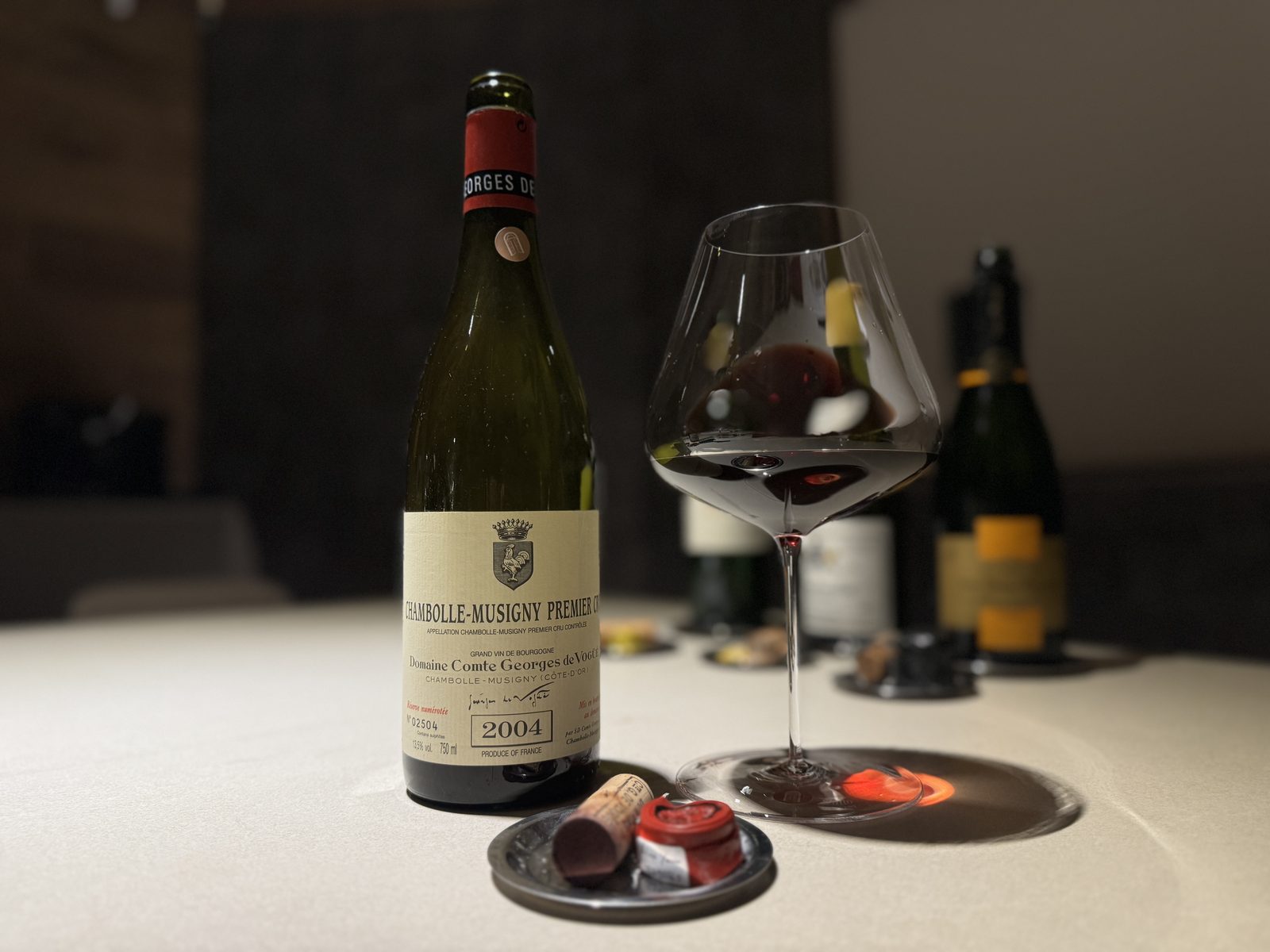
Fully mature now, at or just past its peak, and clearly happiest with food on the table. There is no argument left for holding bottles like this. The young vines have long since grown up — and so has the wine.