Every Vintage at Once
Jacques Selosse Substance Grand Cru Blanc de Blancs Brut
- Producer
- Jacques Selosse
- Appellation
- Champagne Grand Cru
- Grapes
- Chardonnay
- Tasted
- 17 July 2025
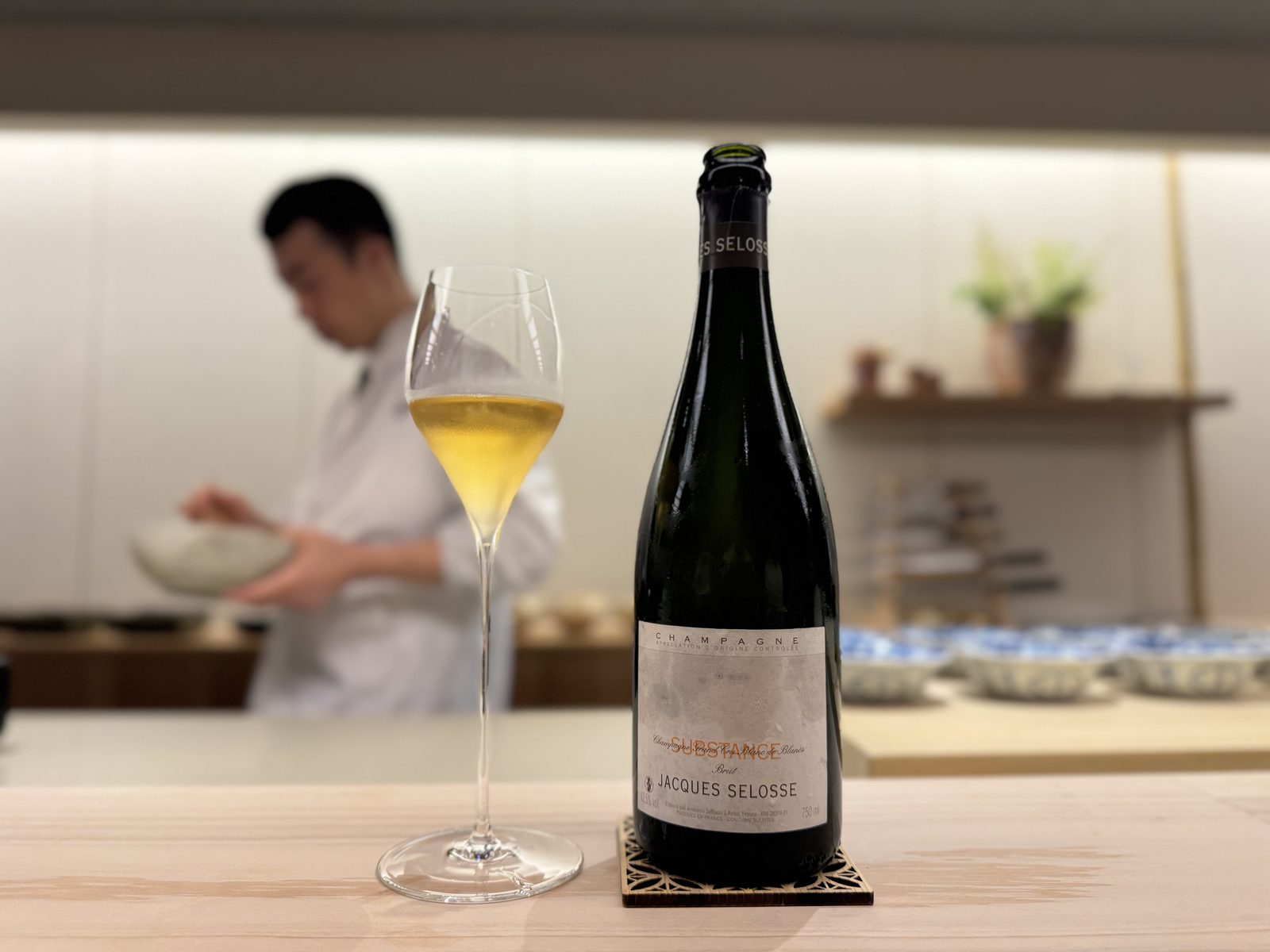
Substance carries no vintage on its label — not because the year doesn’t matter, but because nearly every year since 1986 is in the bottle. This is the cuvée where Anselme Selosse borrowed sherry’s solera method outright: each year a portion is drawn off for bottling and the reserve is topped up with new Avize base wine, a true two-stage perpetual reserve in cask and tank, with the youngest vintage making up roughly a fifth of the blend. Where V.O. is three villages and three years, Substance is one village — Avize, grand cru chalk — and four decades folded into one wine.
It is also the almost unique corner of Champagne where “it tastes like sherry” counts as praise. Selosse trained in Burgundy in the 1970s, came home to ferment his base wines in Burgundian oak with wild yeasts and a deliberately oxidative hand, and built a style that stands with its back to the rest of the region. Anselme retired in 2018; his son Guillaume now carries the house.
At the Counter
The setting was a sushi counter — hinoki wood, the chef mid-service — which happens to be one of the great arenas for this wine. Champagne and sushi is an old happy marriage, but Substance negotiates it differently: on weight, not freshness.
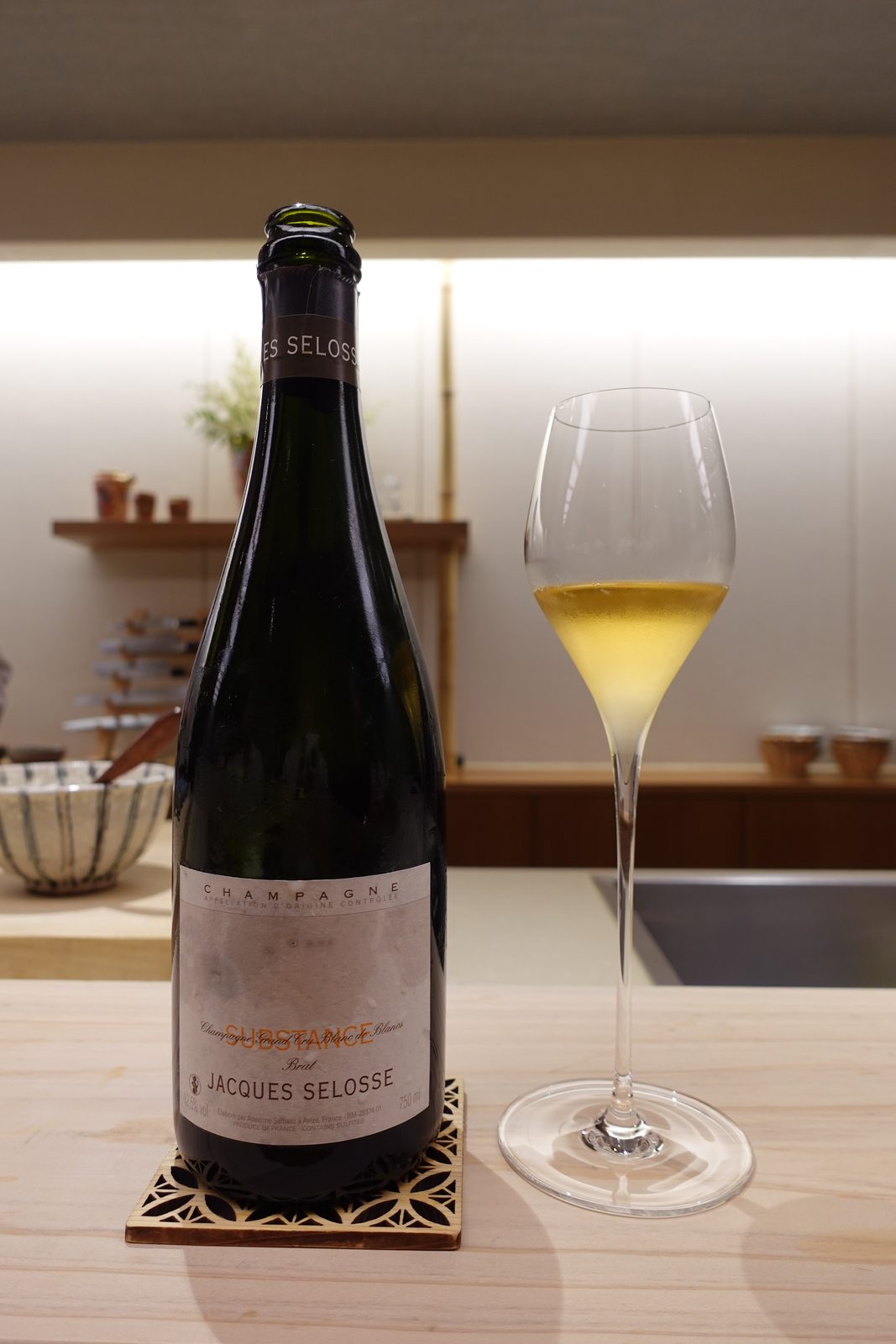
In the Glass
Deep gold from the first pour — solera colour, not age. The nose opens on the oxidative register that defines the cuvée: a fino-like patina, roasted hazelnut and marzipan, orange peel and marmalade, lemon confit, honeyed pear, brioche, beeswax, dried flowers and chamomile behind.
The palate is where you forget the bubbles entirely. Full-bodied, vinous, driven by concentration rather than mousse, with Avize’s blade of acidity and salt cutting straight through the patina — and a distinct savoury umami, somewhere between mushroom and soy, that explains the sushi affinity better than any theory. The finish runs long and saline, ending on nuts and citrus-peel bitterness.
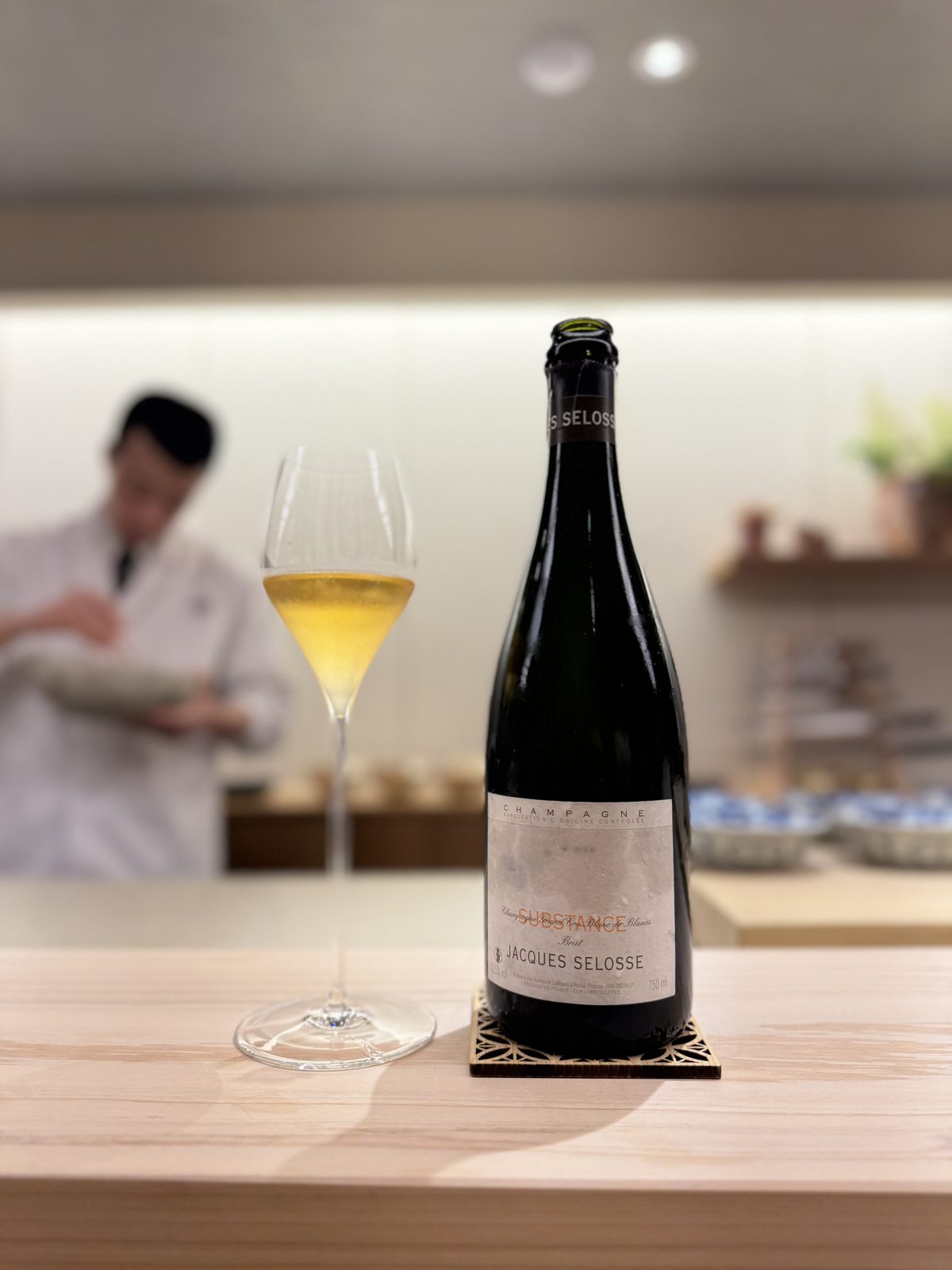
Against the delicate white-fish opening of the meal, the wine frankly wins the exchange; it finds its equals when the richer courses arrive — toro, uni, glazed anago. A Champagne that needs the food to reach up to it. Most evenings that would be a flaw. At this counter, it was the point.