A Rosé That Waited Twenty Years
Louis Roederer Cristal Rosé Vinothèque 1999
- Producer
- Louis Roederer
- Appellation
- Champagne AOC
- Grapes
- Pinot Noir, Chardonnay
- Tasted
- 22 June 2026
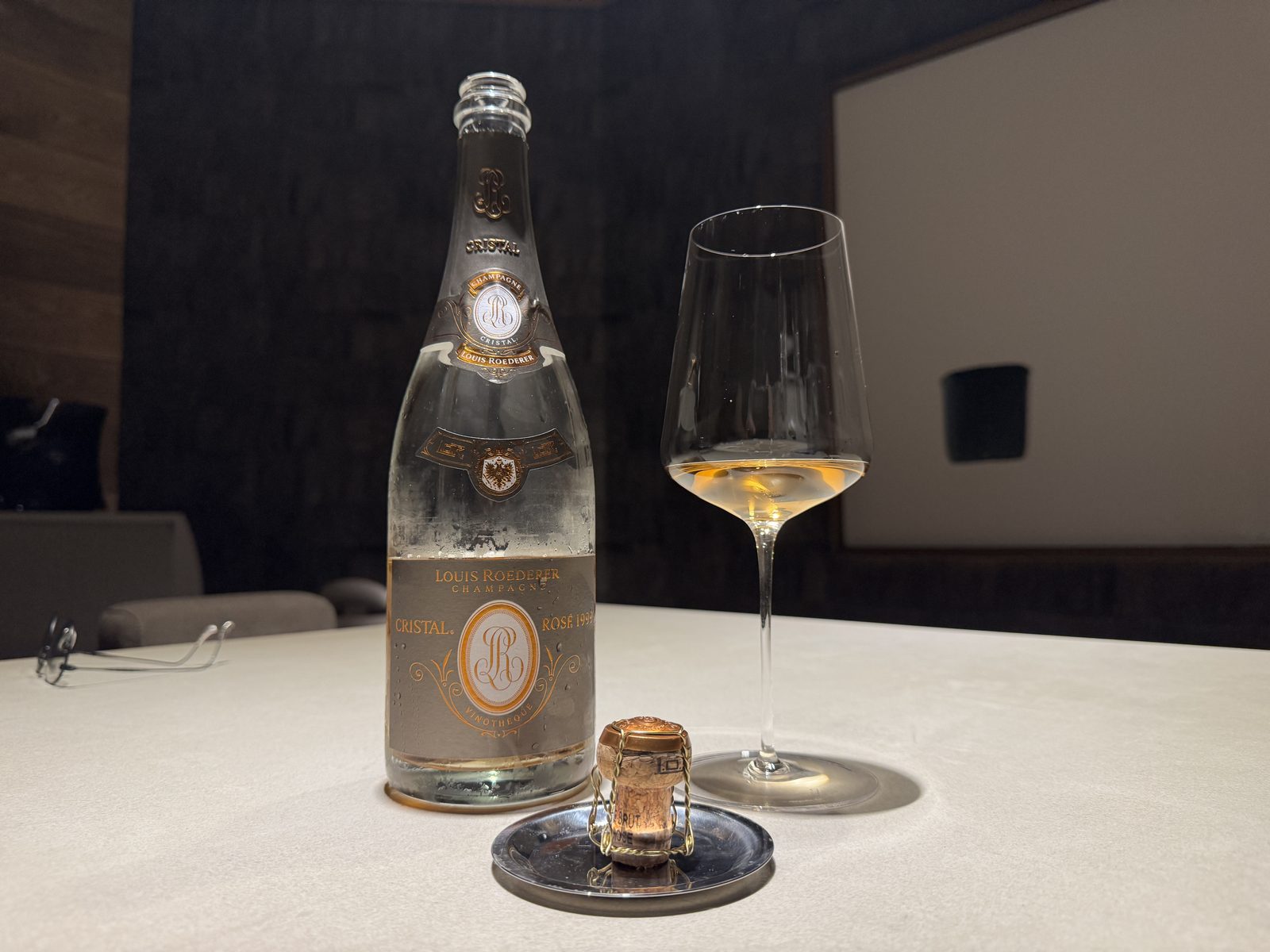
Cristal was born in 1876 as the world’s first prestige cuvée, commissioned by Tsar Alexander II, who wanted a Champagne that was his alone — served in a flat-bottomed, transparent crystal bottle, the story goes, so that no bomb could be hidden beneath the punt. A century and a half later, Roederer built a second legend on top of the first: Vinothèque, which is simply Cristal with time added — the same wine, held back in the house’s own cellars for close to twenty years and disgorged late.
The regimen reads like choreography. Eight years resting on the side, eight more standing on the head, then late disgorgement — the 1999 Rosé in 2016, with a modest 7–8 g/L dosage — and a further four years of settling before release. The blend is Pinot Noir 54, Chardonnay 46, from selected blocks in Aÿ, Avize and Le Mesnil, the Pinot bled by saignée. Nobody maximizes lees contact this far without believing time itself is an ingredient.
In the Glass
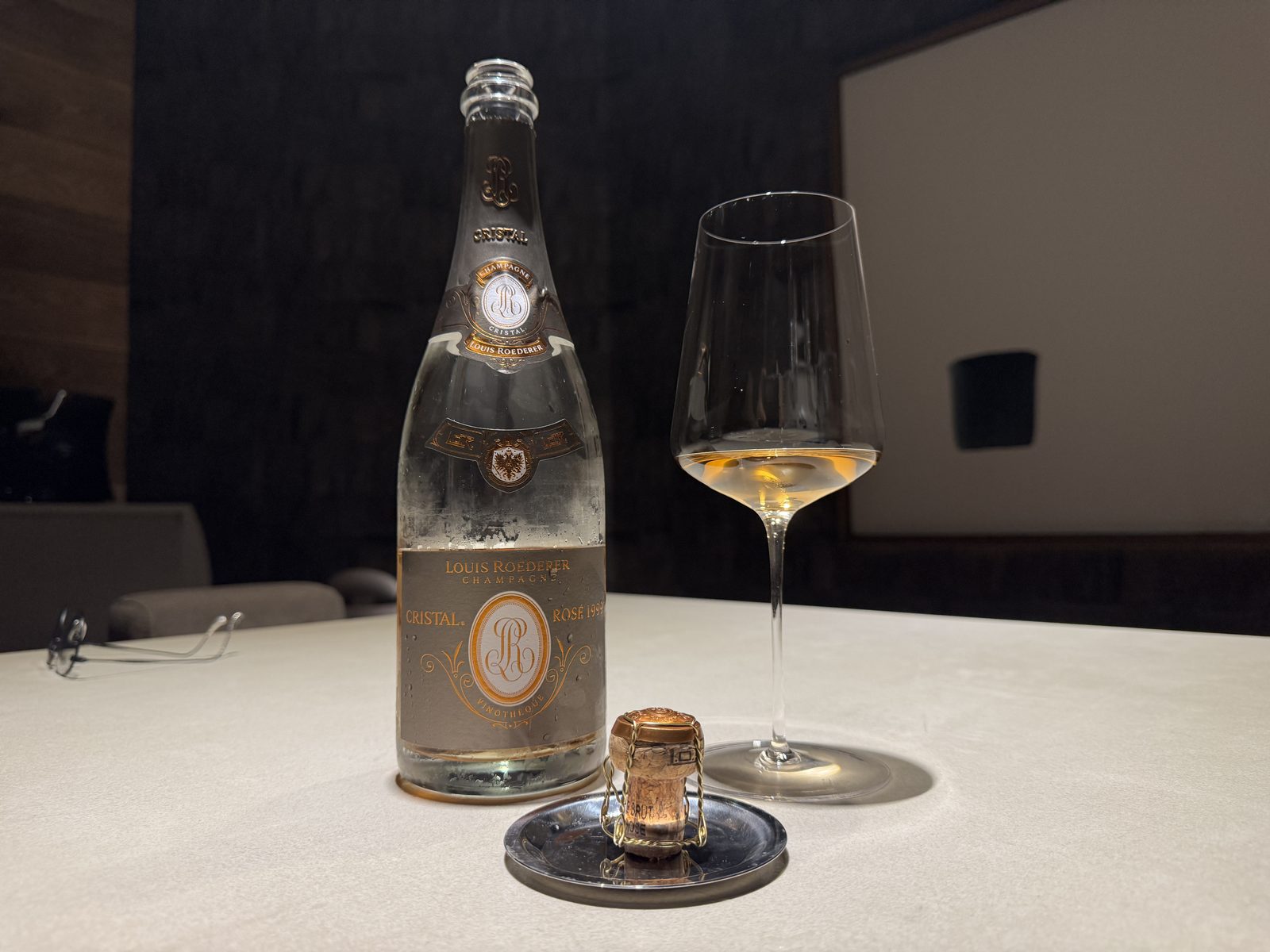
The colour told the first chapter: a pale, clear pink shaded with gold, its saturation quietly settled by two decades, the mousse fine and unhurried. The nose opened as a young rosé might — hawthorn blossom, rose petal, fresh strawberry and cherry — then aged into itself with air: chalk and a wisp of smoke, roasted hazelnut, praline and toffee, orange zest and spice, layer under layer.
The palate was creamy, velvet in texture, dried strawberry and spiced cherry-biscuit flavours fused into one seamless line — generous in flesh, yet held upright by the cool limestone acidity running through the middle. The finish stretched out on that mineral line and ended cool.
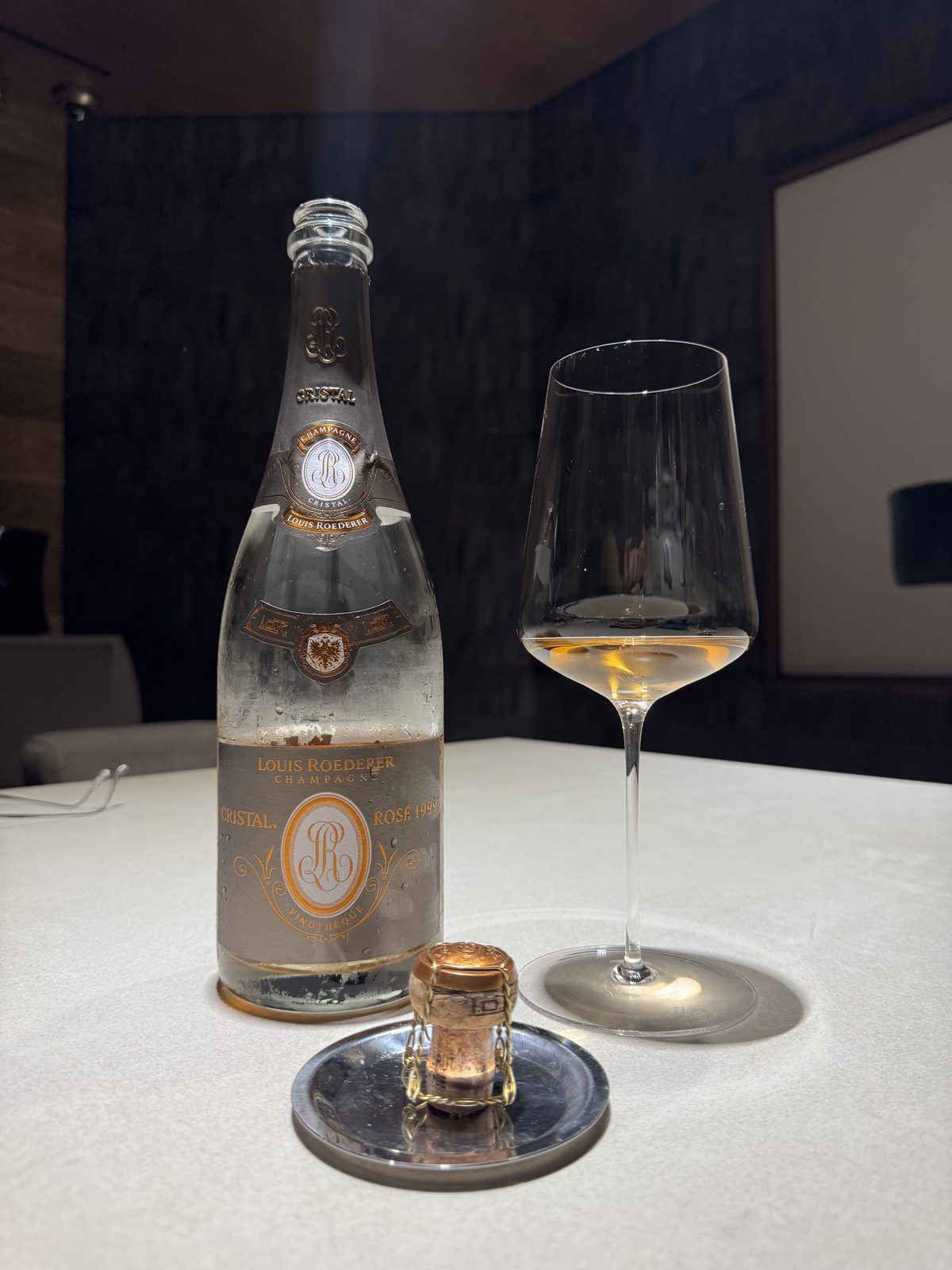
1999 was a powerful, generous, seductive year in Champagne, and the Vinothèque program delivered it at the exact moment the maths works: maturity and tension in full balance, nothing still owed to the future. A twenty-year wait, planned by the house so the drinker doesn’t have to — and repaid, on this evidence, in full.