Twelve Hundred Bottles of Le Montrachet
Domaine Ramonet Montrachet Grand Cru 2004
- Producer
- Domaine Ramonet
- Appellation
- Montrachet Grand Cru
- Grapes
- Chardonnay
- Tasted
- 22 June 2026
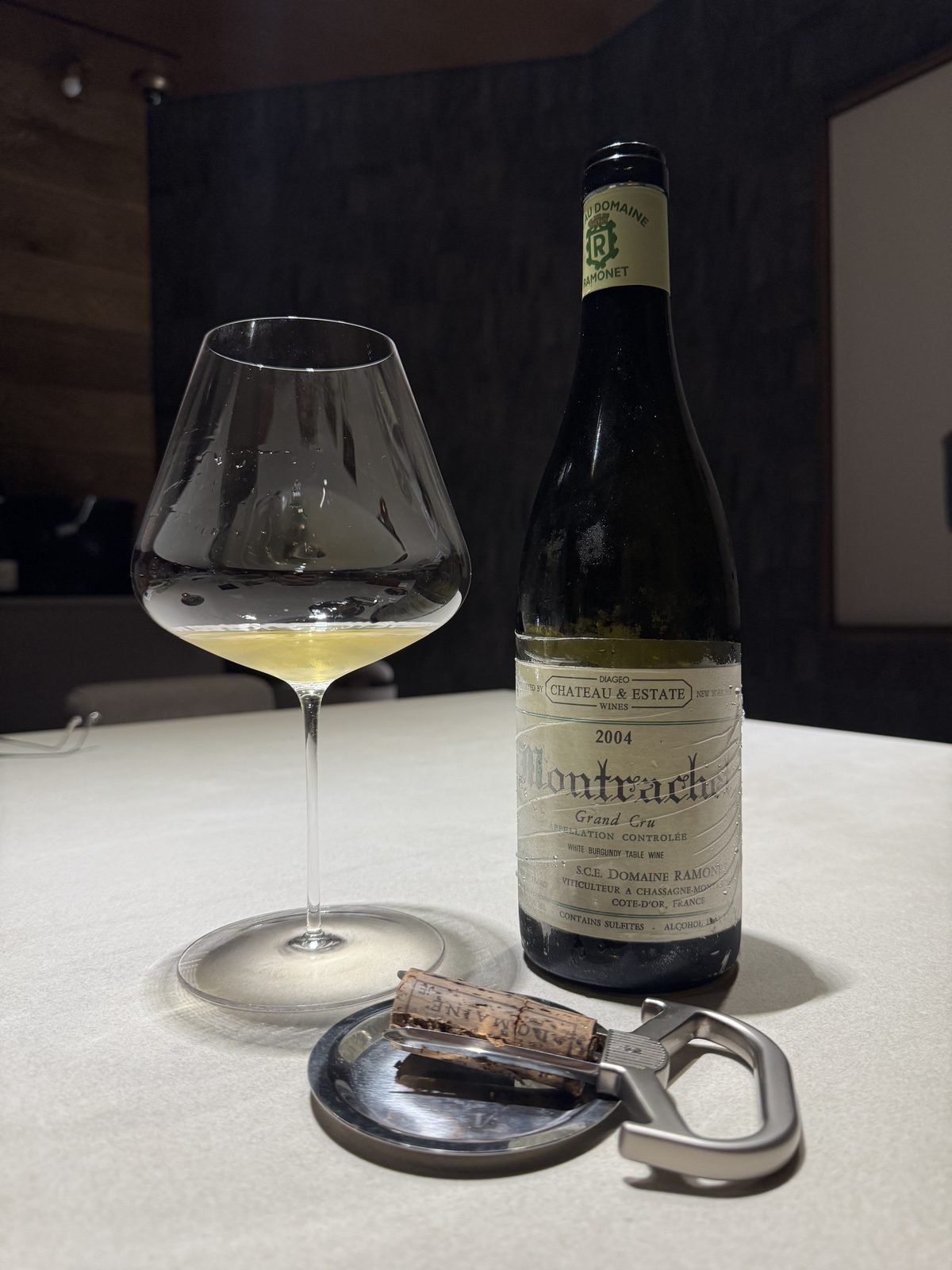
Le Montrachet, the most exalted white wine vineyard on earth, measures 7.48 hectares and yields a little over thirty thousand bottles a year. Domaine Ramonet’s share of that is 0.26 hectares at the vineyard’s southeastern tip — twelve to fifteen hundred bottles annually. Even among grands crus, this is scarcity of a different order.
The parcel entered the family in 1978, and the date is treated as the hinge of the domaine’s history. Pierre Ramonet — Père Ramonet — had assembled the estate from nothing across the early twentieth century, a self-made grower in Chassagne-Montrachet whose grandsons Noël and Jean-Claude carry the house today. Batard, Bienvenues-Batard and a sliver of Chevalier were already in hand; Le Montrachet was the summit acquired last, the purchase that turned a great Chassagne domaine into a legend.
A Cool Year, Past the Danger Zone
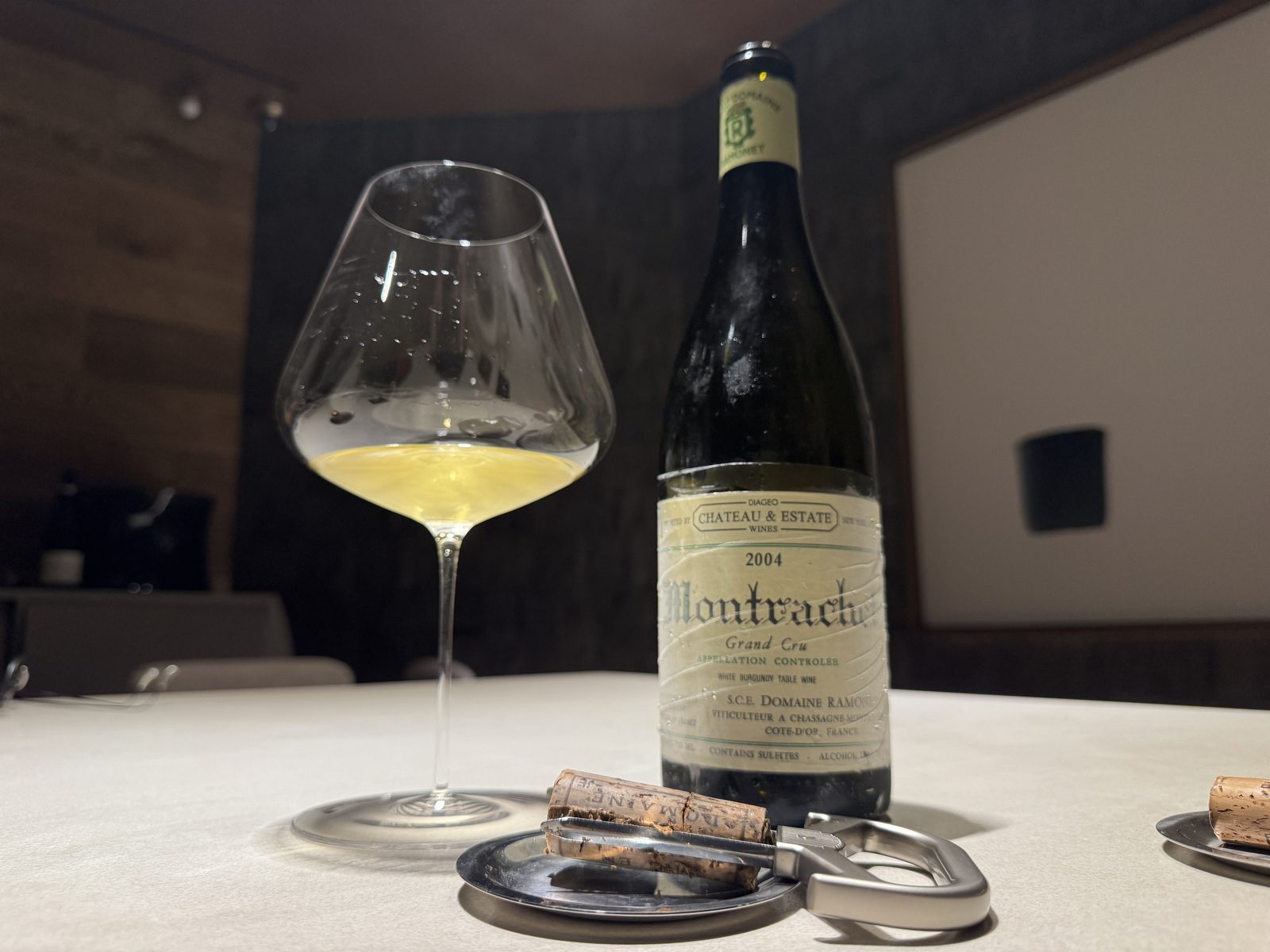
2004 gave white Burgundy a cool season and left the wines with bright, articulate acidity — taut and classical rather than opulent. It also sits, mercifully, past the worst of the premature-oxidation era, whose darkest stretch ran through the vintages of 1995–2002. Still, no white Burgundy past twenty gets the benefit of the doubt; every bottle testifies only for itself.
In the Glass
This one testified well. The colour had climbed to a confident, luminous gold — proper for twenty-two years, nowhere near the bruised-apple warning signs. The wine showed the house profile that runs through Ramonet’s 2004s: precise, edged acidity, the domaine’s curious signature of mint and spearmint, and a dry, mineral-and-earth texture that clings to the palate rather than washing over it.
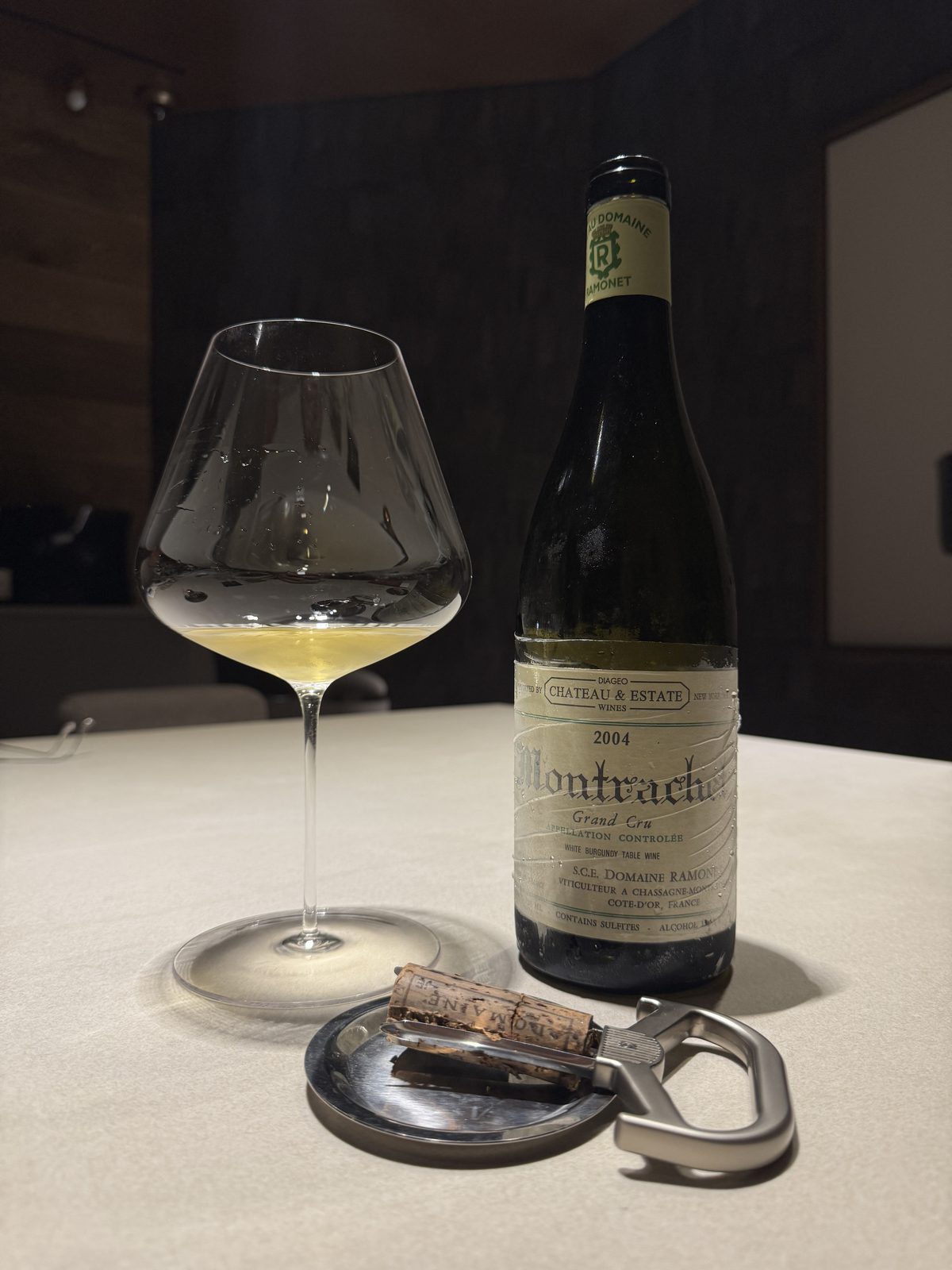
A cool-vintage Montrachet at twenty-two, standing upright, from a third of a hectare that changed a family’s history. It opened a long dinner that would end hours later with Champagne and Burgundy of other colours — but the first act held the table.