The Same Wine, at a Different Hour
Dom Pérignon Vintage 2008 Plénitude 2
- Producer
- Dom Pérignon
- Appellation
- Champagne AOC
- Grapes
- Pinot Noir, Chardonnay
- Tasted
- 16 July 2026
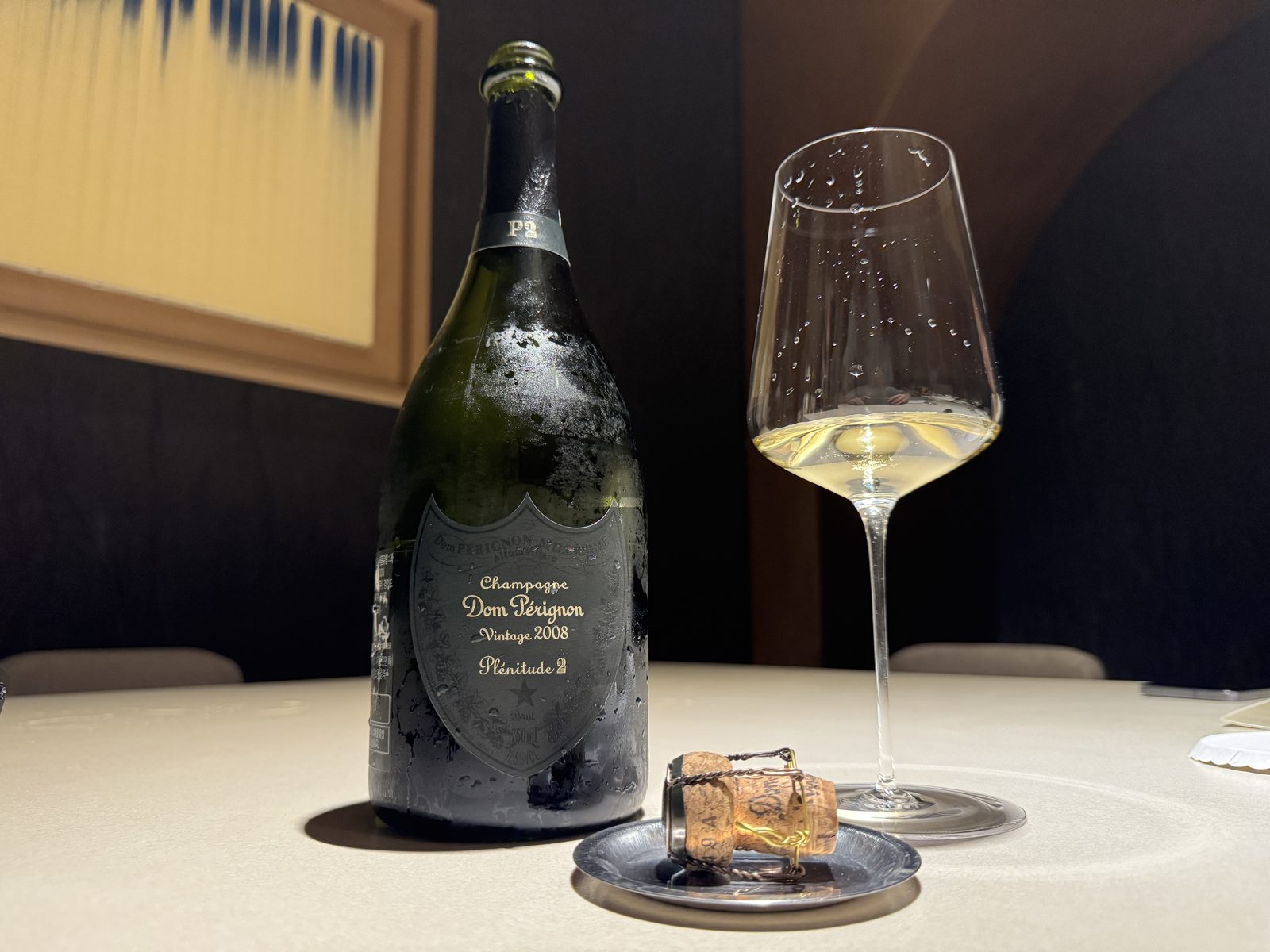
Every time the P2 concept comes up, the first reflex is admiration for the marketing department — and then the wine is poured, and the argument ends. It ended again this evening.
Plénitude is Dom Pérignon’s theory of time: Champagne, the house contends, does not age along a smooth slope but passes through successive peaks of expression. The first release is Plénitude 1. The same wine, left sleeping on its lees far longer, re-emerges as Plénitude 2 — the same grapes from the same autumn, simply opened at a different hour of their life. This 2008 was disgorged in March 2024 after more than fifteen years on the lees, dosed at a spare five grams per litre, Pinot Noir and Chardonnay in near-equal parts.
The vintage gives the experiment its drama. 2008 was cool and slow-ripening, and its blade-like acidity stood squarely at the front of the original release — thrilling to some, plainly early to others. The long lees rest planed those edges and filled in the mid-palate behind them. Same wine; different face.
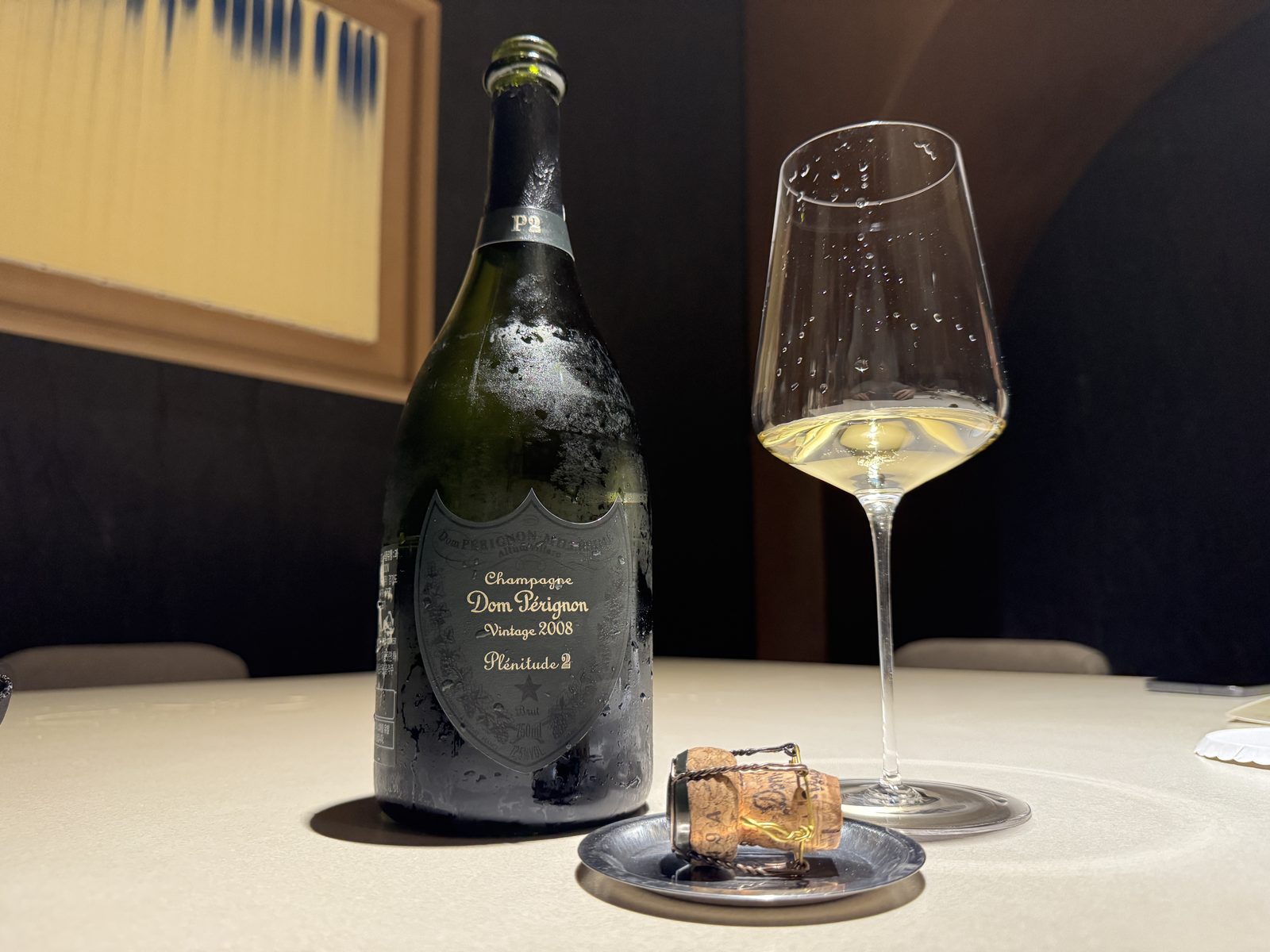
In the Glass
Bright yellow-gold, the mousse fine and quiet. The nose moved through orange and nashi pear into honeysuckle florals, roasted hazelnut and brioche, with the faintest smoky-reductive shading behind — some read jasmine and lavender in it, and the reading is fair.
The palate is where the fifteen years show. Medium in weight but unmistakably dense in texture: apple and lime over an oyster-shell mineral and umami floor, with the cool-year acidity holding the center perfectly upright. The finish doesn’t push; it persists — quiet density that simply declines to leave.
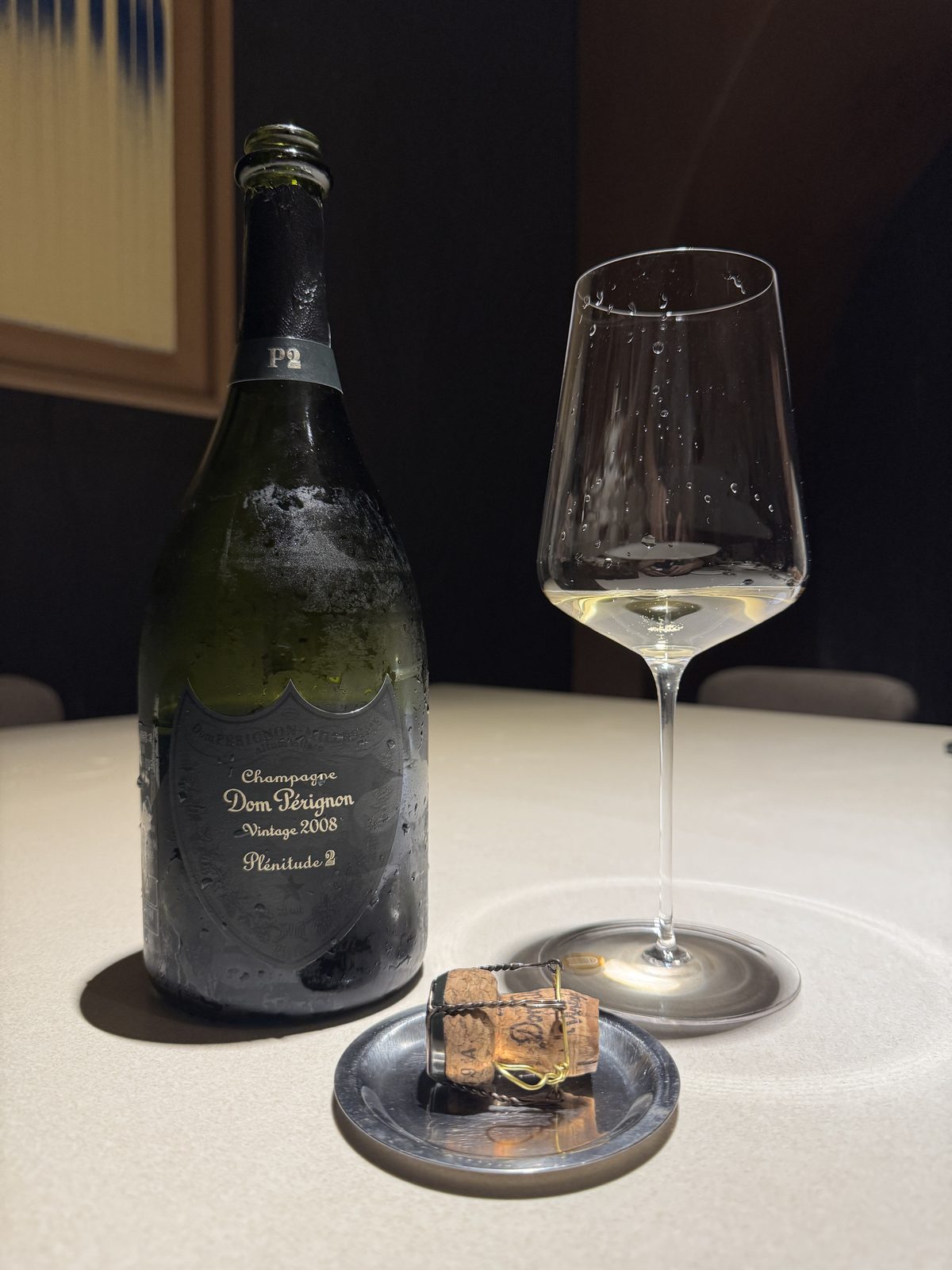
For anyone who opened the 2008 early and thought good, but not yet — this is the answer, released at what the house judges to be the second peak, with acid enough in reserve for years past it. One is left wondering whether a bottle forgotten in one’s own cellar for fifteen years could simply be declared a P2. It could not. That, presumably, is the point.