The Ripest of the Three
Krug Vintage Brut 1990
- Producer
- Krug
- Appellation
- Champagne AOC
- Grapes
- Pinot Noir, Chardonnay, Pinot Meunier
- Tasted
- 26 August 2026
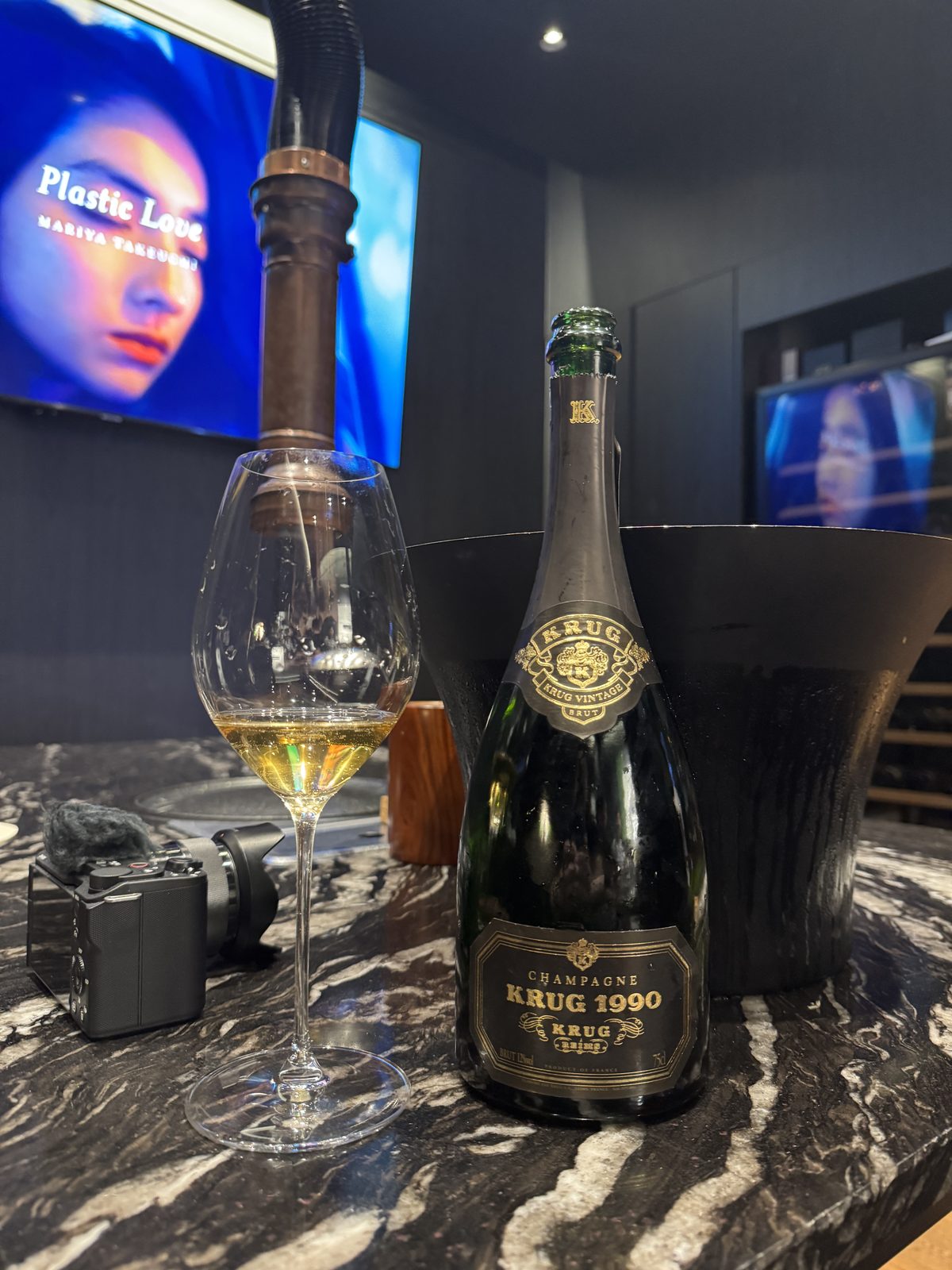
Krug declared 1988, 1989 and 1990 back to back, which is not something the house does often. Three consecutive portraits of three consecutive years, each one distinct enough to be kept apart from the Grande Cuvée. The 1989 has already had its turn here. This is the year that followed it.
The Warm One
Of the three, 1990 is the ripe one. The season began badly, with frost in April, and then turned into a long, hot summer that carried the grapes to a level of ripeness Champagne rarely sees — and, unusually for such a warm year, left the acidity intact. A large crop, fully ripe, still fresh: that combination is close to the ideal for a region that normally has to choose between the last two.
The blend is Pinot Noir 40, Chardonnay 37, Meunier 23. Krug has never been shy about Meunier, and in a year this generous the grape’s job is to keep the wine on its feet.
The house clearly thought highly of what it had made. A portion of the 1990 was held back after release and kept in the cellars for the better part of twenty-five years before being re-issued as Krug Collection, the library line reserved for a handful of vintages the house considers worth a second life. The 1995 is another of them.
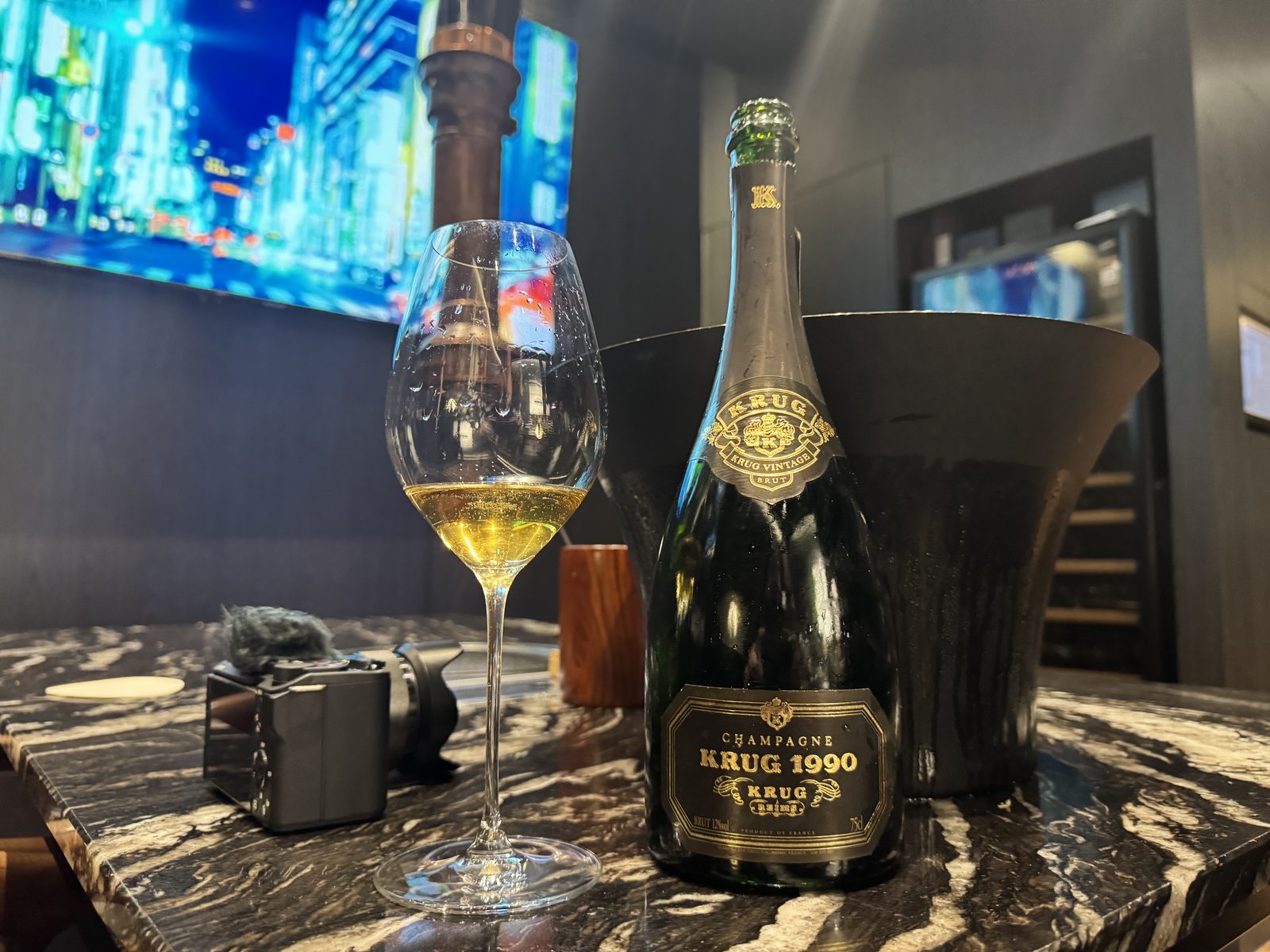
This bottle was not the Collection. It was the original release, the wine as it left Reims the first time, with thirty-six years on its own cork and nothing done to it since.
Thirty-Six Years On
Bright gold in the glass, the mousse reduced to a fine, quiet bead. The nose opened on nougat and roasted nuts, then dried apricot, orange marmalade, brioche and a warm sweep of cinnamon. Underneath it a thread of grapefruit peel kept the whole thing from settling into heaviness.
The palate was full and creamy — this is the vintage that earns Krug the phrase “the body of a red wine” — and yet freshness ran alongside the richness rather than beneath it. That is the 1990 character exactly: the flesh of a ripe year and a living acidity sharing one glass without either giving way. The finish was long, unhurried, drifting towards caramel and dried fruit.
At thirty-six, an original-release bottle carries a layer of oxidative nuance, and it should. That patina is the difference between this and the Collection re-issue, and it is the reason to prefer this one. The wine is at its point now, and there is no argument for waiting.